
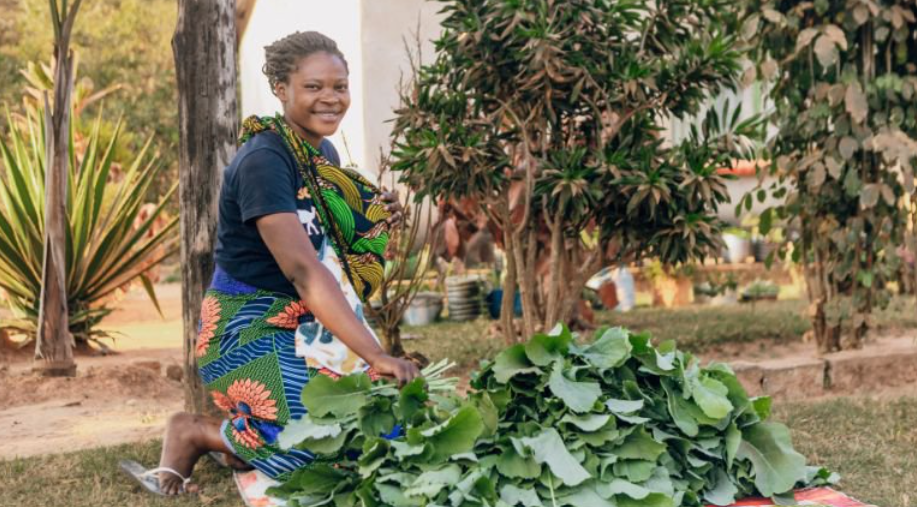
Farmers in Zambia See Higher Yields Under New E-Voucher Subsidy System
A new electronic voucher system under Zambia’s Farmer Input Support Programme is helping smallholder farmers increase crop yields, diversify production and access farming inputs more easily.
The initiative, introduced by the Government of Zambia with support from the World Bank Group, allows farmers to purchase agricultural inputs from private agro-dealers using electronic vouchers.
Under the programme, farmers make a small deposit through a bank and receive a voucher code via mobile phone. The code enables them to buy seeds, fertilisers and other inputs from registered agro-dealers, who are later reimbursed by the government.
The reform of the Farmer Input Support Programme (FISP) aims to give farmers greater flexibility to select inputs suited to their local soil conditions while encouraging crop diversification beyond maize.
In farming communities such as Kapiri Mposhi, north of the capital Lusaka, farmers say the e-voucher system has improved access to agricultural supplies and reduced the need to travel long distances to obtain fertiliser and seeds.
Community leader Headwoman Teupula said the previous subsidy model required farmers to travel to central depots where they received fixed packs of fertiliser and seed, often limiting their options.
She noted that the new system now allows farmers to access a variety of agricultural inputs from local dealers, improving productivity and convenience.
The e-voucher system was first introduced in 17 districts during the 2023–2024 farming season, benefiting about 220,000 farmers. The programme expanded to nearly 740,000 farmers across 74 districts in the 2024–2025 season and is expected to cover all districts during the 2025–2026 season, reaching more than one million farmers.
Farmers participating in the programme report improved yields. One farmer, Zacchaeus Saleh Mwale, said his maize harvest increased significantly after joining the programme.
“In the past we harvested fewer than 30 bags of maize. Now we are close to one hundred bags. We have food security and can support our grandchildren,” he said.
The shift to the market-based system has also strengthened rural agribusiness. Increased demand for seeds, fertilisers and farming equipment has encouraged competition among agro-dealers and created employment opportunities.
According to an independent survey conducted by Kivu International, about 86 per cent of agro-dealers hired additional staff following the expansion of the programme in the 2024–2025 season, with around 40 per cent of those positions retained.
The survey also indicated that 97 per cent of farmers reported purchasing quality inputs, while 76 per cent said they now have access to a wider variety of agricultural products.
Lead Agricultural Economist for Farming and Agribusiness at the World Bank Group, Sergiy Zorya, said the reforms are helping transform the country’s agricultural sector.
“What we are seeing is that the government has repurposed the input subsidy programme to transform agriculture and attract private sector participation,” Zorya said.
He added that the approach could help create markets, generate employment, diversify crops and improve nutrition.
The World Bank is currently supporting more than 40 countries in reviewing agricultural spending and has already helped shape about US$13 billion in investments aimed at improving agricultural productivity and environmental sustainability.
Through the Food Systems 2030 Multi-Donor Trust Fund, the institution has also allocated more than US$100 million to test innovative approaches to reform fertiliser subsidy programmes and other public agricultural support systems.
Building on Zambia’s experience with e-vouchers, the World Bank plans to support seven African countries through a new knowledge-sharing initiative designed to help governments reform input subsidy programmes and strengthen food systems across the continent.