
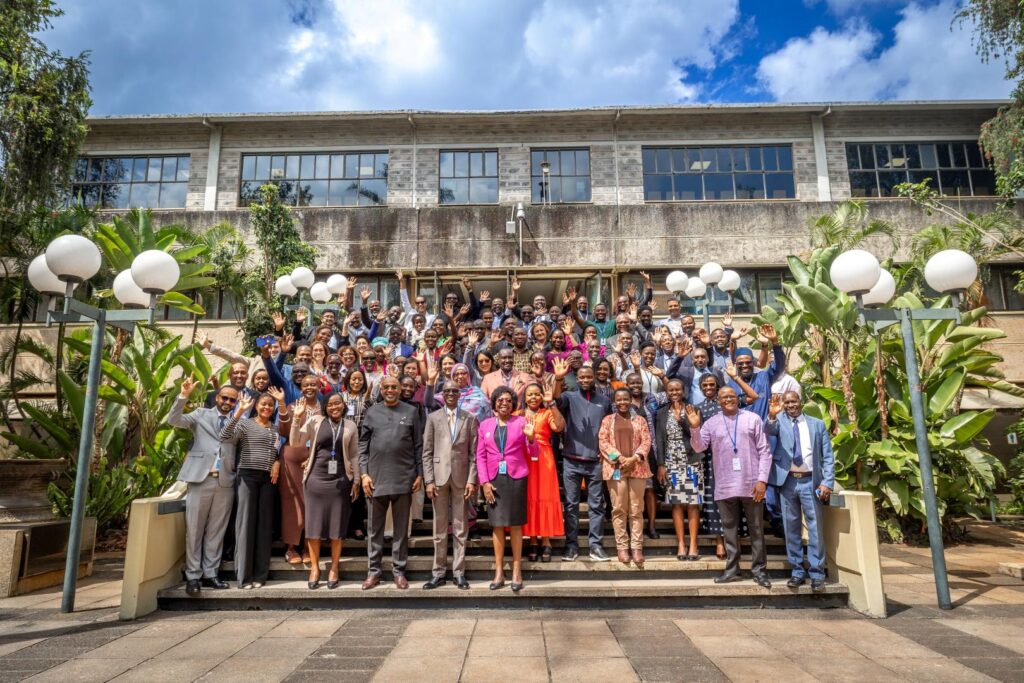
WHO to Co-Host Health Summit Regional Meeting in Nairobi Focused on Stronger Health Systems
The World Health Organization (WHO) is set to play a central role in the World Health Summit (WHS) Regional Meeting 2026, scheduled to take place in Nairobi from 27 to 29 April, in a landmark collaboration with WHS and Aga Khan University, Kenya.
This will be the first time WHO has co-organised a World Health Summit meeting at either global or regional level, reflecting a new strategic partnership aimed at strengthening collaboration on global health priorities, particularly in Africa.
The meeting, hosted by WHS and Aga Khan University in partnership with WHO, the Kenyan Ministry of Health, and the Africa Centres for Disease Control and Prevention, is expected to bring together more than 1,000 delegates from around 50 countries.
Participants will engage in 80 sessions focused on strengthening health systems, advancing universal health coverage, and promoting innovation in global health.
WHO has contributed to the development of around 80% of the sessions, helping shape discussions on key health challenges including non-communicable diseases, shifting patterns of infectious diseases, and health financing across Africa and beyond.
Professor Lukoye Atwoli, Dean of Medical College East Africa at Aga Khan University and President of the WHS Regional Meeting 2026, said the gathering will address urgent and evolving health priorities on the continent.
“We will be looking at the rising burden of chronic disease, changing patterns of infectious diseases and the health financing landscape in Africa and beyond,” he said.
WHO Regional Director for Africa, Dr Mohamed Janabi, is scheduled to speak in six high-level sessions, including the opening ceremony, which will be attended by Kenyan President William Ruto.
He will also contribute to discussions on global health security, digital health sovereignty, and health financing, as well as a side event on the WHO African Region Strategic Plan 2026–2030 and Vision 2035.
“The WHO Regional Office for Africa is honoured to co-convene this meeting. Over these three days we will deepen resolve and consolidate evidence. We will leave with regional commitments that are global in ambition,” Dr Janabi said.
Other senior WHO officials, including regional directors from Europe and the Eastern Mediterranean, will also participate as keynote speakers, alongside more than 20 WHO programme directors and nearly 90 WHO staff members drawn from headquarters, regional offices, and country offices in Kenya, Ethiopia, Eritrea, and Ghana.
WHO will also feature an exhibition space showcasing its latest publications, a virtual reality demonstration simulating polio vaccination in communities, and an artificial intelligence tool designed to support emergency response operations.