Women Deliver 2026 Opens in Narrm with Global Call to Rebalance Power and Accountability in Gender Equality
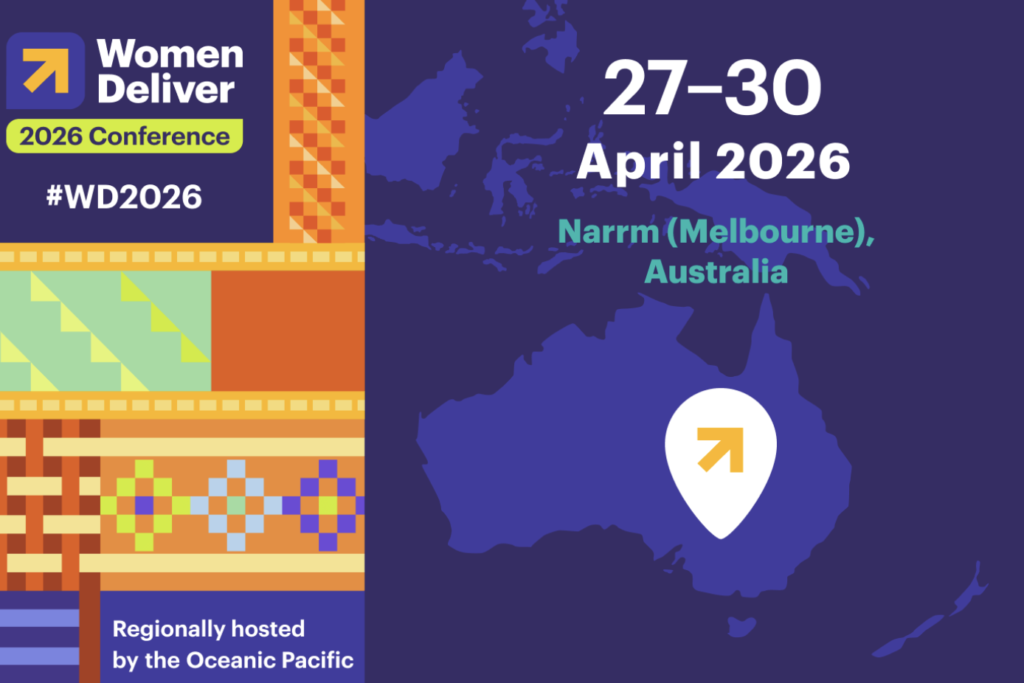
The Women Deliver 2026 Conference (WD2026) has officially opened in Narrm (Melbourne), bringing together global leaders, activists, funders, journalists and young advocates in a renewed call to transform how gender equality is funded, governed and delivered.
Held for the first time in the Oceanic Pacific region, the conference arrives at a moment of intensifying global challenges, including rising conflict, shrinking civic space, and growing pressure on women’s rights movements. Organisers say these conditions highlight the urgency of rethinking existing systems that have long shaped the global gender equality agenda.
At the centre of WD2026 is the forthcoming Melbourne Declaration for Gender Equality, a shared political commitment developed through global consultation. The declaration seeks to place States’ human rights obligations, public accountability, and the leadership of civil society and feminist movements at the heart of future action.
The theme of this year’s conference, “Change Calls Us Here”, reflects what organisers describe as a shift away from discussion towards accountability, solidarity and tangible action. It also signals a deliberate focus on First Nations leadership and the voices of the Oceanic Pacific in shaping global priorities.
Speaking at the opening of the conference, Women Deliver Chief Executive Officer Maliha Khan delivered a stark assessment of the global gender equality ecosystem, arguing that while it has delivered important gains, it has also entrenched structural weaknesses.
“The system that housed our victories created a model of dependency, making millions reliant on donors and organisations headquartered thousands of miles away rather than building the conditions for States to be held accountable to the people,” Khan said.
She added that much of the ecosystem had become “defanged politically”, shaped heavily by donor priorities and historically unequal global power structures.
“When sustained opposition arrived, the institutional architecture fell apart,” she said.
However, Khan struck a defiant tone, rejecting pessimism about the future of the movement.
“This is not a moment for mourning. We have secured the impossible before, and we will do it again. We choose courage over caution, solidarity over spectacle, and joy over despair.”
The conference is being hosted by the state of Victoria on behalf of the Oceanic Pacific, a milestone that organisers say marks a shift in whose voices are centred in global gender equality spaces.
Victorian Minister for Women and Girls, the Hon Gabrielle Williams, said hosting WD2026 reflects both responsibility and opportunity.
“Progress for women and girls isn’t guaranteed. It has to be fought for, built and protected. Bringing world leaders together like this is how we keep moving forward,” she said.
She added that the conference provides an important platform for mutual learning.
“We have a lot to learn from leaders and advocates from around the world and a lot to share as well, so we can get on with the job of delivering a better future for women and girls.”
A strong emphasis on regional leadership was also echoed by Pacific feminist organiser Noelene Nabulivou, Executive Director of DIVA for Equality in Fiji and Co-Chair of the WD2026 Regional Steering Committee.
With more than four decades of experience across feminist organising, climate justice and sexual and reproductive health and rights (SRHR) advocacy, Nabulivou has played a key role in shaping the conference’s Pacific-centred approach.
She said the decision to host WD2026 in the Oceanic Pacific is symbolically and politically significant.
“The Melbourne Declaration is an Oceanic Pacific call as much as it is a global one,” she said. “For too long, international frameworks have spoken about our communities while decisions were made elsewhere.”
She added that the declaration demands a redistribution of power and resources.
“This Declaration demands that power, resources and accountability flow towards the people and movements doing the work. That is what bringing Women Deliver to this region means to us.”
The Melbourne Declaration is expected to be formally launched at the close of the conference. It aims to strengthen commitments across the global gender equality ecosystem, ensuring that States are held accountable for human rights obligations while enabling feminist movements and civil society to play a stronger oversight role.
It also calls for international actors to support, rather than replace, locally led initiatives.
Across four days of programming, WD2026 will focus on key global issues shaping gender equality today, including bodily autonomy, gender-based violence, climate justice, digital rights, public systems, adolescent girls’ leadership, conflict, movement funding, and accountability mechanisms.