Red Cross Neutrality Under Pressure as States Question Role in Conflict Zones
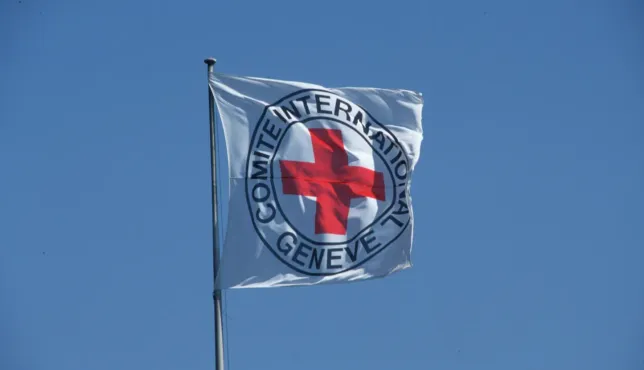
The principle of neutrality upheld by the International Committee of the Red Cross is facing increasing scrutiny as governments question its engagement with armed groups and separatist entities in conflict zones.
For decades, the ICRC has maintained that dialogue with all parties in a conflict is essential to deliver humanitarian assistance. However, this approach is increasingly being viewed by some states as a challenge to national sovereignty, particularly where contact is made with non-state actors controlling territory.
According to the organisation’s 2025 assessment, the ICRC maintains contact with 383 armed groups of humanitarian concern across more than 60 countries, affecting an estimated 204 million people.
While the organisation considers such engagement operationally necessary, critics argue that it risks blurring the line between humanitarian access and political recognition.
In Africa, tensions have been particularly evident. In 2007, authorities in Ethiopia expelled the ICRC from the Ogaden region, accusing it of siding with the Ogaden National Liberation Front. The organisation had operated in the region for over a decade, but the government viewed its engagement with local actors as politically sensitive. Efforts to return were unsuccessful for several years, highlighting a breakdown in trust.
A similar challenge has emerged in the South Caucasus, particularly in the disputed region of Nagorno-Karabakh. The ICRC has operated there since 1992, maintaining contact with authorities in both Azerbaijan and Armenia, as well as local structures in the region.
However, tensions escalated following the 2020 conflict and subsequent disputes over the Lachin corridor. Azerbaijani authorities accused the organisation of facilitating unauthorised transport, allegations the ICRC denied, though it acknowledged misconduct by contracted drivers. In 2025, the organisation closed its delegation in Azerbaijan after the government withdrew its consent for operations.
Observers say such incidents illustrate the growing difficulty of maintaining neutrality in complex political environments. While the ICRC views its role as strictly humanitarian, governments may interpret engagement with non-state actors as indirect legitimisation.
The organisation’s governance structure has also drawn attention. Though globally recognised, the ICRC is institutionally rooted in Switzerland, with its leadership composed exclusively of Swiss nationals. Its reliance on confidential diplomacy, while intended to preserve access, has been criticised for lacking transparency.
Analysts note that neutrality, once seen as the cornerstone of humanitarian work, now depends heavily on trust between the organisation and sovereign states. Where that trust erodes, access becomes restricted and operations are challenged.
Despite the criticism, the ICRC continues to emphasise that engagement with all parties remains essential to reach civilians in conflict zones. However, the organisation faces increasing pressure to clarify how it balances humanitarian access with respect for state sovereignty in an evolving global landscape.