Benin Leads Francophone Push to End Malaria Amid New Warning on Rising Deaths
Benin has hosted a high-level mobilisation event marking World Malaria Day, bringing together policymakers, development partners, researchers, civil society, youth groups, athletes and media in a renewed call to accelerate efforts towards a malaria-free future in Francophone Africa.
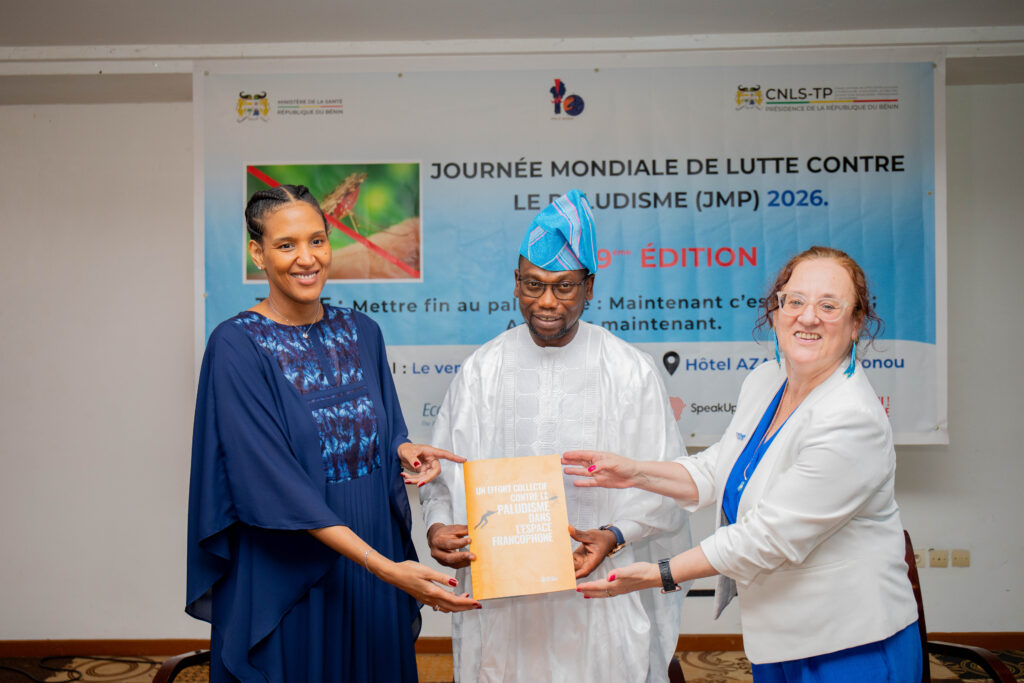
The activities, held from 24 to 26 April under the global theme “Driven to End Malaria: Now We Can. Now We Must.”, culminated in the launch of a landmark report titled “A Big Push Against Malaria in the Francophone World”, presented by Benin’s Minister of Health, Professor Benjamin Hounkpatin.
The report reveals a stark imbalance in the global malaria burden: Francophone countries represent only 13% of the global population at risk, yet account for more than 42% of malaria cases and 40% of malaria-related deaths. It warns that without urgent and coordinated action, these disparities could deepen.
Professor Hounkpatin described the findings as a wake-up call for the region. “The report highlights a reality we can no longer ignore: our region is on the front line. But it also shows that progress is possible when political leadership, financing, and collective mobilisation come together,” he said, reaffirming Benin’s commitment to regional and international leadership in malaria control.
Benin has emerged as a notable example of progress, having nearly quadrupled its national malaria budget between 2022 and 2025. Health authorities attribute recent reductions in malaria prevalence to a multisectoral approach involving government institutions, parliamentarians, civil society, and the private sector.
The initiative has been strongly supported by advocacy organisation Speak Up Africa, which has been driving regional engagement on malaria elimination. Its Executive Director, Yacine Djibo, said the report should serve as a catalyst for immediate action. “We must act now, collectively, to save lives and finance a malaria-free future,” she said.
The mobilisation in Cotonou also featured youth-focused and community-driven activities, including a media workshop, storytelling sessions, and a 3×3 basketball tournament delivered in partnership with the I AM Foundation. These formed part of the broader “Speak Up Africa in Action” platform, which uses sport and culture to advance public health awareness.
Former Senegal international footballer Khalilou Fadiga, co-captain of the Zero Malaria Football Club, highlighted the role of sport in driving behavioural change. “Through sport and youth engagement, we can raise awareness, mobilise communities, and drive change,” he said.
At global level, the RBM Partnership to End Malaria warned of rising funding pressures that risk reversing gains made over the past decade. Its CEO, Dr Michael Charles, urged countries to scale up coordination and investment, noting that Benin’s progress demonstrates what strong political commitment can achieve.
As momentum builds, Benin is positioning itself as a leading voice within the Francophone world, with ambitions to push for a strong malaria resolution at the upcoming Francophonie Summit in November 2026.
The Cotonou gathering highlighted a shared message from all stakeholders: while progress has been made, eliminating malaria will require sustained financing, innovation, and deeper community engagement across all sectors of society.