
India’s Supreme Court Declares Menstrual Health a Fundamental Right
Supreme Court of India has delivered a landmark ruling declaring menstrual health an integral part of fundamental rights, marking a significant step towards advancing menstrual justice and gender equality.
In the judgment delivered on 30 January 2026, the court ruled that menstrual health is linked to the right to life under Article 21 of India’s Constitution, which guarantees the right to live with dignity, health and self-respect. The decision makes India the first country in the world to constitutionally guarantee menstrual health.
The court also directed authorities to ensure the judgment is effectively implemented, stating that it will review progress across the country within three months.
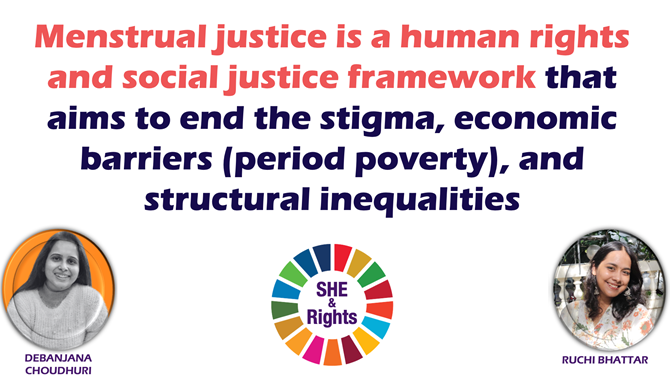
Gender justice activist Debanjana Choudhuri welcomed the decision, saying it addresses the long-standing gap between legal guarantees and the lived realities of girls and women.
“By recognising menstrual health and hygiene as an integral part of life under Article 21, the Court acknowledged a reality that has long affected girls and women in silence due to stigma and patriarchal attitudes,” she said.
According to government data, challenges related to menstruation continue to disrupt education for many girls in India. Studies indicate that one in four adolescent girls misses school during menstruation, often due to inadequate sanitation facilities, lack of privacy, and limited access to sanitary products. Over the past four years, around four million girls have reportedly dropped out of primary education in the country.
Legal expert and journalist Ruchi Bhattar explained that the 127-page judgment requires all states and union territories to improve infrastructure and services in schools. The ruling mandates the provision of gender-segregated toilets with running water, free biodegradable sanitary pads, safe disposal systems and menstrual health education within school curricula.
The court emphasised that infrastructure alone will not solve the issue. It called for greater involvement of men and boys, including teachers and peers, to help break the stigma surrounding menstruation and encourage a more supportive environment.
The concept of menstrual justice, first coined by legal scholar Margaret Johnson in 2018, goes beyond hygiene and access to products. It focuses on eliminating structural inequalities, economic barriers and social stigma that prevent people who menstruate from managing their periods with dignity.
Globally, the issue remains widespread. Estimates suggest that more than 300 million people menstruate each day, yet around 500 million women and girls lack access to adequate menstrual products and sanitation facilities. Poor menstrual hygiene can increase the risk of infections and negatively affect education, health and economic opportunities.
Advocates say the Indian court’s decision has the potential to shift policy discussions from basic menstrual hygiene towards broader menstrual justice, ensuring dignity, equality and access for all menstruators, including transgender and non-binary individuals.
However, experts stress that the ruling must be followed by sustained action from governments, communities and civil society to ensure that its promises translate into real change in the lives of millions.