
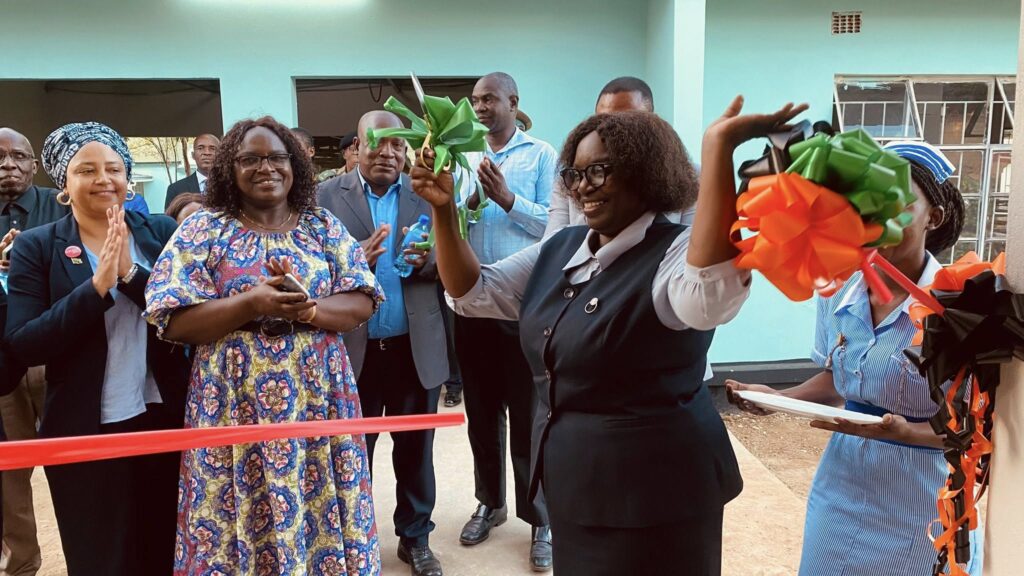
Gov’t Expands Health Training with Five New Rural Skills Laboratories
The Government of Zambia has commissioned five new Skills Laboratories at nursing and midwifery training institutions in Kaoma, Chitambo, Mbala, Nchanga and Kashikishi, aimed at addressing critical shortages of health workers and improving access to quality healthcare in rural communities.
The commissioning was led by Minister of Health, Hon. Dr Alex Katakwe, and represented by Director of Nursing, Ms Daphne Namoonga Shamambo. The Ministry said the initiative comes at a crucial time, as Zambia continues to face a shortage of nurses and midwives, particularly in underserved areas.
In remarks delivered on his behalf, Dr Katakwe emphasised the importance of investing in the health workforce and called on communities to support newly recruited staff. He noted that retaining health workers in rural areas requires both government commitment and active community involvement.
The Skills Laboratories are part of a decentralised training model being implemented by the Ministry of Health in partnership with SolidarMed Zambia, the Hilti Foundation, Liechtenstein Development Service and the Swiss Agency for Development and Cooperation (SDC). The model is designed to bring training closer to communities while aligning education with local healthcare needs.
Funded by SDC, the laboratories provide simulation-based learning environments where students can practise essential clinical skills, strengthen competencies and prepare for real-world service delivery in rural settings.
The commissioning took place on the eve of the International Day of the Midwife, highlighting the vital role midwives and frontline health workers play in Zambia’s healthcare system.
Speaking at the event, SolidarMed Zambia Country Director, Ms Kupela Clark, highlighted the broader impact of the initiative, stating that the investment is focused on improving lives through better-trained health workers and expanded access to care.
Over the past decade, the decentralised training model has been developed in collaboration with the Ministry of Health and the Nursing and Midwifery Council of Zambia. By embedding training within rural communities, the approach enables students to gain practical experience in the environments where they are most needed.
Evaluations show that more than 60 per cent of graduates from this model are deployed in rural facilities, compared to less than 40 per cent from traditional training pathways. The programme is expected to produce over 2,000 additional nurses and midwives annually by 2026, improving healthcare access for more than two million people.