Gov’t and Tech Leaders Unite to Connect All Zambians to the Digital Economy
The Fifth ICT and Digitalisation Sector Technical Working Group Meeting under the Public-Private Dialogue Forum (PPDF) has reaffirmed Zambia’s commitment to accelerating its digital transformation through strengthened collaboration between Government and the private sector.
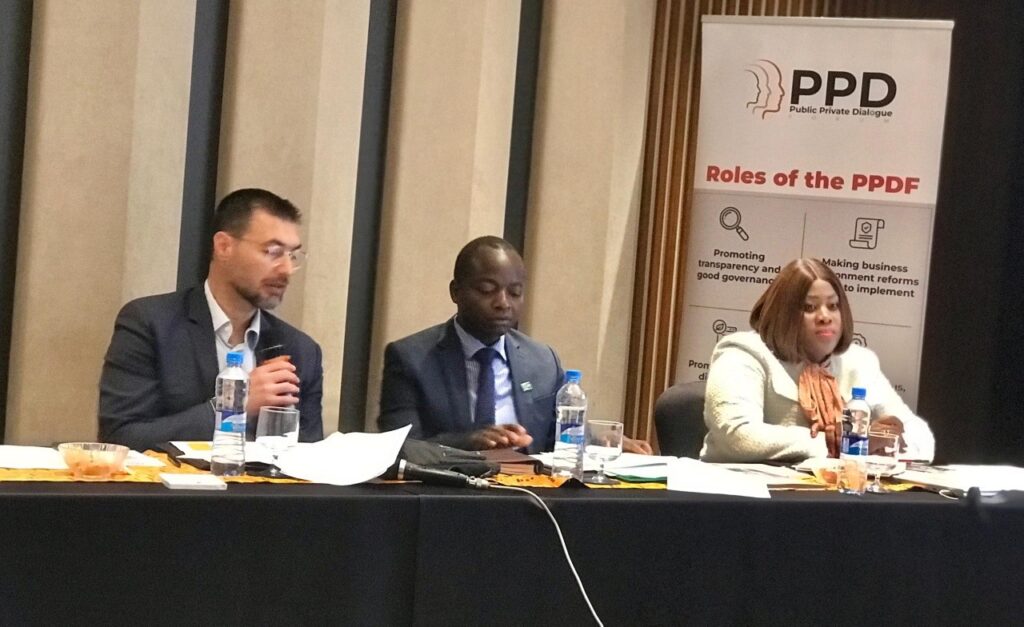
Held at Neelkanth Sarovar Premiere Hotel on Monday, 27 April 2026, the meeting brought together key stakeholders to review progress, align priorities, and address policy, infrastructure, and innovation challenges shaping the country’s ICT sector.
The forum was co-chaired by the Permanent Secretary at the Ministry of Technology and Science, Eng. Dr Brilliant Habeenzu, and the Chair of the Global System for Mobile Association of Zambia (GSMAZ) and Chief Executive Officer of MTN Zambia, Mr Abbad Reda.
Dr Habeenzu reaffirmed Government’s commitment to ensuring that all citizens benefit from the ongoing digital revolution. He highlighted key legislative reforms, including the review of the Postal and Courier Services Act and the revision of the ICT Act of 2009, to align with the 2023 National ICT Policy.
According to Dr Habeenzu, the reforms are designed to respond to emerging digital realities such as e-commerce, digital logistics, and innovation, while strengthening the legal framework for economic growth.
He further stressed the importance of digital sovereignty, calling for the expedited operationalisation of Part IV of the Cybersecurity Act to enhance data protection and national control over critical information systems.
On infrastructure development, the Permanent Secretary reported significant progress in reducing the digital divide. Since 2022, Government has constructed 110 communication towers, signed contracts for an additional 80, and secured World Bank support for 300 more.
The private sector has also contributed more than 270 towers, underscoring the strength of public-private partnerships in expanding connectivity and improving access to digital services across the country.
Dr Habeenzu also noted that telecommunications infrastructure has been designated as critical under the Cybersecurity Act of 2025, with a dedicated budget line introduced in the 2026 National Budget to enhance sustainability and investor confidence.
Addressing affordability and consumer safety, he referenced ongoing cost-of-service studies guiding tariff regulation and reviews aimed at reducing duties and customs charges.
He also highlighted Government interventions to combat mobile money fraud and misinformation, including the 707 reporting code, which led to the deactivation of more than 90,000 fraudulent SIM cards in 2024.
Mr Abbad Reda emphasised the central role of the ICT sector in driving Zambia’s socio-economic development. He noted that platforms such as the PPDF are essential for aligning Government and industry priorities, addressing sector challenges, and unlocking new opportunities.
He underscored the shared ambition of ensuring universal access to ICT and financial services, describing it as key to promoting inclusion, dignity, and economic participation.
Mr Reda further called for constructive engagement and coordinated action among stakeholders, reaffirming the private sector’s readiness to support Zambia’s digital transformation agenda.
The meeting concluded with a renewed commitment from both Government and industry to deepen collaboration, strengthen regulatory frameworks, and accelerate digital infrastructure rollout as Zambia positions itself as a more connected and digitally enabled economy.