Zambia Calls for Value Addition in Critical Minerals at UN Financing for Development Forum
Zambia has called for a stronger global focus on value addition, industrialisation, and fair benefit-sharing in the extraction of critical minerals, as part of efforts to ensure a just and inclusive global energy transition.
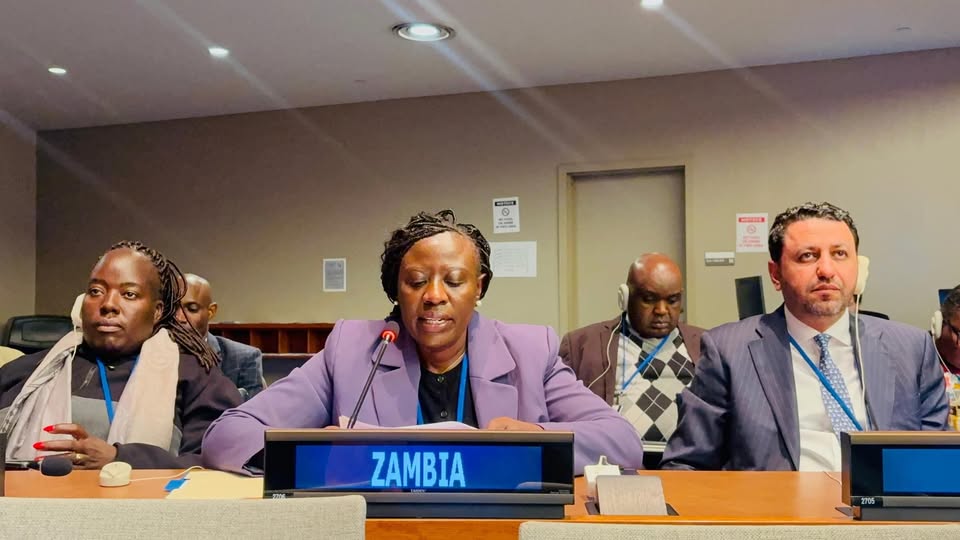
Speaking during a session on “International Trade: Unlocking Value Addition in Critical Minerals” at the ongoing Financing for Development Follow-up Forum at the United Nations Headquarters, the Ministry of Finance and National Planning Permanent Secretary, Ms Prudence Kaoma, said the rising global demand for critical minerals presents a major opportunity for developing countries to advance industrial development and job creation.
Ms Kaoma noted that Zambia is actively implementing policies aimed at promoting domestic beneficiation of minerals and strengthening industrial capacity across the entire value chain. She stressed that this approach is central to the country’s broader economic transformation agenda.
She further highlighted the need for increased investment in critical infrastructure, particularly in transport, energy, and logistics, to support efficient mineral value chain development. In this regard, she pointed to the Lobito Corridor as a key regional initiative expected to enhance trade connectivity and mineral export efficiency across the region.
The Permanent Secretary also called for strengthened international cooperation, fair investment practices, and strategic partnerships to ensure that the benefits of the global energy transition are equitably shared, particularly with resource-rich developing countries.
Ms Kaoma reaffirmed Zambia’s commitment to maximising value from its mineral resources, including copper, cobalt, manganese, lithium, and emeralds. She noted that this strategic focus has already contributed to increased production across key minerals, including copper, gold, zinc, coal, and cobalt.
She further highlighted major ongoing investments such as the US$600 million Sinomine Kitumba Project and the US$1.25 billion Kansanshi S3 Expansion, which are expected to significantly boost national output.
Zambia has set an ambitious target of producing three million metric tonnes of copper annually by 2031, as it continues to position itself as a key player in the global minerals and energy transition value chain.