
Zambia Advances Fiscal Reforms as Tax-to-GDP Ratio Rises to 22.1%
Finance and National Planning Minister Dr Situmbeko Musokotwane says Zambia has made significant progress in implementing reforms aimed at strengthening collaboration between the public and private sectors to build a more competitive economy.
Dr Musokotwane said private sector participation in key sectors such as energy and manufacturing is yielding positive results, noting that Zambia has now become a net exporter of fertiliser. He also cited the revival of Mulungushi Textiles as evidence of the impact of ongoing economic reforms.
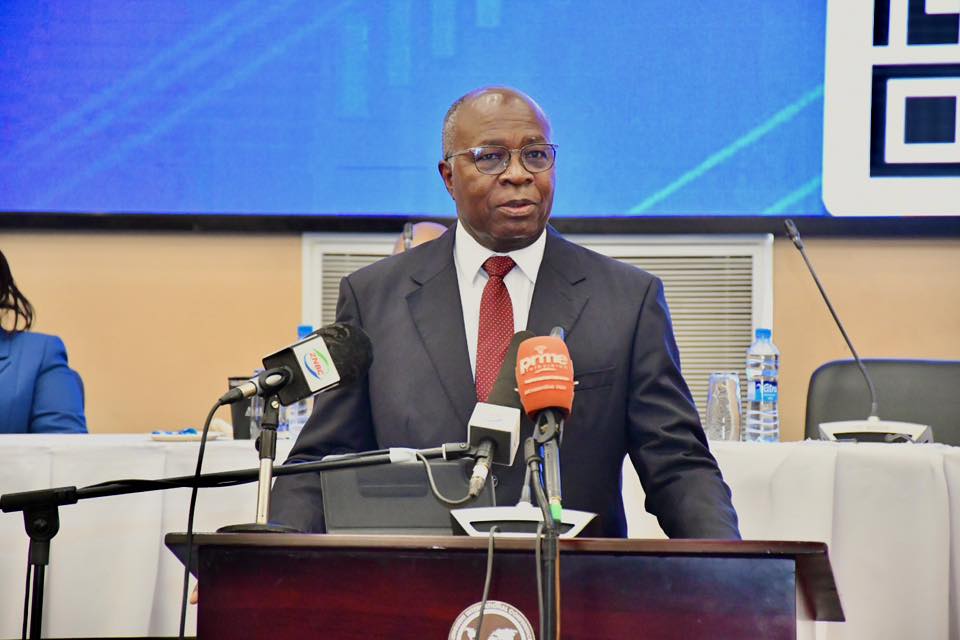
Speaking during the Quarter 1, 2026 Budget and Economic Performance Town Hall meeting in Lusaka, the Minister said Government has introduced wide-ranging reforms to enhance fiscal stability and support sustainable economic growth.
“A major lesson from the reforms is that change must also transform how institutions work, leading to better economic incentives and improved results for the nation,” he said.
Secretary to the Treasury, Mr Felix Nkulukusa, highlighted the Integrated Public Financial Management Reform Strategy as a key framework designed to improve efficiency, transparency and accountability in the management of public finances.
He said Government is also strengthening digital integration across financial systems, including linking the Integrated Financial Management Information System (IFMIS) with other platforms to simplify tax payments and improve compliance.
Mr Nkulukusa further disclosed that a Compliance Risk Management (CRM) Unit has been established within the Zambia Revenue Authority (ZRA) as part of efforts to enhance revenue administration.
ZRA Commissioner General, Mr Dingani Banda, announced that Zambia’s tax-to-GDP ratio has increased from an average of 18.3 per cent to 22.1 per cent in 2025. He said this reflects improved compliance and strengthened tax administration.
He noted that ZRA is implementing a Compliance Risk Management system supported by a Cooperative Compliance Model, which encourages voluntary tax compliance rather than enforcement-driven collection.
Mr Banda said 43,498 taxpayers have already been onboarded onto the Smart Invoicing system, although uptake remains a challenge. He added that the Authority is piloting pre-filled VAT returns for large taxpayers and mining companies to improve efficiency.
He also encouraged taxpayers to utilise the Voluntary Disclosure Programme, which offers waivers on interest and penalties for eligible cases.
Zambia Association of Manufacturers (ZAM) President, Mr Mohammad Umar, commended ZRA for introducing the Smart Invoice system, saying it will improve efficiency in tax administration within the manufacturing sector.
He also praised efforts to combat illicit trade, noting the positive impact of the newly established multi-sectoral committee.
The Town Hall meeting, organised by the Ministry of Finance and National Planning, was held under the theme: “Consolidating Economic and Social Gains Towards a Prosperous, Resilient and Equitable Zambia.”