
Zambia Deepens People-to-People Ties with China at Language Day Celebration
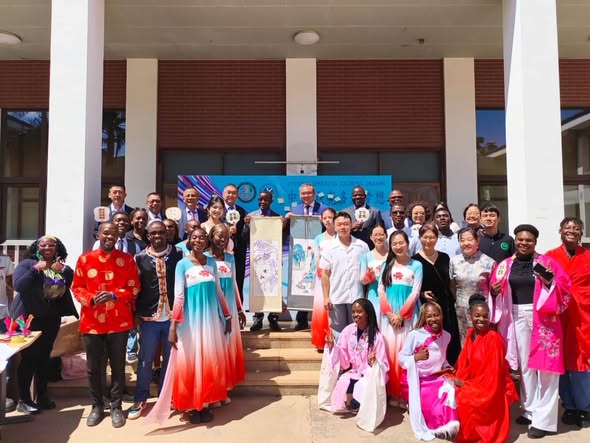
The International Chinese Language Day was commemorated in Lusaka with a vibrant celebration at the Confucius Institute hosted by the University of Zambia, highlighting the growing cultural and educational ties between Zambia and China.
The event brought together over 120 participants, including students, faculty members and representatives of the Chinese community in Zambia.
Among the dignitaries in attendance were Minister-Counsellor Wang Sheng of the Chinese Embassy, UNZA Vice-Chancellor Mundia Muya, and Zambia Chinese Association President Zhang Jian, alongside Confucius Institute Directors Professor Fan Guoping and Professor David Mwanza.
Speaking during the ceremony, Wang Sheng described the Chinese language as more than a means of communication, calling it “a key that opens doors to opportunities” and enables individuals to realise their aspirations.
He reaffirmed China’s longstanding relationship with Zambia, noting that cooperation between the two countries continues to deliver investment, technology transfer and employment opportunities.
Professor Muya emphasised that the enduring friendship between Zambia and China has strengthened over time, with language playing a central role in connecting the two nations.
He added that the university remains committed to supporting Chinese language education and expanding cultural exchange programmes.
The celebration, themed “Chinese: Sparking Colourful Dreams”, marked the first activity under the Zambia–China People-to-People Exchanges Week, held within the framework of the 2026 China-Africa Year of People-to-People Exchanges.
Other speakers, including Mr Zhang and the Confucius Institute directors, welcomed the increasing number of Zambian students studying Chinese and encouraged young people to harness language skills to contribute to bilateral relations.
The event featured a lively showcase of cultural performances by students and staff, including singing, dancing, martial arts and poetry recitations.
Guests also engaged in interactive cultural activities such as calligraphy, paper-cutting, oracle bone script games and trying on traditional Hanfu attire.