Zambia Calls for Inclusive Innovation and Stronger Global Partnerships at UN STI Forum
Zambia has called for stronger international cooperation to ensure science, technology and innovation (STI), including Artificial Intelligence (AI), drive inclusive and sustainable development globally.
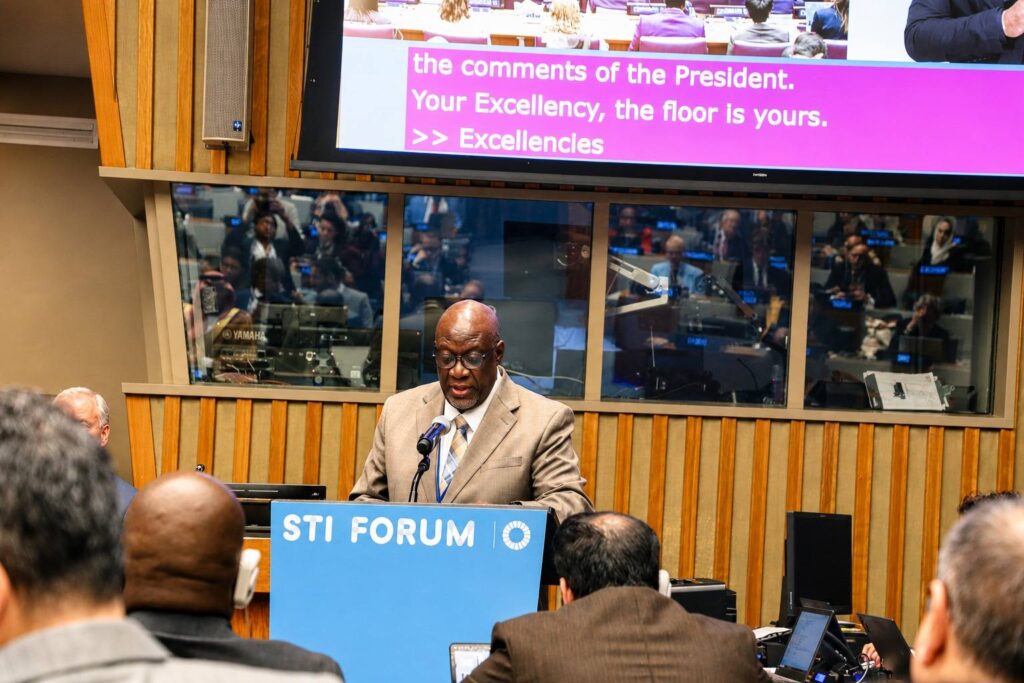
Speaking during the ministerial session of the 11th Multi-Stakeholder Forum on Science, Technology and Innovation for the Sustainable Development Goals in New York City on Wednesday, Deputy Secretary to the Cabinet (Administration), Dr. Oliver Kalabo said science and innovation must move beyond ambition and deliver practical impact for all people.
Dr. Kalabo, who is leading the Zambian delegation to the forum, stressed that innovation should serve as a tool for inclusion rather than exclusion.
He reaffirmed Zambia’s commitment under the Eighth National Development Plan (8NDP) to strengthen digital infrastructure, innovation ecosystems and skills development, adding that accelerated progress would require stronger partnerships in areas such as AI capacity-building, clean energy transition and water security.
The Deputy Secretary to the Cabinet further called for increased financing, wider access to space-based technologies and effective implementation of global frameworks such as the Global Digital Compact, which Zambia helped facilitate before its adoption by the UN in 2024.
The 2026 STI Forum is being held under the theme, “Transformative, equitable and coordinated science, technology and innovation for the 2030 Agenda and a sustainable future for all”, and is co-chaired by Zambia and Austria.
Opening the forum, President of the Economic and Social Council (ECOSOC), Lok Bahadur Thapa, said science, technology and innovation were essential to achieving the Sustainable Development Goals and urged countries to translate commitments into practical action while ensuring equitable access to technology.
Meanwhile, Zambia’s Permanent Representative to the UN, Dr. Chola Milambo, highlighted the importance of ensuring innovation produces practical and scalable solutions.
He noted that inequality, limited institutional capacity and financing gaps continued to hinder progress, calling for stronger collaboration to deliver inclusive development outcomes.
Austria’s Permanent Representative to the UN, Gregor Koessler, also warned of the risks associated with rapid technological advancement, stressing the need for effective global governance to ensure emerging technologies contribute positively to sustainable development.
The forum brought together policymakers, scientists and stakeholders from across the world to accelerate progress towards the 2030 Agenda through collaboration, knowledge-sharing and innovation-driven implementation.
On the sidelines of the forum, the Zambian delegation held bilateral engagements aimed at strengthening cooperation in innovation financing, technology incubation, commercialisation pathways, digital infrastructure development and joint research initiatives.
Dr. Kalabo is accompanied by Director of Science, Technology and Innovation at the Ministry of Technology and Science, Dr. Larry Mweetwa, and Principal Planner at the Ministry of Foreign Affairs and International Cooperation, Joseph Tumba. The delegation also includes Deputy Permanent Representative at Zambia’s Mission to the UN, Stenah Shampile, among other officials.