Mulungushi Textiles Reopens, Bringing Jobs and Industrial Growth to Zambia
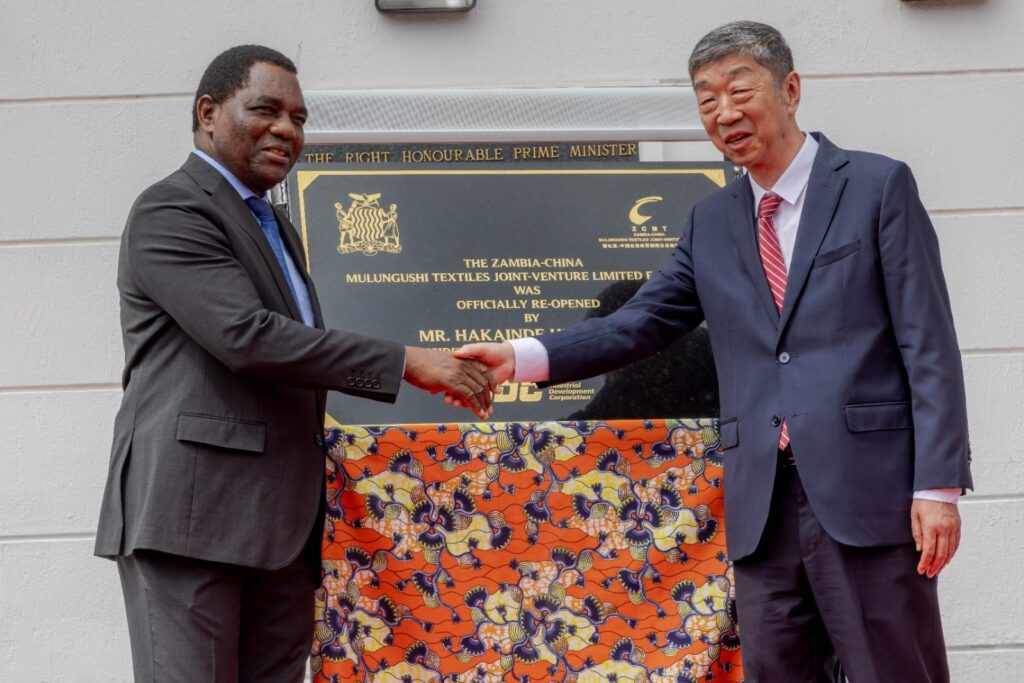
President Hakainde Hichilema has officially reopened the Zambia–China Mulungushi Textiles Plant, marking a significant milestone in Zambia’s industrialisation and economic diversification agenda.
Speaking during the launch in Kabwe, Minister of Commerce, Trade and Industry, Hon. Chipoka Mulenga, MP, described the occasion as “momentous,” saying the reopening is a direct outcome of deliberate policy direction and sustained leadership aimed at reviving key productive sectors.
He said that under President Hichilema’s leadership, the Ministry has continued to implement policies promoting a private sector-led economy anchored on value addition, industrialisation, and inclusive growth.
“This event signals the economic transformation of Kabwe, driven by a targeted industrial policy framework aligned to the Eighth National Development Plan and the National Industrial Policy,” the Minister said.
Mr Mulenga further thanked the President for his consistent leadership throughout the revitalisation process, which began three years ago. He noted that the project involved close collaboration between Zambia–China Mulungushi Textiles management, the Industrial Development Corporation (IDC), Chinese partners, and key ministries including Finance and Defence.
He said the reopening demonstrates government’s commitment to revitalising strategic industries and advancing economic diversification through value addition, adding that similar efforts are being pursued in the mining sector.
Unlike previous attempts, the Minister said the current relaunch is supported by a clear roadmap and substantial investment, including the replacement of obsolete machinery with modern equipment worth millions of United States dollars.
“Today, Government has done what previous administrations could not achieve. We have completely changed the narrative of Zambia–China Mulungushi Textiles, demonstrating the credibility of this reopening,” he said.
Mr Mulenga also stressed the importance of the textile sector in driving job creation and poverty reduction, noting its labour-intensive nature and extensive value chain opportunities.
The Ministry has reaffirmed its commitment to maintaining policy consistency, predictability, and transparency to support continued industrial growth.