
Strong Trade Figures Highlight Zambia’s Transition to Growth and Stability
Zambia is showing strong signs of transitioning from economic stabilization to investment-driven growth, according to the latest international trade figures for 2025.
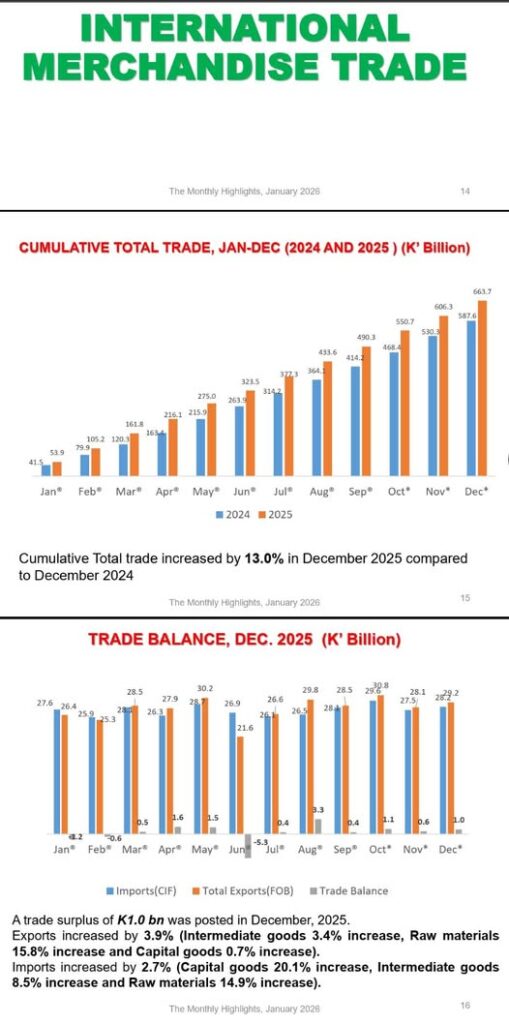
Data released by the Zambia Statistics Agency (#ZAMSTATS) indicate that total trade rose to K663.7 billion by December 2025, up from K587.6 billion in December 2024 – a 13 percent year-on-year increase. This reflects sustained growth in both exports and imports throughout the year.
December 2025 also saw Zambia record a trade surplus of K1 billion, reversing earlier deficits and signalling improved external balances. Total exports (FOB) grew by 3.9 percent compared to the same month in 2024, led by a 15.8 percent rise in raw materials and a 3.4 percent increase in intermediate goods. Capital goods exports also rose marginally by 0.7 percent.
Imports (CIF) increased by 2.7 percent, with capital goods surging by 20.1 percent, intermediate goods by 8.5 percent, and raw materials by 14.9 percent. The data suggest that imports are increasingly focused on investment and productive capacity rather than consumption, pointing to strengthening industrial activity and domestic value creation.
Reflecting on the data, Finance and National Planning Minister, Dr Situmbeko Musokotwane, said the trade performance demonstrates a move from stabilization to consolidation. “The economy is beginning to generate – and import – the machinery, intermediate goods, and raw materials needed to expand domestic value creation across mining, agriculture, manufacturing, and energy,” Dr Musokotwane noted.
Looking ahead, the structure of trade is expected to support investment-led growth while protecting external stability. The moderated pace of import growth is likely to ease pressure on reserves and the exchange rate, allowing monetary policy to remain focused on disinflation and fiscal policy to pivot towards growth-enhancing expenditure.
“For investors, producers, and households, these developments signal improving predictability. Trade performance is increasingly driven by a broad normalization of economic activity rather than episodic price movements,” Dr Musokotwane added.
If sustained, this trajectory could strengthen price stability, create jobs, and provide a solid foundation for inclusive and durable growth in 2026 and beyond.