2024 Tax Expenditure Report Strengthens Fiscal Transparency
The Government has released the 2024 Tax Expenditure Report, marking the second consecutive year that the Ministry of Finance and National Planning has published a comprehensive and systematic account of revenue forgone through tax incentives, exemptions and reliefs. Following the inaugural report covering 2023, released in December 2024, the latest publication signals a growing commitment to transparency and disciplined fiscal management.
The Tax Expenditure Report provides insight into how public resources are used through the tax system by identifying policy choices embedded in tax laws and estimating the revenue the State does not collect as a result. In doing so, it treats tax incentives as a form of public spending, subjecting them to the same standards of scrutiny, justification and review as direct budgetary expenditure.
At its core, the report answers three critical questions for citizens and businesses alike: which tax incentives exist, how much they cost the country, and whether they align with national development priorities. Publishing the report on a consistent, annual basis reinforces the message that tax expenditures are no longer hidden or peripheral, but a central component of Zambia’s public finance framework.
The report highlights that while tax incentives are often introduced to encourage investment, job creation and competitiveness, they carry real fiscal costs. Every kwacha forgone through the tax system reduces the resources available for essential services such as healthcare, education, infrastructure development, social protection and debt reduction. By quantifying these costs, the Government enables a clearer understanding of fiscal trade-offs and supports more informed policy decisions.
For citizens, the report serves as an important accountability tool, helping to explain why public resources are limited and how tax policy choices influence Government spending capacity. It encourages informed public debate on whether specific incentives deliver benefits that justify their cost.
Businesses and investors also stand to benefit from the increased clarity and predictability. Transparent disclosure of the scope and structure of tax incentives reduces uncertainty, limits discretion and supports fair competition, reinforcing confidence in Zambia’s rules-based investment environment.
Within Government, the report is designed to guide decision-making by allowing ministries and institutions to assess trends over time, evaluate the effectiveness of incentives and ground reform proposals in evidence. This strengthens coordination, prioritisation and fiscal sustainability in pursuit of inclusive growth.
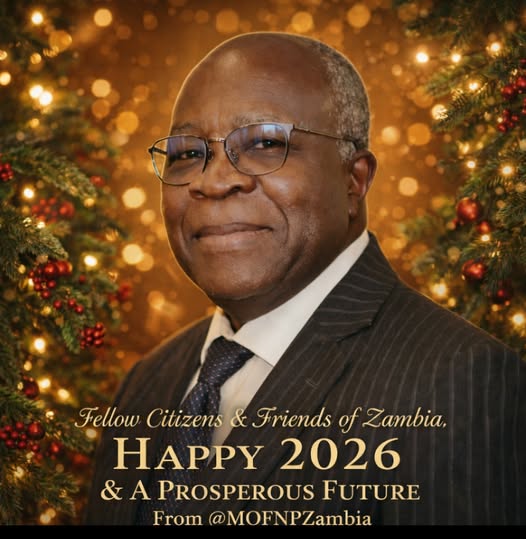
Reflecting on the publication, Minister of Finance and National Planning Dr Situmbeko Musokotwane, MP, noted that releasing the 2024 report following the 2023 edition represents more than routine disclosure. Together, the reports demonstrate a consolidation of transparency reforms and a measurable strengthening of Zambia’s fiscal governance framework.
Benchmarked against international standards, the report performs strongly under the IMF Fiscal Transparency Code and aligns closely with OECD best practice. Regular tax expenditure reporting, the Minister observed, is increasingly recognised by investors, credit-rating agencies and cooperating partners as a sign of institutional maturity and disciplined economic management.
As Zambia looks ahead to 2026, the Government has reaffirmed its commitment to open engagement, informed dialogue and responsible fiscal decision-making. Fiscal transparency, it emphasised, is a practical tool for better choices and better outcomes for households, businesses and communities.
The 2024 Tax Expenditure Report is available on the Ministry of Finance and National Planning website.