
African Girls Still at Risk as Child Marriage and FGM Laws Fail in Practice
Legal protections across Africa are failing to shield girls from child marriage and female genital mutilation (FGM), despite widespread bans, according to a new report by the African Committee of Experts on the Rights and Welfare of the Child (ACERWC), supported by Equality Now.
The Thematic Report on Harmful Practices Affecting Children in Africa, launched during the 47th Ordinary Session of the ACERWC in Maseru, reveals that weak enforcement, legal loopholes and limited access to justice continue to expose millions of girls to abuse.
Drawing on case studies from Chad, Cameroon, Ethiopia, Egypt, Malawi, Mali, Nigeria, Somalia, Sudan and Zimbabwe, the report finds that harmful practices remain deeply entrenched, even where legal frameworks have been strengthened.
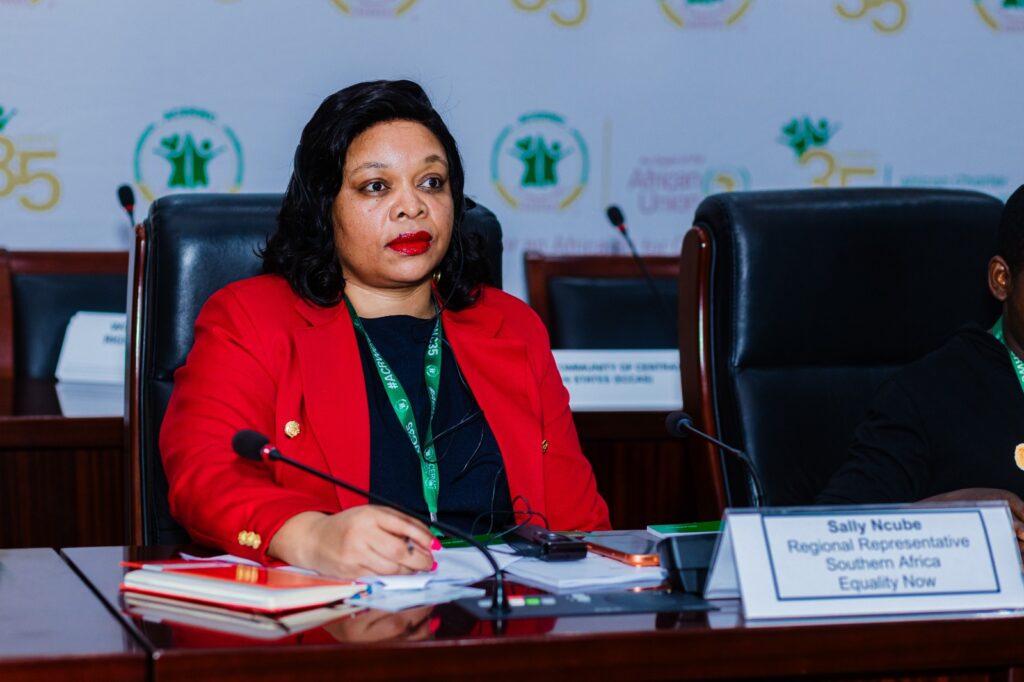
Sally Ncube, Equality Now’s Regional Representative for Southern Africa, said the issue extends beyond legislation. “Failure of implementation and enforcement of the law to protect children from harmful practices is not a failure of the law alone. It is a failure of the ecosystem that should make the law protect and support children,” she said.
The report highlights how climate change, conflict and economic instability are intensifying drivers of child marriage and FGM. In rural and conflict-affected areas, weakened systems and limited access to services heighten girls’ vulnerability.
Economic hardship remains a key factor. Families facing poverty may resort to early marriage as a coping mechanism, often under the misconception that it offers protection. However, the report stresses that child marriage increases risks of domestic violence, early pregnancy, school drop-out and long-term poverty.
Environmental shocks are also contributing. In parts of East Africa, drought has disrupted schooling and livelihoods, with evidence showing that reduced rainfall correlates with increased child marriage rates. In some regions, FGM is being performed at younger ages due to rising economic pressures linked to “marriageability”.
Less than half of African countries enforce a minimum marriage age of 18 without exceptions. In many cases, parental consent, judicial approval, or customary and religious laws allow child marriage to persist.
Similarly, gaps remain in legislation addressing FGM. Of the 27 African countries with prevalence data, four including Liberia, Mali, Sierra Leone and Somalia still lack specific national laws banning the practice.
Even where laws exist, enforcement is inconsistent. In countries such as Nigeria and Egypt, challenges include legal contradictions, weak implementation and the continued medicalisation of FGM. Survivors often struggle to access justice and support services, particularly in rural areas.
The report also warns of setbacks. In The Gambia, debates around repealing the FGM ban have resurfaced, while in Mali, proposed anti-FGM provisions were removed from the 2024 Penal Code following resistance from religious groups.
Despite these concerns, the report highlights examples of progress. In Malawi, traditional leaders such as Chief Theresa Kachindamoto have annulled thousands of child marriages, demonstrating the impact of community-led interventions.
In Zimbabwe, a landmark Constitutional Court ruling prompted reforms to the 2022 Marriage Act, setting the legal marriage age at 18 without exception. Meanwhile, Ethiopia has used mobile technology to raise awareness about FGM among out-of-school girls during crises such as the COVID-19 pandemic.
The ACERWC is urging African governments to close legal gaps, harmonise statutory, customary and religious laws, and ensure full implementation of child protection frameworks. It also calls for stronger data systems, increased funding, and coordinated efforts between governments, civil society and communities.
Hon. Hermine Kembo Takam Gatsing, Special Rapporteur on Child Marriage and Other Harmful Practices, emphasised that progress is possible.
“Change is already taking place. Progress is achievable when legislation is complemented by implementation and coordination among relevant stakeholders and promotion within communities,” she said.
The report underscores that addressing harmful practices requires tackling underlying social norms, empowering girls through education, and ensuring survivors have access to justice and support.
Ncube concluded with a stark warning: “The law that cannot protect a girl in her own home is not a law; it is a broken promise. Millions of girls across Africa are waiting for the law to find them, not for them to find the law.”