
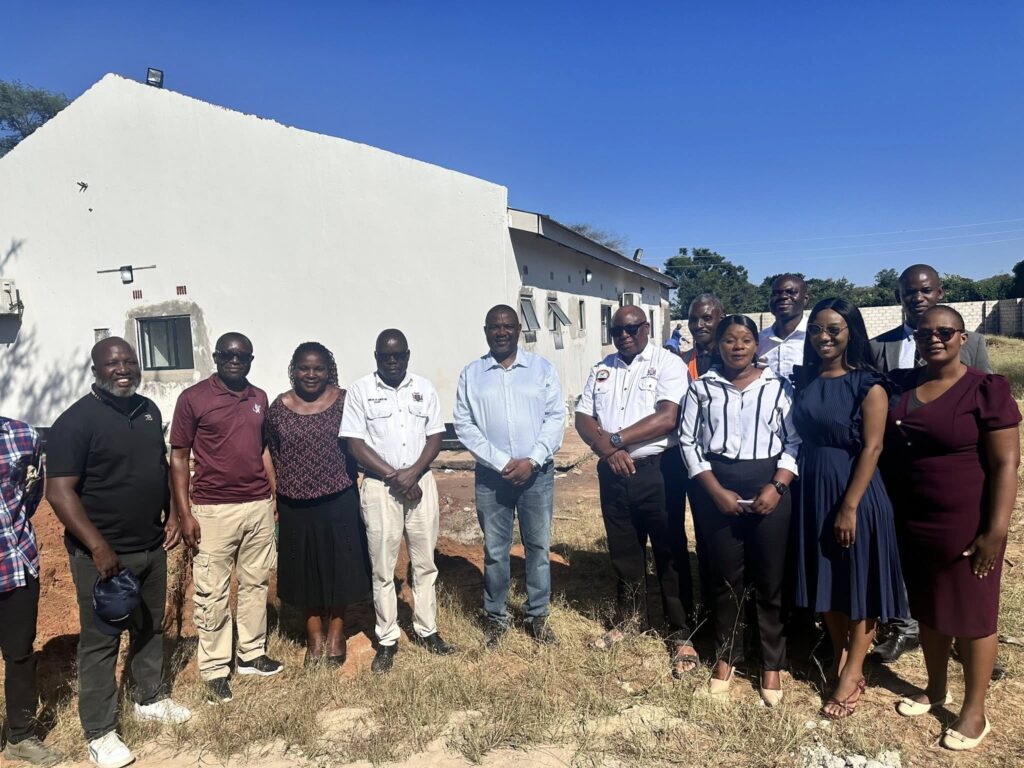
Livingstone Phytosanitary Laboratory Nears Completion
The Ministry of Agriculture has expressed satisfaction with the progress made on the construction of the Plant Quarantine and Phytosanitary Service (PQPS) laboratory in Livingstone, describing it as a key development in strengthening Zambia’s agricultural value chain.
Permanent Secretary for Technical Services, Mr John Mulongoti, said the facility is now more than 80 per cent complete and is expected to be handed over by the end of next month, with only final works such as paving and installation of laboratory equipment remaining.
Speaking during an inspection of the site, Mr Mulongoti noted that the project, supported by cooperating partners including TradeMark, will significantly enhance service delivery to farmers and traders in the region.
He explained that once operational, the laboratory will serve farming communities from Livingstone through Zimba to Kalomo, reducing the need for farmers to travel long distances to access laboratory services.
Mr Mulongoti added that the Livingstone facility forms part of a wider government programme to decentralise phytosanitary services across the country.
He revealed that a similar laboratory in Kapiri Mposhi is progressing well, while others have already been completed at key entry points such as Simon Mwansa Kapwepwe International Airport in Ndola and other strategic locations.
Mr Mulongoti said the expansion of laboratory infrastructure will reduce turnaround times for testing, with results expected within 48 hours, thereby improving efficiency and convenience for farmers and agribusiness operators.
The Permanent Secretary emphasised that the laboratory will play a critical role in enhancing the competitiveness of Zambia’s agricultural products by ensuring compliance with required phytosanitary standards in both local and international markets.
Meanwhile, PQPS Director, Dr Kenneth Msiska, said the facility comes at a time when Zambia is expanding access to international markets where certification is essential.
Dr Msiska explained that the laboratory will conduct a wide range of tests, including molecular diagnostics and traditional analysis of soil and plant samples. He added that the facility will also feature an imaging section to support detailed identification of pests and crop diseases.
He further noted that inspectors have continued to receive specialised training to ensure compliance with international standards, particularly during audits by trading partners such as New Zealand, China and the European Union.
Dr Msiska said decentralising laboratory services will benefit not only exporters but also small-scale farmers, traders and plant nursery operators, who will now have easier access to testing and certification services.
He stressed that certification remains critical for the movement of agricultural commodities across borders, including into neighbouring countries such as Botswana, where strict phytosanitary requirements apply.
Dr Msiska encouraged stakeholders to utilise the facility by submitting samples for testing to detect harmful organisms such as fungi, bacteria and nematodes.
The PQPS, a department under the Ministry of Agriculture and Zambia’s recognised National Plant Protection Organisation, plays a key role in preventing the spread of plant pests while facilitating safe trade in agricultural products.