Asia’s Economic Resilience Tested by Energy Shock, IMF Warns
Asia’s economic resilience is facing renewed pressure from an escalating global energy shock triggered by conflict in the Middle East, according to a new assessment by the International Monetary Fund (IMF).
Despite entering 2026 on a strong footing, the region is now contending with rising inflation, weakening external balances, and reduced policy flexibility, underscoring its heavy dependence on imported oil and gas.
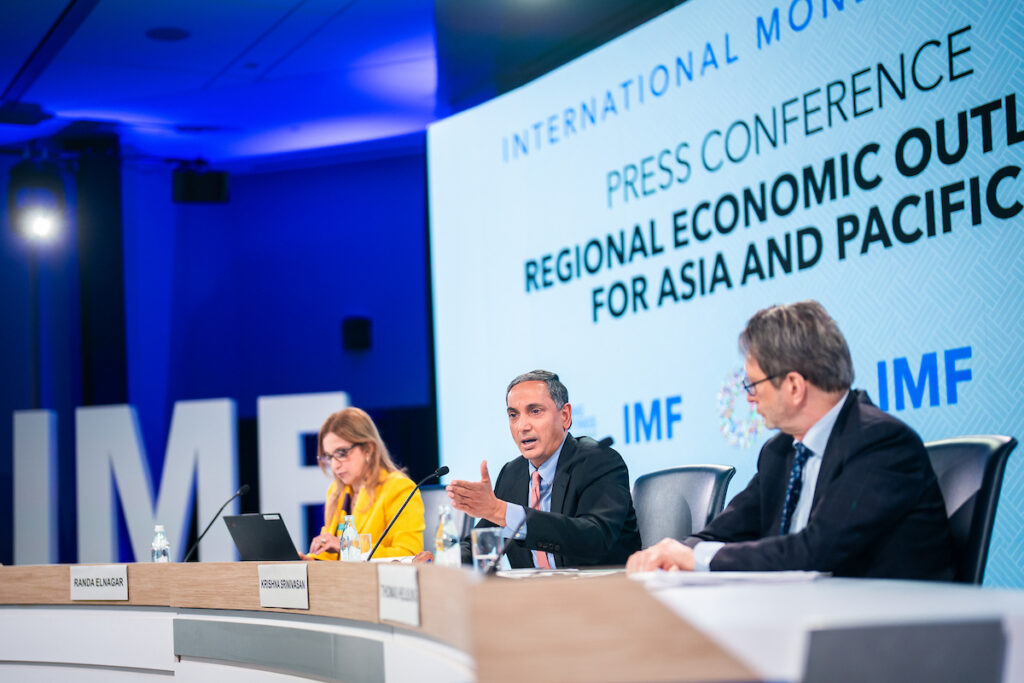
IMF economists Andrea Pescatori and Krishna Srinivasan noted that while Asia is expected to remain the world’s primary engine of growth, expansion will moderate from 5 percent last year to 4.4 percent in 2026 and 4.2 percent in 2027, assuming the energy shock remains temporary.
They cautioned that prolonged disruption could significantly worsen the outlook, with cumulative growth losses of up to 2 percent by 2027 under more severe scenarios.
“Asia entered the year with strong momentum, but the energy shock is testing that resilience by raising inflation and narrowing policy space,” the economists observed.
Inflation across the region is projected to rise to 2.6 percent this year, up from 1.4 percent in 2025, driven by higher energy costs and supply chain pressures. Economies such as China and India are expected to account for around 70 percent of regional growth, although even these major drivers are not immune to the slowdown.
The IMF report highlights Asia’s significant exposure to global energy markets, noting that the region consumes about 38 percent of the world’s oil and 24 percent of its natural gas, while also accounting for a large share of global refining capacity. Dependence on imports, particularly through critical routes such as the Strait of Hormuz, has intensified vulnerability to supply disruptions.
The energy shock is also transmitting through multiple channels, including higher production costs, reduced household purchasing power, currency pressures, and increased financial market volatility.
In response, the IMF urged policymakers to prioritise targeted support for vulnerable groups rather than broad-based subsidies, which it warned could be costly and difficult to reverse. It also recommended allowing exchange rates to adjust flexibly, maintaining credible monetary policy, and anchoring inflation expectations.
“Exchange-rate flexibility should remain the first line of defence,” the report stated, adding that fiscal measures should be temporary, well-targeted, and supported by clear consolidation plans where necessary.
The Fund further called for accelerated structural reforms, including stronger social safety nets, investment in energy efficiency, improved labour market policies, and deeper regional integration to strengthen long-term resilience.
It also highlighted the role of emerging technologies such as artificial intelligence, noting that while they could widen inequality if poorly managed, they also present opportunities to boost productivity and inclusion.
The IMF concluded that Asia’s ability to navigate the current shock will depend on a balanced policy mix of short-term stabilisation and long-term reforms aimed at reducing vulnerability to external energy shocks.