SADC and World Bank Support Energy Sector with $292 Million Zambia Funding
The Southern African Development Community (SADC) and the World Bank have reaffirmed their commitment to deepening cooperation aimed at accelerating regional integration and economic transformation in Southern Africa.
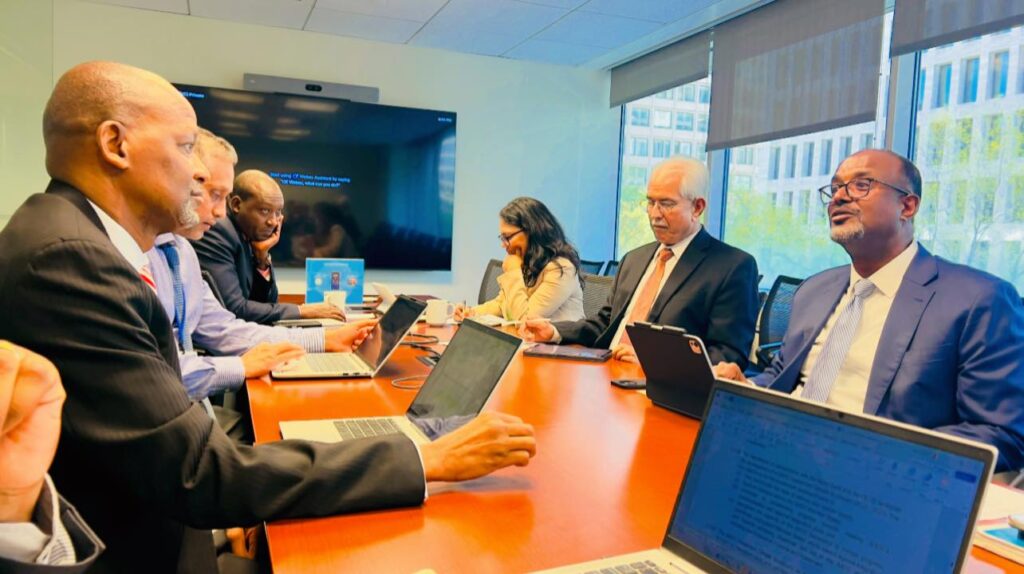
The renewed partnership was highlighted during a high-level meeting held on 14 April 2026 in Washington, D.C., where both parties reviewed progress on ongoing programmes and advanced discussions on key priority sectors, including energy, statistics and investment climate reforms.
World Bank Regional Programmes Director for Africa Nathan M. Belete welcomed SADC Executive Secretary Elias M. Magosi and his delegation, reaffirming the Bank’s support for regional development initiatives.
Mr Magosi expressed appreciation for the Bank’s continued partnership and support towards advancing SADC’s regional integration agenda.
Currently, the SADC Secretariat is managing a programme portfolio valued at over 31.5 million US dollars across sectors such as statistics, climate resilience and groundwater management, alongside regional energy initiatives.
Among the key projects discussed was the SADC Regional Energy Transmission, Trade and Decarbonisation Programme, which has received significant backing from the World Bank. This includes 292 million US dollars committed for the Zambian segment of the Zambia–Tanzania Interconnector, as well as 12 million US dollars in technical assistance to support regional energy institutions.
Mr Magosi called for the swift conclusion of negotiations for the next phase of the programme, which will focus on financing the Angola–Namibia Interconnector, and emphasised the importance of future projects such as the Malawi–Zambia Transmission Interconnector in strengthening regional energy security.
The meeting also noted progress on the North–South Integrated Economic Corridor, with five member states having signed a memorandum of understanding to establish a Corridor Management Institution, a key step towards coordinated regional infrastructure development.
In addition, the World Bank’s Mid-Term Review of the SADC Regional Statistics Project confirmed steady implementation progress, with both parties stressing the need for continued support beyond 2028 to strengthen regional data systems.