EIB Backs Zambia’s Lobito Corridor Expansion
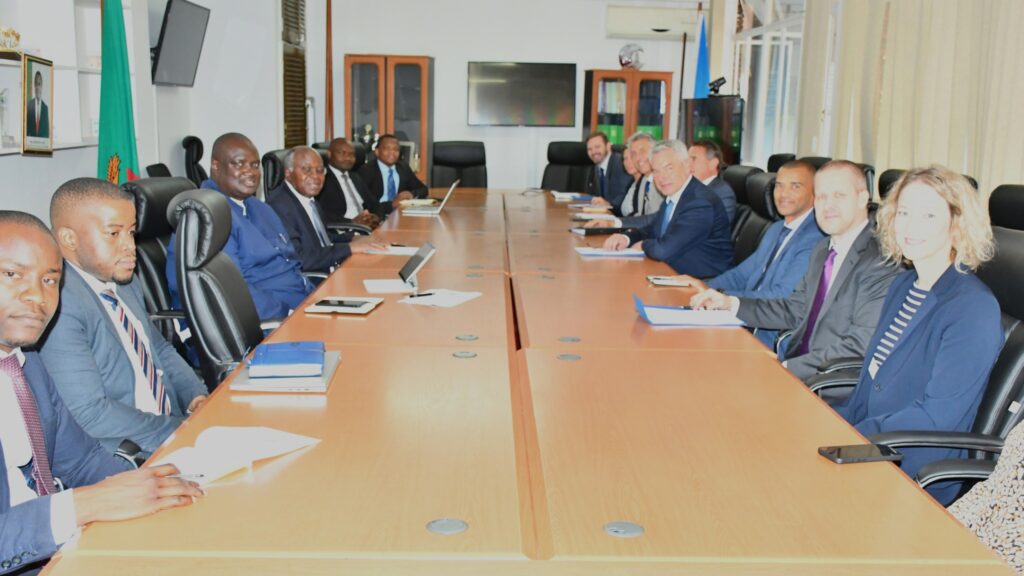
Zambia has stepped up its engagement with multilateral financiers as Finance and National Planning Minister, Dr Situmbeko Musokotwane, held a bilateral meeting with the Vice President of the European Investment Bank (EIB), Mr Karl Nehammer, ahead of the Zambia–EU Lobito Corridor Business Forum set for 13–14 November in Lusaka.
The high-level talks focused on unlocking investment along the Lobito Corridor, a strategic regional transport link connecting Zambia to the Atlantic Ocean through Angola and the Democratic Republic of Congo. The project, central to Zambia’s connectivity and industrialisation agenda, is expected to boost cargo volumes, enhance trade efficiency and accelerate economic diversification.
Dr Musokotwane noted that transforming the corridor into a modern trade artery will support mining, agro-processing and manufacturing activities, ultimately expanding Zambia’s export capacity.
“The Lobito Corridor presents major investment opportunities to stimulate trade and attract private capital. Our aim is to build an efficient route that creates value for citizens and investors while strengthening regional integration,” he said.
The Minister outlined three priority areas for investment: expanding mining output to increase freight volume; promoting value addition to improve industrial competitiveness; and supporting agriculture and agro-processing to diversify exports. He reaffirmed the Government’s commitment to Public–Private Partnership models as a means of raising private financing for large-scale infrastructure.
Mr Nehammer welcomed Zambia’s reform momentum, stressing that the EIB remains fully aligned with the country’s development goals. “The Bank stands ready to deepen cooperation with Zambia and its regional partners to unlock the full economic potential of the Lobito Corridor,” he said.
Zambia currently holds active EIB loans amounting to USD 536.4 million, with major projects covering transport, energy transmission, and water and sanitation systems. These include the Great North Road upgrade, Lusaka Power Transmission and Distribution Project, and the Lusaka Sanitation Project. The portfolio reflects continued confidence in Zambia’s macroeconomic reforms and debt management efforts.
Authorities say the renewed collaboration with the EIB sends a strong signal to international markets about Zambia’s policy stability and commitment to investment continuity. As the country transitions from economic stabilisation to sustained growth, partnerships with institutions such as the EIB will be critical in expanding renewable energy capacity, upgrading infrastructure, and promoting inclusive development.
The Government has reaffirmed its readiness to implement bankable projects under the Lobito Corridor, with feasibility studies currently under way to identify financing gaps and priority interventions. Officials say the corridor will not only improve Zambia’s logistics efficiency but also position the country as a regional hub for trade and industrial growth.