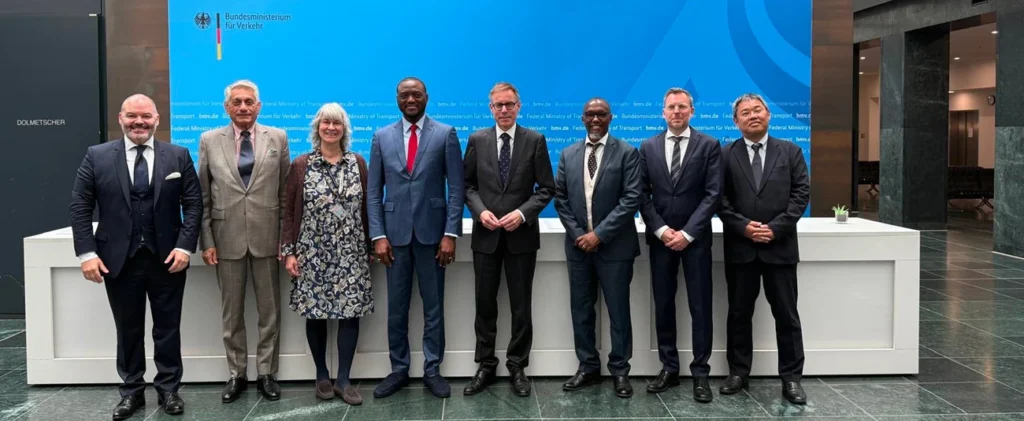
Germany and AfDB Deepen Cooperation on Rail, Energy and Transport Corridors in Africa
The African Development Bank Group has strengthened its strategic partnership with DB Engineering & Consulting to advance modern, sustainable railway infrastructure across Africa.
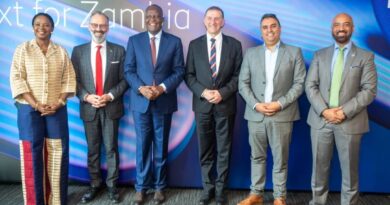
The collaboration follows a high-level mission to Germany in late 2025, led by Mike Salawou, Director for Infrastructure and Urban Development at the Bank. The delegation engaged key German institutions to explore innovative transport systems, digital connectivity, and skills development for Africa’s rapidly evolving rail sector.
Central to the visit was the signing of a Letter of Intent between the AfDB and DB Engineering & Consulting. The agreement establishes a framework for a feasibility study into the creation of an African Rail Competence Centre. The proposed centre is expected to serve as a continental hub for technical training, innovation, and knowledge exchange, supporting the expansion and modernisation of rail networks.
During the mission, the delegation visited the DB Railway Academy in Potsdam, a globally recognised training institution that has equipped hundreds of thousands of professionals with specialised railway expertise. Discussions underscored the importance of STEM-focused education and local capacity building in sustaining Africa’s infrastructure ambitions.
Speaking on the initiative, Salawou described the partnership as a critical step towards building a resilient and skilled railway ecosystem across Africa. He noted that leveraging German expertise would help accelerate a continent-wide skills revolution while strengthening sustainable transport systems.
The delegation also drew lessons from Germany’s integrated transport model, where rail, bus, tram, and cycling systems operate seamlessly. Such multimodal networks, combined with transit-oriented development, have helped reduce reliance on private vehicles while promoting compact, economically vibrant urban centres.
Beyond rail development, discussions expanded to broader economic cooperation. The AfDB engaged Germany’s Federal Ministry for Economic Cooperation and Development, which reaffirmed its support for capacity-building initiatives through Deutsche Gesellschaft für Internationale Zusammenarbeit.
Further engagements with institutions including the Federal Ministry of Transport, the Federal Ministry for Economic Affairs and Energy, and KfW IPEX-Bank focused on advancing regional corridors, electric vehicle supply chains, and strengthening small and medium-sized enterprises involved in infrastructure delivery.
Key projects discussed included the Lobito Corridor, the Abidjan–Lagos Corridor Highway, the Uganda–Kenya Standard Gauge Railway, and Ethiopia’s Bishoftu International Airport, flagship initiatives aimed at boosting regional integration and economic growth.
The delegation also visited the EUREF Campus in Berlin, where they explored cutting-edge approaches to clean energy, smart mobility, and sustainable urban development.
Officials from DB Engineering & Consulting emphasised that long-term success in railway development depends not only on infrastructure investment but also on building local expertise. They expressed readiness to co-develop training programmes that equip African professionals with the technical skills needed to design, operate, and maintain modern rail systems.
Germany’s development partners reiterated their commitment to aligning infrastructure growth with climate goals, while fostering investment opportunities and job creation across the continent.
The strengthened AfDB–Germany partnership signals a renewed push towards building efficient, climate-resilient, and interconnected railway systems, positioning rail as a cornerstone of Africa’s future economic transformation.