CEC Commissions Africa’s 3rd Largest Solar Plant: A $125.8m Shift Toward Zambia’s Energy Independence
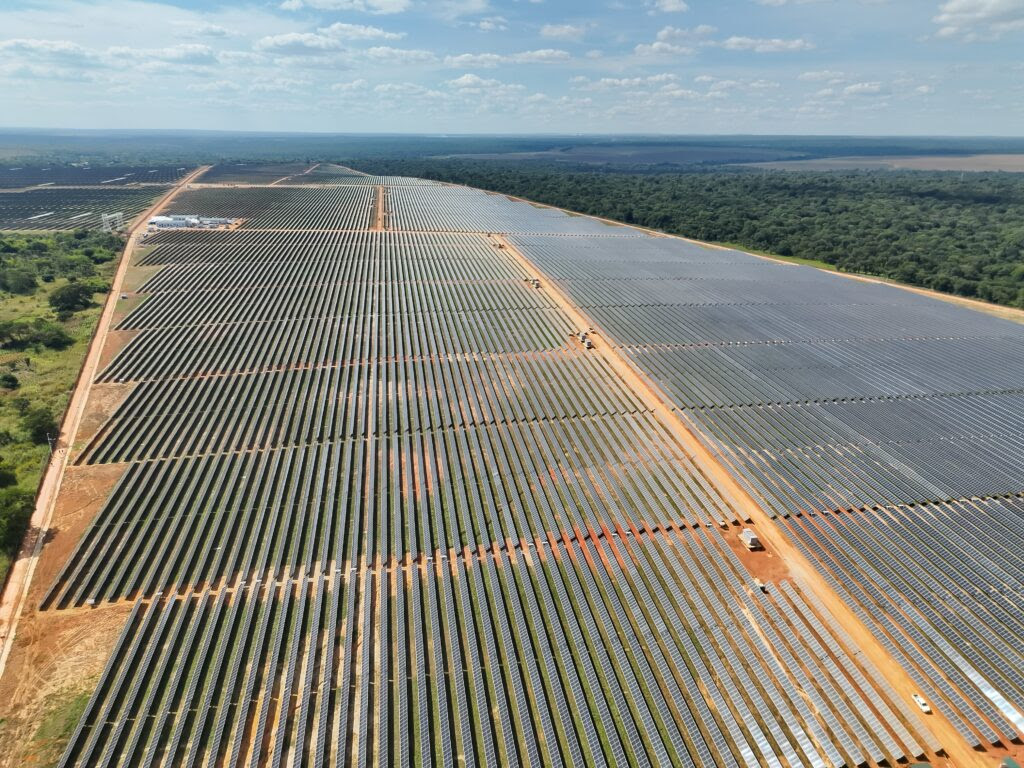
The Copperbelt Energy Corporation (CEC) Group has commissioned the 136MW Itimpi II Solar Photovoltaic (PV) Power Plant in Kitwe, a development that significantly expands its renewable energy portfolio and strengthens Zambia’s drive towards a diversified energy mix.
The facility increases CEC’s total solar generation capacity from 94MW to 230MW, making it the country’s largest operational solar plant and the third largest in sub-Saharan Africa. The project was completed within 14 months at a cost of US$125.8 million, financed through CEC’s US$200 million Green Bond issuance.
Beyond its scale, the project is being viewed as a structural shift in how Zambia can finance and develop large-scale energy infrastructure. By successfully deploying capital raised locally through green financing instruments, CEC has demonstrated the growing capacity of domestic financial markets to support major national development projects without relying on sovereign debt.
Itimpi II is also expected to deliver significant environmental benefits, with projections indicating it will offset approximately 101 metric tonnes of carbon dioxide annually. Economically, the project created 2,568 jobs, with more than 95% filled by Zambians.
In addition, 15 local companies and eight local consultants, including Copperbelt University, were engaged during construction. Around 1,000 workers also received technical training, strengthening local expertise in renewable energy systems.
At the commissioning ceremony held on Thursday, 30 April 2026, President Hakainde Hichilema underscored the strategic importance of the project within Zambia’s broader energy security agenda, particularly the need to reduce reliance on hydropower.
“This is a great day and another very important project that contributes directly to our objective of increasing electricity generation in Zambia,” President Hichilema said. He added that diversification of energy sources was now essential for economic growth and export competitiveness.
“You have our full support, not partial support, but full support,” he told private sector developers, reaffirming government backing for increased private investment in the energy sector.
CEC Board Chairperson London Mwafulilwa described the project as a strong statement of confidence in Zambia’s development trajectory. He said the investment demonstrated that the country was “ready, capable, and committed to driving progress through investment, partnership, and decisive action,” adding that the project’s value extended beyond infrastructure to long-term national impact.
CEC Chief Executive Officer Owen Silavwe framed the development as a milestone in national empowerment and skills development.
“Thousands of Zambians contributed their skills, effort, and dedication to bring this project to life, turning ambition into a landmark of national progress,” he said. He further noted that Itimpi II forms part of a broader strategy to expand renewable energy capacity and ensure sustainable power supply for long-term economic development.
Financial sector stakeholders also highlighted the broader implications of the project. Securities and Exchange Commission Chief Executive Officer Philip Chitalu observed that CEC exceeded a national capital markets target by raising US$156 million, describing it as evidence of the strength of Zambia’s domestic financing ecosystem.
Stanbic Bank Zambia Chief Executive Officer Mwindwa Siakalima praised CEC’s role in enhancing national power supply stability, while Public Private Dialogue Forum Acting Deputy Director General Jacquiline Chishimba commended the project for aligning with national priorities on job creation, wealth generation and skills transfer.
Looking ahead, CEC has outlined ambitions to expand its solar capacity beyond 500MW by 2027. The company also intends to allocate remaining Green Bond proceeds towards Battery Energy Storage Systems (BESS), a move aimed at improving grid stability and enabling solar energy to become a more reliable, dispatchable power source.