
Three Pillars That Will Determine the Future of Blue Hydrogen Unveiled
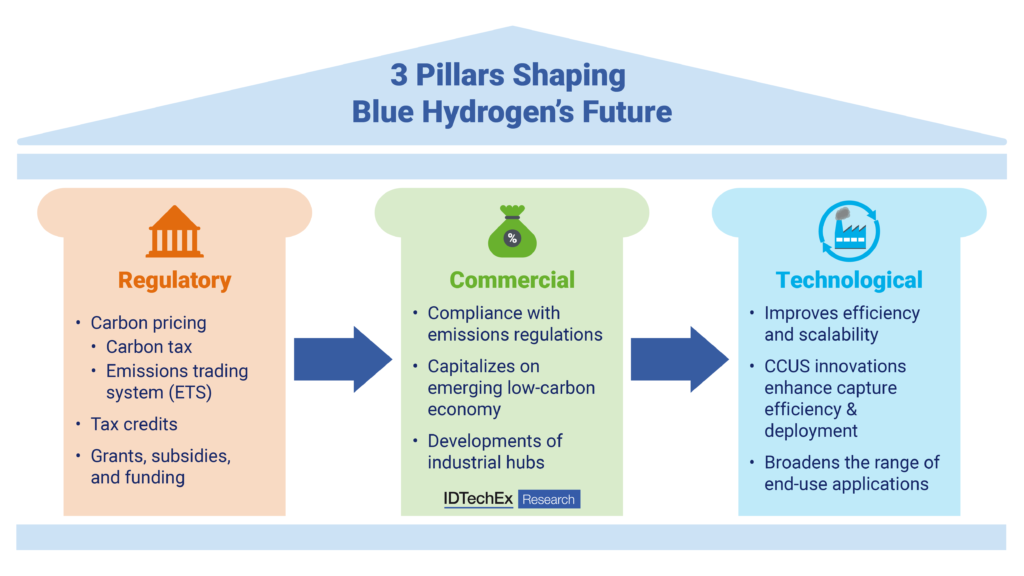
A new report by IDTechEx has identified regulation, commercial investment, and technological innovation as the three essential pillars required to scale blue hydrogen and support the transition to a low-carbon economy.
In its latest publication, “Blue Hydrogen Production and Markets 2026–2036”, the firm highlights blue hydrogen as a lower-carbon alternative to conventional grey hydrogen, produced using natural gas alongside carbon capture, utilisation and storage (CCUS) technologies.
According to the report, while blue hydrogen offers a practical transitional solution towards cleaner energy systems, its widespread adoption remains dependent on strong policy support. Regulatory frameworks, including carbon pricing mechanisms and tax incentives, are seen as critical in addressing the higher production costs associated with carbon capture technologies.
The study points to initiatives such as the European Union Emissions Trading System as examples of how carbon pricing can help create viable markets for low-carbon energy solutions. Governments are also increasingly introducing tax credits, grants, and subsidies to encourage investment in hydrogen infrastructure and production.
Beyond policy, the report underscores the importance of private sector participation in driving real-world deployment. Companies are leveraging opportunities in emerging low-carbon markets, particularly by integrating CCUS into existing hydrogen production facilities. Industrial hubs, often developed through public-private partnerships, are also playing a key role in reducing costs and improving efficiency.
Technological innovation remains the third pillar, with advancements in hydrogen production methods and carbon capture systems improving efficiency and reducing emissions. Developments such as advanced catalysts, improved reformer technologies, and modular CCUS systems are helping to make blue hydrogen more scalable and commercially viable.
The report further notes that innovation is expanding the potential applications of blue hydrogen across industries, including steel production, cement manufacturing, power generation, and fuel technologies, thereby increasing demand and market growth.
Looking ahead, IDTechEx emphasises that closer alignment between governments, industry players, and technology developers will be essential to unlocking the full potential of blue hydrogen. While the long-term goal is for the sector to become self-sustaining, the report concludes that strong regulatory support remains crucial in the near term.
As countries seek to balance energy security with climate commitments, blue hydrogen is expected to play an increasingly important role in bridging the gap between fossil fuels and fully renewable energy systems.