Africa Suffers US$8.5 Billion Climate Damage in One Year
Southern Province Minister Credo Nanjuwa has warned that climate change-induced loss and damage is “wrecking economies across Africa,” as Zambia hosts a key international meeting on climate financing in Livingstone.
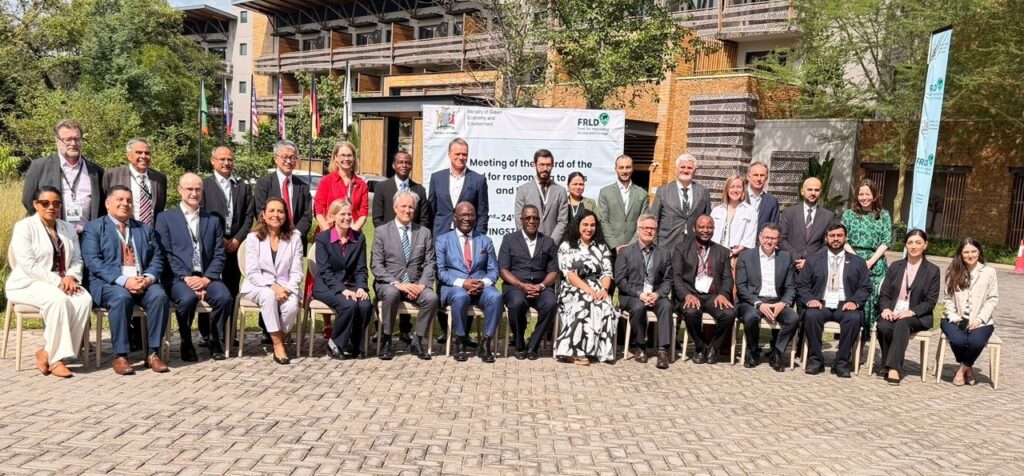
Speaking during the official opening of the Eighth Board for the Fund for Responding to Loss and Damage at the Radisson Blu Mosi-oa-Tunya, Nanjuwa said Zambia continues to face severe impacts from floods, droughts and other climate-related disasters, while resources for recovery remain inadequate.
“Loss and damage arising from the impacts of climate change is wrecking economies across Africa. Zambia has not been spared,” he said.
The meeting has drawn international stakeholders to explore urgent financing solutions for vulnerable countries. Nanjuwa cited African Development Bank data showing that climate change is already reducing Africa’s per capita economic growth by between 5 and 15 per cent, with projections indicating a possible 34 per cent decline in GDP per capita by 2050.
He further noted that weather- and water-related hazards caused more than US$8.5 billion in economic damage across Africa in 2022, while crop and livestock losses in the Sahel and Horn of Africa between 2000 and 2022 were estimated at US$11.5 billion.
The human impact remains severe, with over 110 million people affected by climate hazards across the continent in 2022, resulting in more than 5,000 deaths. Projections also suggest that sub-Saharan Africa could record up to 86 million internal climate migrants by 2050.
Despite the growing scale of the crisis, Nanjuwa said global financial commitments remain insufficient, with less than US$800 million pledged to the fund against needs running into hundreds of billions of dollars.
In Zambia, the cost of climate-related loss and damage following the 2023/2024 rainy season was estimated at US$3.5 billion. Over the past three decades, floods and droughts have cost the country more than US$13.8 billion, with projections suggesting climate change could reduce Zambia’s GDP by about 6 per cent by 2050.
Key sectors continue to face mounting pressure. The agriculture sector, central to livelihoods and food security, experiences crop yield reductions of between 30 and 40 per cent during drought periods.
Meanwhile, Zambia’s reliance on hydropower, which accounts for over 80 per cent of electricity generation, leaves the energy sector vulnerable to prolonged dry spells.
Flooding has also caused widespread infrastructure damage. The 2019 floods damaged more than 500 kilometres of roads and several bridges, with repair costs estimated at 0.2 per cent of GDP.
More recently, heavy rains during the 2025/2026 season displaced communities and destroyed homes in Eastern Province, affecting over 2,000 people.
Nanjuwa stressed that addressing loss and damage requires both immediate humanitarian interventions and long-term resilience measures. He called for timely, accessible and adequately scaled financial support for countries such as Zambia.
“Countries such as Zambia need to recover in the short term in order to minimise disruption to livelihoods and economic activities,” he said.
Also addressing the meeting, Executive Director of the Fund for Responding to Loss and Damage, Ibrahima Cheikh Diong, commended Zambia’s leadership and underscored the urgency of global action.
He praised the country’s commitment to advancing climate financing discussions and expressed solidarity with communities affected by extreme weather events.
“The communities that have been affected… it is indeed a reminder of the sense of urgency for us to take action,” he said.
Diong noted that expectations remain high following developments at COP30, where calls for funding proposals were launched, stressing the need to ensure that financial resources reach those most in need.
“The expectation is for us to deliver so that money gets where it’s needed,” he said.