Africa Can Raise $469.4 Billion a Year with Better Tax Systems, AfDB Reports
African countries could significantly boost development financing by strengthening domestic resource mobilisation (DRM), a senior official from the African Development Bank Group has said.
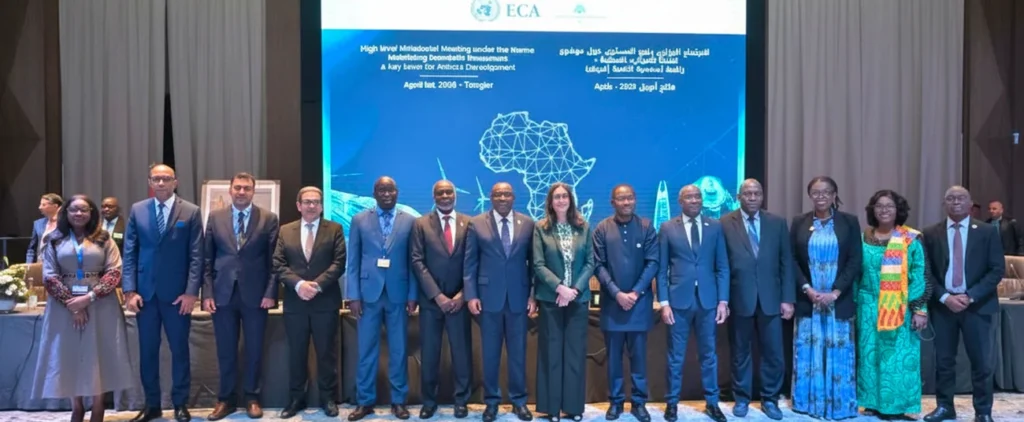
Speaking at the Conference of African Ministers of Finance, Planning and Economic Development (COM 58), the Bank’s Chief Economist, Kevin Chika Urama, described DRM as a critical pillar for sustainable development, resilience and economic sovereignty.
“Domestic resource mobilisation is not merely a fiscal issue; it is a foundational enabler of development,” Prof Urama said during a high-level ministerial session in Tangier.
He noted that despite recent progress, Africa’s domestic revenue levels remain low, averaging below 20 per cent of GDP, with tax revenues estimated at 18.4 per cent in 2024. To meet development goals, he said, the continent must raise its median tax-to-GDP ratio to at least 27 per cent.
According to the Bank’s estimates, Africa could mobilise an additional US$469.4 billion annually between 2025 and 2029 through improved tax systems, stronger enforcement and increased digitalisation.
Prof Urama highlighted that technology-driven reforms, including digital tax platforms, interoperable data systems and artificial intelligence could help close compliance gaps and reduce revenue leakages.
He also stressed that effective utilisation of mobilised resources is equally important, noting that public trust depends on governments delivering visible development outcomes through infrastructure and services.
“DRM works better where the social contract between the state and citizens is effective,” he said.
However, he acknowledged persistent challenges across the continent, including narrow tax bases, high levels of informality, weak enforcement capacity, complex tax systems and exposure to illicit financial flows.
The AfDB has been supporting DRM reforms across the continent, with 31 active programmes in 22 countries aimed at improving tax collection, strengthening institutions and reducing financial leakages.
Prof Urama said successful reforms typically combine policy changes, digitalisation and capacity building, supported by strong coordination between tax authorities, customs agencies and treasuries.
He urged African finance ministers to adopt practical, sequenced reforms, including expanding tax registration, simplifying procedures, accelerating e-filing and e-payments, and improving transparency in tax exemptions.
In the longer term, he called for broader tax policy reforms, stronger institutions and integrated digital systems to build more efficient and equitable revenue frameworks.
The AfDB also continues to work with partners such as the International Monetary Fund and the World Bank, as well as regional bodies, to strengthen tax transparency and combat illicit financial flows.
Prof Urama further noted that Africa loses over US$587 billion annually due to financial leakages, including corruption and unproductive investments, highlighting the urgency of reforms.
He concluded by urging governments to translate revenue gains into tangible development outcomes that improve citizens’ lives.
“With the right combination of technology, stronger institutions and transparent systems, rapid and meaningful progress is within reach,” he said.