Zambians Reassured as Gov’t Outlines Measures to Stabilise Electricity Supply
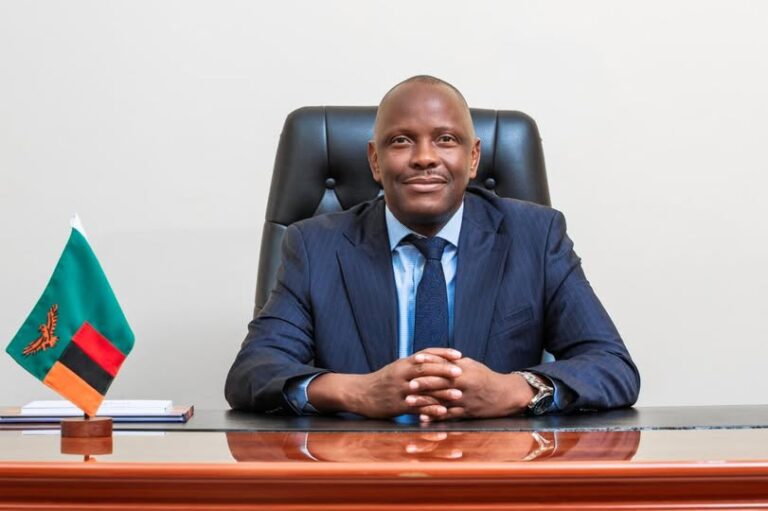
The Government has reaffirmed its commitment to stabilising electricity supply and securing Zambia’s long-term energy future, as the Minister of Energy, Hon Makozo Chikote, MP, delivered a ministerial statement to Parliament on the country’s electricity situation.
Presenting the statement, Hon Chikote said the New Dawn Government, under President Hakainde Hichilema, has prioritised decisive and coordinated measures to safeguard energy security.
He outlined three key policy objectives: stabilising power supply for households and industry, diversifying the national energy mix, and achieving universal access to clean and reliable electricity by 2030.
The Minister reported that Zambia’s installed electricity generation capacity currently stands at 3,880 megawatts (MW), with 3,168 MW generated by ZESCO Limited and 712 MW contributed by independent power producers. However, due to hydrological and operational constraints, available domestic generation is presently 1,635 MW.
To bridge the shortfall, Zambia is importing 511 MW of electricity, bringing total available supply to 1,971 MW, against a national demand of approximately 2,400 MW. The country continues to honour electricity export commitments of 175 MW, in line with existing contracts.
Hon Chikote said the supply deficit is being managed through regional power imports and is expected to narrow as additional generation capacity comes on stream. He highlighted ongoing solar power projects and planned thermal power plants as key interventions to improve system resilience and reduce reliance on imports.
On hydrological conditions, the Minister said the 2025/2026 rainy season has recorded normal to above-normal rainfall across much of the country. This has led to rising water levels in major reservoirs and increased water allocations for power generation.
ZESCO Limited has been allocated 15 billion cubic metres of water for power generation at Kariba North Bank Power Station in 2026, up from 14 billion cubic metres in 2025 and 8 billion cubic metres in 2024. This allocation is expected to support average generation of about 400 MW at the station throughout the year.
Looking ahead, the Government plans to commission new solar power projects and clean thermal plants in 2026, with electricity supply hours projected to be maintained at 24 hours per day.
On electricity tariffs, Hon Chikote explained that the Energy Regulation Board (ERB) reinstated the multi-year tariff framework for ZESCO from 1 November 2025, following the expiry of emergency tariffs introduced during the 2024 drought. Under the current framework, tariffs for residential, commercial, social services and water pumping customers have been maintained.
Addressing public concerns over faster depletion of electricity units, the Minister said he has directed ZESCO and the ERB to investigate the matter and submit a report by 16 March 2026. The findings will be made public once the investigations are concluded.
The Minister assured Parliament that the Government will continue to monitor the electricity situation closely, strengthen coordination with stakeholders and implement further interventions where necessary to ensure a stable and reliable power supply for the country.