
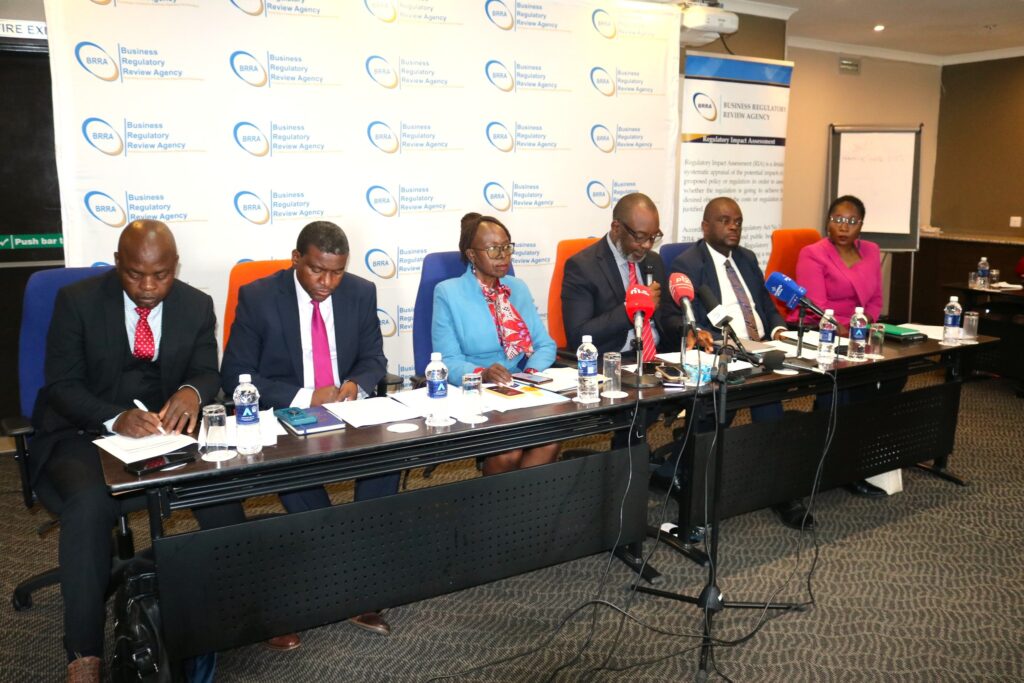
BRRA Steps Up Licensing Reforms to Cut Costs and Improve Ease of Doing Business
The Business Regulatory Review Agency (BRRA) has intensified efforts to streamline Zambia’s business licensing system in a move aimed at reducing regulatory duplication and lowering the cost of doing business.
BRRA Board Chairperson Dominic Kapalu said licensing reforms remain central to creating a conducive regulatory environment for businesses, describing them as a catalyst for improved economic activity and investment.
He said the Agency made notable progress in 2025, attributing the momentum to strong political will, consistent support from the Ministry of Commerce, Trade and Industry, and effective collaboration with key stakeholders.
Among the major reforms being advanced is the proposed amendment of the Business Regulatory Act of 2014 to strengthen enforcement. The Agency is also pushing for the consolidation of fire, health and business levies into a single business levy, as well as amendments to the Tourism and Hospitality Act to introduce a unified licensing system.
Additional reforms include proposed amendments to the Rating Act to reduce and harmonise property rates, alongside changes to forestry regulations aimed at lowering production and conveyance fees for honey and beeswax.
Mr Kapalu said once finalised, the reforms would eliminate overlapping mandates, reduce duplication of regulatory requirements and improve coordination among regulatory agencies.
He further disclosed that BRRA is engaging the Ministry of Justice on a proposed Business Facilitation Act, which is intended to accelerate licensing reforms and improve Zambia’s overall business environment. The proposed legislation would consolidate amendments across multiple laws into a single legal instrument, reduce regulatory bottlenecks and enhance Zambia’s investment attractiveness.
Mr Kapalu said the proposal was informed by a benchmarking mission to Mauritius, where a similar framework has been successfully implemented.
In the tourism sector, the Agency is proposing the introduction of an Omnibus Licence, which would allow a single licence to cover multiple regulatory mandates. He noted that the ongoing amendment of the Tourism and Hospitality Act presents an opportunity to simplify licensing procedures within the sector.
Mr Kapalu also highlighted increased use of digital platforms, revealing that BRRA’s E-Registry recorded 190,869 visits in 2025, representing a 45 per cent increase compared to 2024.
He commended institutions such as the Ministry of Energy, the Road Transport and Safety Agency (RTSA) and the Zambia Environmental Management Agency (ZEMA) for reforms that have improved service delivery and reduced compliance costs.
Looking ahead, Mr Kapalu said BRRA will prioritise the finalisation and implementation of the proposed reforms to strengthen investor confidence, improve service delivery and create a more business-friendly regulatory environment.