
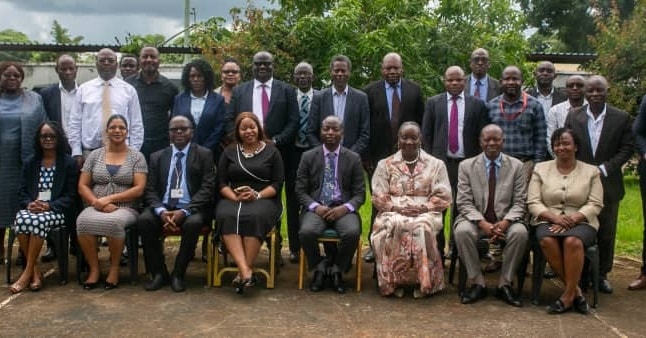
Zambia Aligns Skills, Polytechnics with Agriculture, Energy and Industrial Growth
The Government has convened a high-level Stakeholder Consultative Workshop aimed at validating strategic roadmaps for the establishment of polytechnics and targeted skills development to support Zambia’s national transformation agenda.
The four-day workshop, running from 2 to 5 February 2026, brings together Government officials, industry players, training institutions, cooperating partners, and professional bodies to align skills development with key national priorities. These include increasing maize production to 10 million metric tonnes, scaling beef exports to US$1 billion, rolling out 2MW solar power plants under the Presidential Constituency Energy Initiative, and transforming selected institutions into Centres of Excellence.
The engagement is anchored in the Eighth National Development Plan (8NDP), the transition to the Ninth National Development Plan, and Zambia’s long-term Vision 2030 aspirations.
Speaking at the workshop, Permanent Secretary in the Ministry of Technology and Science, Eng. Dr Brilliant Habeenzu, said the establishment of polytechnics is a strategic intervention to align skills development with economic transformation.
He noted that Zambia’s working-age population is projected to exceed 12 million by 2030, while the current Technical Education, Vocational and Entrepreneurship Training (TEVET) system absorbs less than 15 per cent of eligible youth annually.
Dr Habeenzu warned that without urgent reform, the demographic advantage could turn into a liability through unemployment. He said polytechnics would institutionalise structured partnerships with industry, ensuring training is competency-based, demand-driven, and aligned to labour market needs through Competency-Based Education and Training (CBET).
He emphasised that agriculture transformation requires skills in irrigation, mechanisation, animal health, breeding, post-harvest handling, and climate-smart practices, while the energy transition demands technicians trained in solar installation, maintenance, and energy management.
Dr Habeenzu disclosed that Government is pursuing a dual approach of constructing new polytechnics and upgrading existing TEVET institutions. Mumbwa Trades Training Institute is being redesigned into Mumbwa Polytechnic, specialising in animal management and livestock production.
Chapula Trades Training Institute in Lufwanyama is being upgraded into Chapula Polytechnic, with a focus on heavy equipment repair and mining programmes, through a partnership with Kagem Mining Limited. The project is about 95 per cent complete and is expected to be handed over in the first quarter of 2026.
He added that Northern Technical College (NORTEC) will support mining, copper processing, and critical minerals development, while Kabwe Institute of Technology will focus on electric vehicle battery technologies, agricultural mechanisation, and irrigation systems.
Evelyn Hone College will support pharmaceutical production and health-sector manufacturing, while the Livingstone Institute for Business and Engineering Studies (LIBES) will strengthen tourism, hospitality, and business services.
Director General of the Technical Education, Vocational and Entrepreneurship Training Authority (TEVETA), Mr Cleophas Takaiza, said the workshop was convened to develop practical, costed, and implementable roadmaps for transforming selected institutions into polytechnics and centres of excellence. He urged participants to ensure that policy commitments translate into immediate action.
Meanwhile, TEVETA Board Chairperson Ngosa Chibesakunda Nkwabilo said Zambia now has clear and measurable national targets under President Hakainde Hichilema, stressing that skills stakeholders must define their roles in achieving agricultural productivity, export growth, and energy expansion.