Zambia Calls for Practical Action to Boost Women’s Participation in Construction
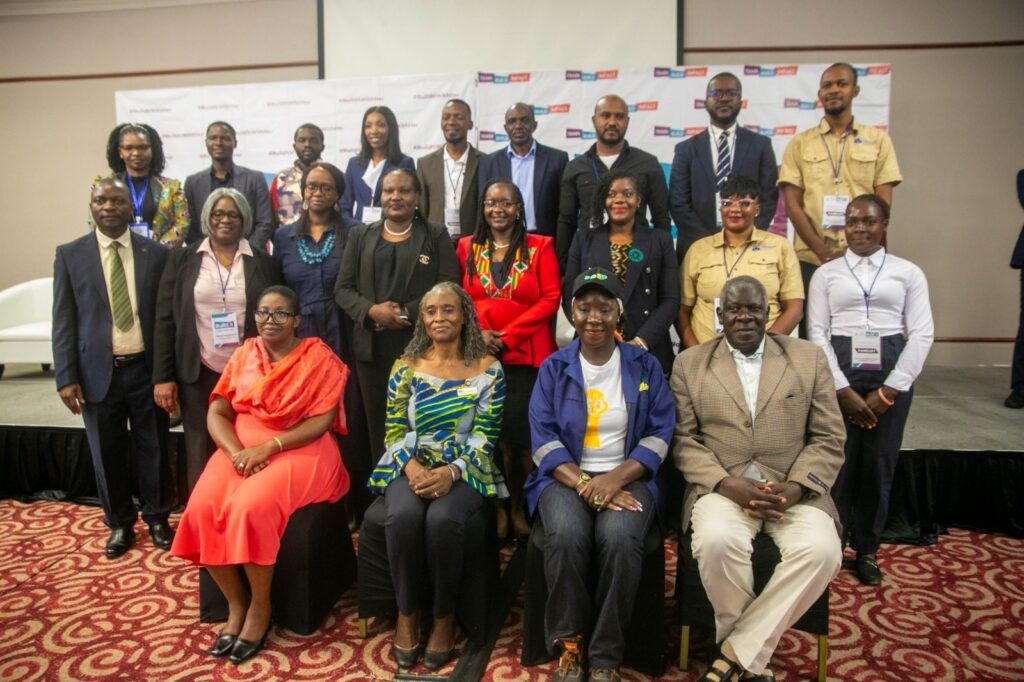
The urgent need to move beyond policy commitments towards practical, measurable inclusion of women in Zambia’s construction sector took centre stage at the Second Edition of the Women in Construction (WiC) Conference, hosted by Build It International Zambia.
Held under the theme “Systems and Skills to Site: Diversity Builds Productivity”, the national one-day conference brought together policymakers, industry leaders, statutory bodies, development partners, training institutions, employers and young women in construction to examine how skills training can be translated into sustained and productive employment on construction sites.
Build It International Zambia, a UK- and Zambia-registered development charity, hosted the conference as part of its flagship programme, Building a More Gender-Diverse, Skilled, and Sustainable Construction Industry (2024–2027). The programme is funded by the Government of Ireland and aims to challenge entrenched gender norms, dismantle systemic barriers and expand meaningful employment opportunities for women in one of Zambia’s most economically significant sectors.
Representing the Acting Permanent Secretary at the Ministry of Technology and Science, Naomi Tetamashimba, Ms Precious Lisulo, Acting Director in the Department of Vocational Education and Training, said the national conversation had shifted from aspiration to implementation.
She stressed that productivity in the construction sector depends on functional systems that effectively link training to certification, recruitment, workplace safety, accountability, retention and career progression.
She noted that without strong systems to support women beyond training, gains in skills development risk being lost before reaching the construction site.
In her address, Eng. Lucie Kasanga, Board Chairperson of Build It International Zambia, described construction as a key driver of economic growth and job creation. She said women’s low participation in the sector is not due to a lack of ability or ambition, but rather the result of systems that have historically limited access, safety and opportunity.
Eng. Kasanga called for coordinated action across government, training institutions, industry and communities to ensure that women’s skills translate into decent and dignified work.
Project Specialist Bwalya Mushiki presented findings from two key studies, the Gender Stakeholder Mapping and the Knowledge, Attitudes, and Practices (KAP) Survey, both validated in 2025. The research revealed that women remain significantly underrepresented across construction training and employment pathways, with cultural norms and stereotypes identified as the most significant barriers.
The studies further showed that while many institutions recognise the importance of gender inclusion, they often lack the systems, policies and monitoring mechanisms required to act effectively. However, the research also highlighted strong potential for change, supported by institutional champions, peer learning and increasing acceptance of women’s technical capabilities.
Through keynote addresses, expert panel discussions, role-model spotlights, a dedicated Men Talk dialogue on male allyship and structured networking sessions, participants explored how inclusive systems can turn women’s skills into real productivity gains.
The conference reinforced the message that gender diversity is not only a social imperative, but also a sound economic strategy. Evidence shared by industry partners pointed to improved productivity, quality of work, teamwork and professionalism on sites that employ women. Testimonies from female graduates further demonstrated how women’s participation in construction contributes to household stability, poverty reduction and national development.
Participants issued a strong call to institutionalise inclusion across the entire construction value chain, emphasising that success should be measured not only by participation numbers, but also by retention, safety, productivity and site-level outcomes.
The conference concluded that when inclusive systems are embedded and skills are effectively utilised, Zambia’s construction sector can become more productive, sustainable and equitable, driving broader economic growth and development.