Zambia Launches New Digital Migration System
Zambia has taken a major step towards modernising its migration governance with the launch of the Integrated Migration Management Information System (IMMIS) and the National Migration Data Strategy (2026–2030).
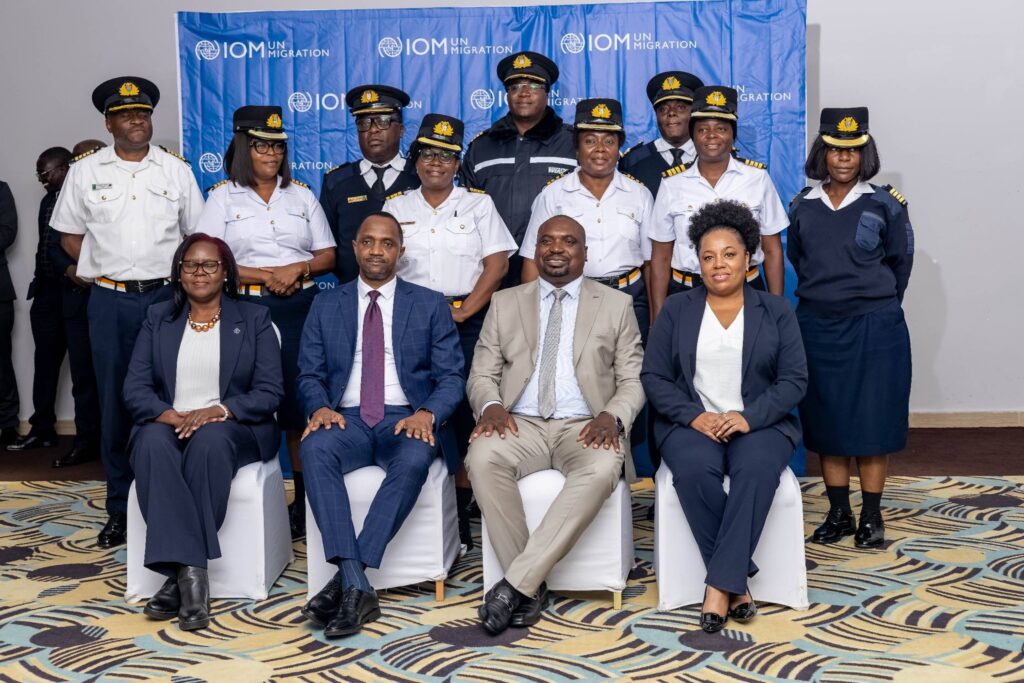
The event, held on 9 December 2025 at the Grand Palace Hotel in Lusaka, was officiated by the Minister of Home Affairs and Internal Security, Hon Jack Jacob Mwiimbu, SC, MP, represented by Permanent Secretary Mr Dickson Matembo.
In his address, Mr Matembo reaffirmed Government’s commitment to strengthening migration management through digital innovation, evidence-based decision-making and inter-agency collaboration. He commended the International Organization for Migration (IOM) for its technical and financial support, describing the launch as a strategic milestone aligned with Vision 2030, the Sustainable Development Goals and Zambia’s wider economic agenda.
He noted that both IMMIS and the National Migration Data Strategy will improve data quality, accessibility and interoperability across institutions, enhance transparency, curb irregular practices and streamline processes for officials, migrants and businesses.
“This launch marks the beginning of implementation,” he said, urging institutions to use the new tools to craft responsive policies, strengthen border management and build capacity.
Director General of Immigration and Co-Chair of the Technical Working Group on Migration Data, Dr Japhet M. Lishomwa, welcomed stakeholders to what he called “a transformative moment in Zambia’s migration management journey.”
He emphasised that IMMIS represents a commitment to a modern, data-driven and human-centred migration governance system, enabling real-time, accurate data sharing across institutions. This, he said, will bolster national security, support the fight against human trafficking and ensure consistent application of immigration laws.
IOM Chief of Mission, Ms Keisha Livermore, reiterated IOM’s steadfast partnership with the Zambian Government. She highlighted that the reforms reflect global standards, including the Global Compact for Safe, Orderly and Regular Migration, and will strengthen migrant protection, policy planning and the fight against human trafficking.
She added that real-time data will be crucial in identifying and safeguarding vulnerable migrants, including unaccompanied children.
A technical presentation by the Department of Immigration traced Zambia’s migration data reform journey from 2017 to 2025, highlighting milestones such as the Migration Data Assessment, the Migration Profile, the National Migration Policy and the Rapid Migration Data Assessment.
The Zambia Statistics Agency (ZamStats), which co-chairs the data working group, outlined how the new strategy will institutionalise coordination, improve data quality and integrate migration data into national planning.
The University of Zambia’s Centre for Technology and Innovation conducted a live demonstration of IMMIS, showcasing features such as analytics dashboards, automated reporting, system interoperability and user-friendly interfaces for frontline officers.
As part of the launch, the IOM donated ICT equipment to support implementation. The Department of Immigration received a server, desktop computers, UPS units, tablets and a laptop, while ZamStats received additional tools to strengthen its migration data functions.
The launch of IMMIS and the National Migration Data Strategy marks a new era for Zambia’s migration governance, paving the way for safer, more efficient and more transparent systems. These reforms are expected to support national planning, enhance service delivery, strengthen bord