Advocates Call for an End to GBV
Calls to end gender-based violence (GBV) echoed strongly at the Africa Speak Up and Heal Summit organised by the African Girls Empowerment Network to mark International Human Rights Day.
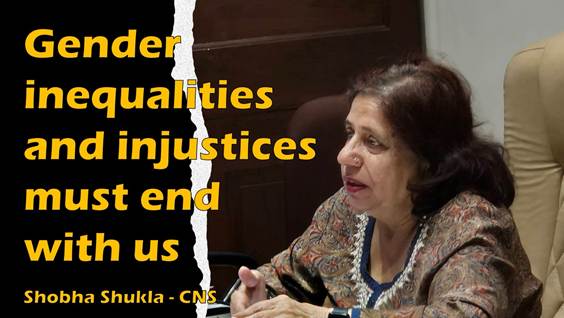
Keynote speaker Shobha Shukla, a prominent feminist and development justice advocate, urged women, girls, and society at large to challenge patriarchal norms and reclaim their rights. “Let us pledge that gender-based violence will end with us. We are not asking for mercy; we are demanding equality and justice. Enough is enough,” she said.
Shukla highlighted the widespread prevalence of GBV, noting that none in the audience had escaped emotional, physical, sexual, or psychological abuse. She described the normalisation of violence against women and girls as “alarming and unacceptable,” pointing out that global progress has been minimal, with an annual decline of just 0.2% in intimate partner and sexual violence over the past 25 years.
Almost half of the world’s countries lack comprehensive legislation addressing domestic violence, she added, stressing that even where laws exist, funding has been insufficient or declining. “One in three women worldwide experiences physical or sexual violence in her lifetime, and this is likely an understatement,” Shukla said.
Dr Pam Rajput, Emeritus Professor at Panjab University and former Chairperson of India’s High-Level Committee on the Status of Women, reinforced the message. She reminded audiences that gender equality has been enshrined in the UN Charter, the Universal Declaration of Human Rights, and legally binding treaties such as CEDAW since 1979. Yet, despite decades of global commitments, GBV rates remain persistently high.
Shukla and Dr Huda Syyed, founder of Sahara Sisters’ Collective, highlighted emerging forms of violence, including digital harassment and female genital mutilation (FGM/C). “Over 230 million girls and women globally live with FGM/C. This is not marginal – it is central to gender justice, public health, and human rights,” Dr Syyed said.
The summit emphasised that patriarchy underpins all forms of gender-based violence, perpetuating inequality in domestic, economic, and social spheres. Shukla noted that women and girls are often conditioned from childhood to accept restrictive gender roles, while men enjoy unearned privileges, entitlements, and rights.
Advocates at the event called for transformative action: dismantling patriarchal structures, ensuring equitable education and economic opportunities for women, strengthening legal frameworks, and bridging the gap between policy commitments and real-world enforcement.
Shukla concluded with a rallying call for collective action: “We were born equal. We deserve equal opportunities, dignity, and freedom from fear. Ending gender-based violence is inseparable from achieving social and economic justice.”
The summit brought together civil society leaders, activists, and international partners, underlining the urgent need to translate commitments into tangible outcomes to protect women and girls from violence and empower them to participate fully in society.