SADC Targets Stronger Climate Resilience to Protect Jobs, Agriculture and Developme
Ministers responsible for Disaster Risk Management in the Southern African Development Community (SADC) have committed to advancing a coordinated, risk-informed, and investment-driven approach to resilient recovery aimed at transforming disaster risk into long-term resilience dividends across the region.
The commitment was made during the SADC Ministerial Roundtable on Disaster Recovery and Resilience Building held in Masvingo, Zimbabwe, under the theme: “Transforming Disaster Risk into Resilience Dividends: A Risk-Informed Recovery Framework for Agrifood Systems and Sustainable Development in the SADC Region.”
The high-level meeting brought together SADC Ministers, cooperating partners, development finance institutions, United Nations agencies, private sector representatives, and technical experts to discuss sustainable solutions to the region’s growing disaster and climate-related challenges.
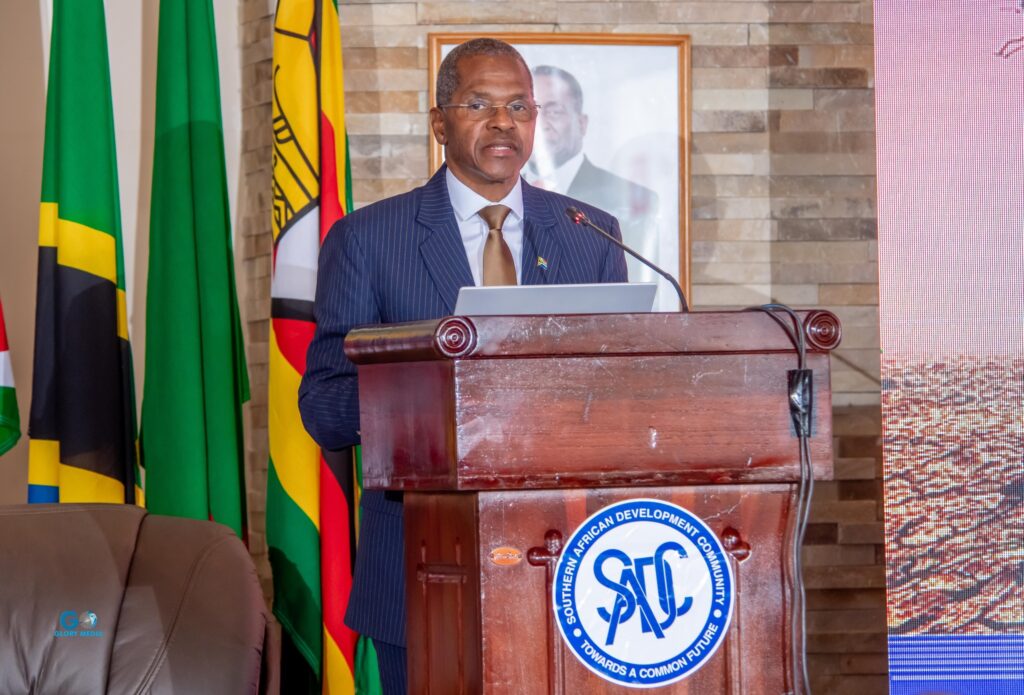
Chairperson of the Committee of SADC Ministers responsible for Disaster Risk Management and South Africa’s Minister of Cooperative Governance and Traditional Affairs, Hon. Velenkosini Fiki Hlabisa, said the region was facing increasingly severe and systemic disaster risks driven by recurring droughts, floods, cyclones, and other climate shocks.
The Ministers noted that since 2019, SADC Member States have experienced multiple devastating disasters, including Cyclones Idai, Kenneth, Ana, Gombe, and Freddy, alongside prolonged droughts and worsening food insecurity, which have collectively weakened resilience, strained national budgets, and reversed development gains.
The communiqué highlighted concerns that repeated disasters were creating a structural recovery deficit cycle, where countries are forced to repeatedly respond to crises without adequate resources to invest in transformative recovery and resilience-building initiatives.
The Ministers further acknowledged findings from the Global Assessment Report 2025, which indicate that disaster losses are escalating globally and that investments in disaster risk reduction and resilience offer significant economic and social returns.
“We affirm that resilient recovery must be repositioned from a post-crisis expenditure to a strategic investment agenda that supports long-term prosperity,” the communiqué stated.
The Roundtable also recognised the increasing threats climate shocks pose to food security, industrialisation, infrastructure development, and regional integration under the SADC Regional Indicative Strategic Development Plan (RISDP) 2020–2030, Africa’s Agenda 2063, and the Sustainable Development Goals.
Ministers stressed the urgent need to strengthen agrifood systems through climate-smart agriculture, resilient water systems, irrigation expansion, renewable energy, resilient infrastructure, and strengthened social protection programmes.
The meeting further acknowledged practical lessons shared by Member States on institutionalising Post-Disaster Needs Assessments, strengthening urban resilience, improving drought preparedness, and investing proactively in water security and climate resilience.
Delegates agreed that resilient recovery requires a fundamental shift from rebuilding vulnerable systems towards deliberately building back better through risk-informed planning and systems transformation.
The Ministers directed the SADC Secretariat to work with partners in operationalising the SADC Regional Disaster Recovery Framework and Action Plan aimed at supporting Member States in transitioning from recovery deficits towards resilience-led growth.
The framework will prioritise the development of bankable regional and national projects in resilient agrifood systems, drought and water resilience, renewable energy, resilient infrastructure, urban resilience, ecosystem restoration, and social protection systems.
The Roundtable also called upon the African Development Bank, United Nations agencies, bilateral partners, climate finance institutions, and the private sector to collaborate with SADC in establishing a coordinated regional resilience financing architecture capable of unlocking scalable and predictable financing for resilience-building initiatives.
Participants further emphasised the importance of strengthened collaboration on loss and damage financing, agrifood systems transformation, and integrated resilience-building models capable of converting climate and disaster risks into economic opportunities for Member States.
The meeting concluded with SADC Ministers reaffirming their commitment to strengthening political cooperation, strategic investment, and regional solidarity in order to build a more resilient, prosperous, and sustainable Southern African region.