
Civil Society, Diaspora and Philanthropy Positioned at the Centre of Africa’s New Financial Architecture
The African Development Bank Group has reaffirmed the central role of civil society organisations, diaspora networks, and philanthropic institutions in shaping and implementing its proposed New African Financial Architecture for Development (NAFAD), aimed at closing Africa’s estimated $400 billion annual financing gap.
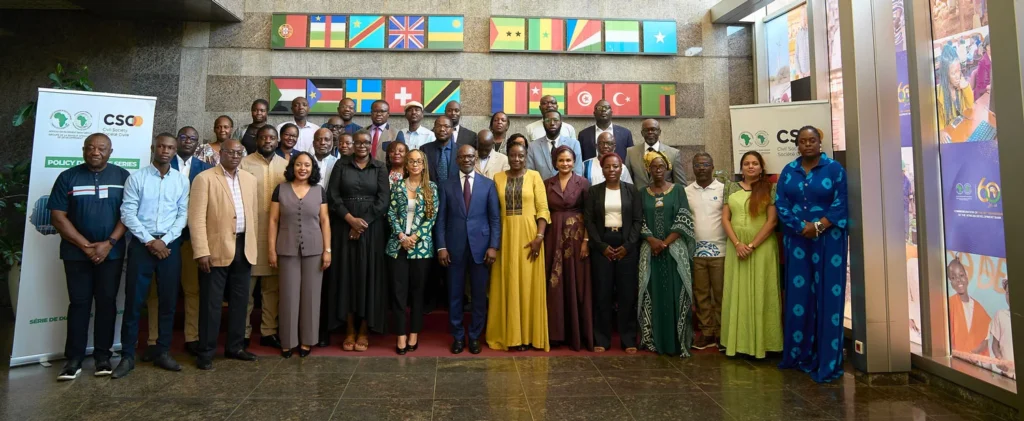
This commitment emerged during a high-level policy dialogue held on 4 May 2026 at the Bank’s headquarters in Abidjan, where stakeholders agreed to co-develop a civic operational framework to guide the initiative. The framework is expected to be formally presented during a side event at the Bank’s Annual Meetings in Brazzaville later this month.
NAFAD is designed as a transformative financing model that seeks to mobilise Africa’s estimated $4 trillion in domestic savings, alongside approximately $100 billion in annual diaspora remittances and growing philanthropic capital. The objective is to redirect these resources into structured, development-focused investments across the continent.
Speaking at the dialogue, Didier Acouetey, NAFAD Coordinator and Special Adviser to the President of the Bank Group, emphasised that the framework places citizens at the centre of financial decision-making.
He noted that the initiative aims to ensure that Africans are not merely beneficiaries of development programmes, but active participants and drivers of economic transformation, whether through diaspora-led investment or philanthropic support to grassroots sectors such as agriculture.
Fatoumata Sidibé Diarra, Co-founder of the Think Tank Manssah, described the initiative as a shift towards “genuine co-investment partnerships”, arguing that Africa requires ownership-based financial systems rather than traditional aid structures.
Civil society and diaspora actors were also highlighted as critical to the success of NAFAD due to their direct engagement with communities and local development needs.
Ndidi Okonkwo Nwuneli of the ONE Campaign urged the Bank to institutionalise these partnerships, stressing that the initiative would only succeed if grassroots actors were fully integrated as co-architects of the financial framework.
Closing the session, Zéneb Touré, Manager of the Civil Society and Community Engagement Division at the African Development Bank Group, said the discussions marked a shift from consultation to action, signalling stronger collaboration ahead of the upcoming Annual Meetings in Brazzaville.
The Bank stated that the forthcoming meetings will serve as a key platform for advancing the civic operational framework and deepening collaboration between financial institutions, civil society, diaspora networks, and philanthropic actors in shaping Africa’s financial future.