Zambia Pushes Water Security to the Forefront of Economic Policy at Spring Meetings
Zambia has used the 2026 Spring Meetings of the International Monetary Fund and the World Bank Group to elevate water security as a central economic priority, urging governments and partners to treat the sector as a driver of growth rather than a social add-on.
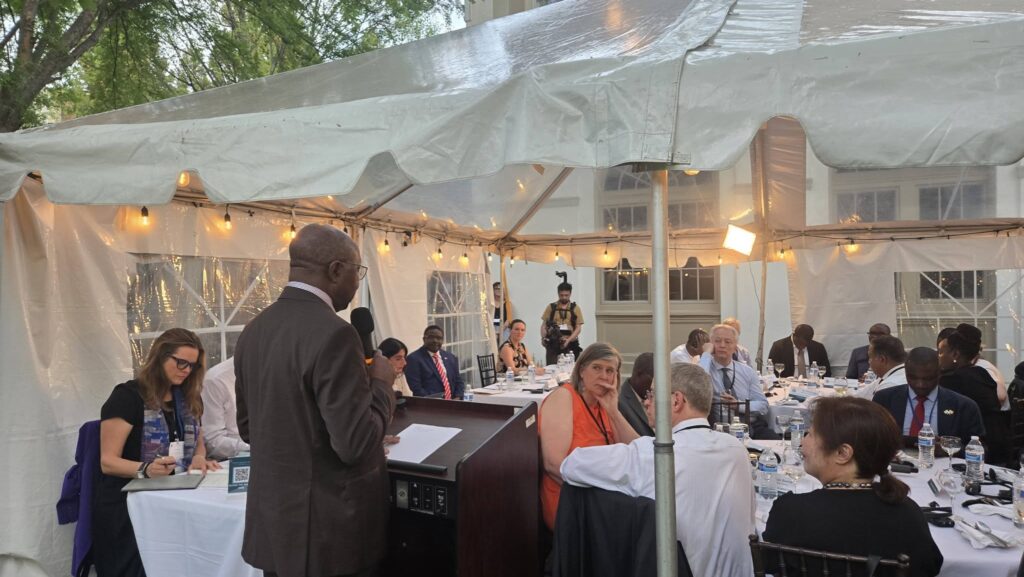
The Ministry of Finance and National Planning hosted a high-level engagement for finance ministers at Zambia’s embassy in Washington, convened on behalf of the Sanitation and Water for All (SWA). The meeting brought together ministers and senior officials from countries including Malawi and Chad, alongside representatives from Europe, the Caribbean and development partners.
Delegates agreed that water security is increasingly critical to macroeconomic stability, productivity, climate resilience and long-term growth, reflecting a shift in how fiscal authorities are approaching the sector.
Delivering the keynote address, Finance and National Planning Minister Situmbeko Musokotwane said Zambia is prioritising water security within its fiscal frameworks, while acknowledging that financing gaps remain significant.
He noted that historical underinvestment in the sector stemmed from fiscal constraints and its exclusion from core economic planning. However, under the New Dawn Administration, Zambia is adopting a more integrated approach that combines increased public investment, decentralised financing through the Constituency Development Fund and efforts to attract private capital through improved governance and project management.
Participants from other countries echoed similar challenges, citing limited fiscal space and rising climate-related risks, including the impact of water shortages on food systems, energy supply and inflation.
The discussions also advanced proposals for a summit-level initiative under the SWA framework to elevate water security into a national compact supported by credible fiscal plans and measurable targets.
Separately, speaking at a World Bank dialogue on “Water Security for Africa’s Future”, Permanent Secretary for Economic Management and Finance Mulele Mulele stressed that water must be treated as a macroeconomic and fiscal issue.
“Countries that fail to secure water will struggle to sustain growth, manage inflation and protect livelihoods,” he said.
Mr Mulele warned that water-related shocks, such as droughts, can quickly translate into fiscal pressures through increased spending on food imports, emergency relief, power shortages and infrastructure repairs.
He called for stronger integration of water priorities into medium-term expenditure frameworks, climate budgeting and public investment systems, with a focus on infrastructure such as dams, irrigation schemes, sanitation and urban water supply networks.
Highlighting reform priorities, Mr Mulele emphasised the need to strengthen water utilities through improved governance, better metering systems and tariff adjustments that protect vulnerable groups, while reducing inefficiencies.
He further underscored water’s role as a cross-cutting enabler of key sectors, including agriculture, mining, manufacturing, tourism and energy, noting that reliance on rain-fed agriculture remains a structural risk across Africa.
Mr Mulele also urged greater mobilisation of concessional financing and domestic resources to attract private investment through blended finance, guarantees and improved project preparation.
“If Africa secures water, Africa secures growth,” he said, calling for a shift from dialogue to implementation.
Zambia’s delegation to the Spring Meetings included Denny Kalyalya, Deputy Governor Francis Chipimo and other senior government officials, alongside Members of Parliament participating in the Global Parliamentary Forum.