SADC Ministers Commit to Malaria, HIV, TB and Emergency Health Action for Southern Africa
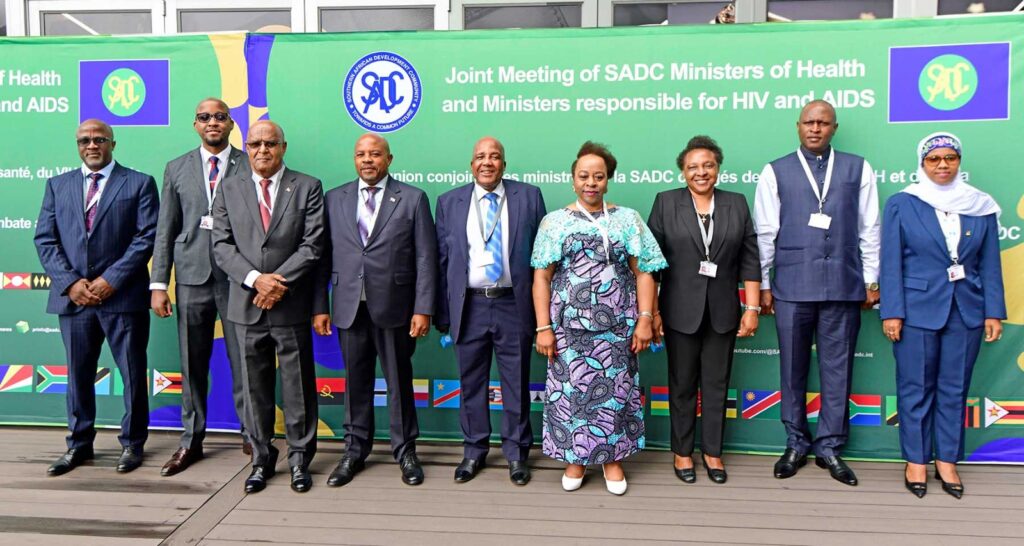
Health Ministers from the Southern African Development Community (SADC) have reaffirmed their collective commitment to strengthening health security, preparedness, and resilient health systems following a high-level ministerial meeting held in Johannesburg, South Africa, on 24 February 2026.
The meeting, which brought together Ministers responsible for Health and HIV and AIDS, reviewed the overall state of health in the region, focusing on key public health priorities including health emergencies and preparedness, Tuberculosis, Malaria, Nutrition, and HIV and AIDS. It was chaired by South Africa’s Minister of Health, Dr Aaron Motsoaledi, in his capacity as Chairperson of the SADC Ministerial Committee on Health.
Ministers and representatives from Angola, Botswana, the Democratic Republic of Congo, Eswatini, Madagascar, Malawi, Mozambique, Namibia, South Africa, the United Republic of Tanzania, Zambia, and Zimbabwe attended the meeting, alongside SADC Deputy Executive Secretary for Regional Integration, Angele Makombo N’tumba. Development partners and international organisations, including the World Health Organization, UNAIDS, UNFPA and UNICEF, also participated.
Opening the meeting, Dr Motsoaledi underscored the importance of a self-reliant Africa in safeguarding global health security, calling on international cooperating partners to support SADC’s vision for health sovereignty. He urged Member States to move beyond declarations and develop clear, measurable roadmaps to address gaps in local manufacturing, financing, and regulatory systems.
Ms N’tumba acknowledged progress made by several Member States in improving child survival and reducing stunting but warned that malnutrition remains a serious regional challenge, with more than 23 million children affected by stunting and high levels of anaemia among women of childbearing age. She stressed the need for stronger multi-sectoral approaches linking health, water and sanitation, agriculture, and social protection.
WHO Africa Regional Director Dr Mahammed Yakub Janabi called for innovative financing mechanisms to address growing health funding pressures, emphasising that health should be viewed as a strategic investment rather than a cost. He noted a positive shift among African governments towards prioritising health in national budgets.
On HIV and AIDS, UNFPA Regional Director Lydia Zigomo highlighted sustained reductions in new infections and AIDS-related deaths in the region, while cautioning against complacency, particularly regarding adolescent girls and young women who remain disproportionately affected. Anne Githuku-Shongwe, UNAIDS Regional Director for East and Southern Africa, reiterated the need to strengthen domestic financing and community health systems to ensure long-term sustainability of the HIV response.
Ministers also raised concern over severe flooding across parts of the region, which has triggered surges in malaria and waterborne diseases such as cholera. They noted that progress towards malaria elimination has regressed and called for accelerated action, including enhanced surveillance, cross-border coordination, early outbreak detection, and the deployment of emergency malaria commodities in flood-affected and hard-to-reach areas.
The meeting endorsed the SADC Regional Strategy for Strengthening Emergency and Essential Surgery, Anaesthesia, Nursing, Obstetrics and Gynaecology (2025–2030), reaffirming a shared commitment to integrating safe, timely, and affordable surgical care into universal health coverage. Ministers stressed that improving access to emergency and essential surgical services is critical to reducing preventable deaths and improving maternal and women’s health outcomes.
Concerns were also raised over recent outbreaks of polio and measles in some Member States. Ministers called for strengthened surveillance, improved data sharing, sustained implementation of national and regional cholera plans, and increased advocacy for vaccine availability and financing.
On Tuberculosis, Ministers noted the high incidence among men and endorsed the 2024 SADC TB Report, urging targeted interventions in male-dominated settings such as mines and prisons. They further directed the SADC Secretariat to work with partners on adopting AI-driven TB diagnostics to strengthen early detection and primary health care responses.
The meeting reviewed progress in implementing SADC’s Sexual and Reproductive Health and Rights (SRHR) Strategy and Scorecard, welcoming resource mobilisation from partners including Sweden and AUDA-NEPAD. Ministers also endorsed outcomes from the SADC Regional Climate Change and SRHR Indaba, directing the Secretariat to develop a regional SRHR and Climate Action Framework.
Ministers expressed support for South Africa’s efforts to secure a voluntary licence to locally manufacture Lenacapavir, noting its potential to improve regional access and affordability. They directed the SADC Secretariat to establish a regional task force to support the application process.
The meeting concluded with the endorsement of the 2025 SADC HIV Scorecard, anchored on prevention pillars including adolescent girls and young women, key populations, condoms, voluntary medical male circumcision, and pre-exposure prophylaxis. Ministers urged Member States to implement the recommendations and prioritise interventions for the most vulnerable populations to ensure no one is left behind.