Zambia’s Mining Sector Records Growth in 2025 as Copper Output Rises and Reforms Take Effect
The Zambia’s mining sector recorded notable growth in 2025, with copper production increasing by eight per cent and sustained investment, licensing expansion, and policy reforms strengthening the industry’s contribution to the country’s socio-economic development.
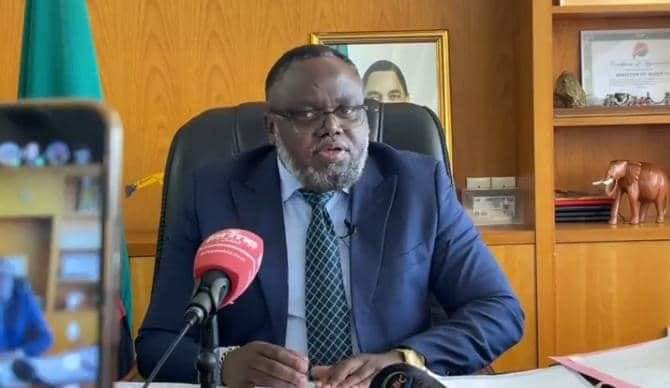
Speaking at the press briefing, the Minister of Mines and Minerals Development, Honourable Paul C. Kabuswe, MP. highlighted that copper, Zambia’s dominant mineral, saw production rise by 8 per cent, from 825,513.01 metric tonnes (Mt) in 2024 to 890,345.79 Mt in 2025.
This growth was largely attributed to output increases at Konkola Copper Mine, Mopani Copper Mine, Kansanshi, and Lubambe Mine. Konkola Copper Mine’s production surged by 366.58 per cent, reaching 80,215.33 Mt, while Mopani Copper Mine increased output by 40.27 per cent.
However, challenges persisted as SINO Metals Leach halted operations following a tailings dam failure, and FQM Trident Mine recorded a decline of 18 per cent in production, impacting overall sector targets.
The sector’s diversification also showed progress, with cobalt production rising by 12 per cent to 352.97 Mt, nickel production increasing by 616 per cent to 24,089.56 Mt, and zinc production up by 25 per cent to 65,134.11 Mt. Emerald output increased to 35,611.78 kg, while cement and coal production also recorded growth.
Minister Kabuswe emphasised the Government’s efforts to boost Zambian participation in mining. In 2025, the Ministry granted 2,375 mining licences, a 9.2 per cent increase from 2024, including 1,068 Artisanal Mining Rights – a 57.06 per cent increase. Licences requiring Zambian shareholding, such as Small-Scale Exploration and Small-Scale Mining Licences, also saw increases.
Significant investments were highlighted, including the Sinomine Kitumba Minerals project in Mumbwa District, valued at US$600 million, which commenced ground stripping and open-pit mining in April 2025. The project will include a 50-Megawatt solar plant, contributing to Zambia’s national grid.
The FQM Kansanshi S3 expansion project, commissioned in August 2025 at a cost of US$1.25 billion, is expected to increase milling capacity, improve copper grades, extend the life of the mine by 20 years, and create approximately 1,500 new jobs.
The Government enacted the Geological and Minerals Development Act No. 2 of 2025, replacing the 2015 Act to strengthen geological mapping, exploration, data management, and local content participation. The Minerals Regulation Commission (MRC) became operational in 2025 to oversee licencing and regulation, while the Ministry will focus on policy and technical oversight.
Local Content Regulations (Statutory Instrument No. 68 of 2025) came into effect on 1 January 2026, aimed at increasing Zambian participation in mining and the supply of goods and services along the mineral value chain.
Government initiatives include the Three Million Tonnes Copper Production Strategy, targeting 3 million Mt of annual copper output by 2031. In 2025, Mimbula Mine commenced operations with 8,183.11 Mt produced, while other mines are expected to contribute 22,000 Mt in 2026.
The National Critical Minerals Strategy advanced exploration of lithium in Mapatizya and Luano Districts and graphite in Petauke District. The Countrywide High-Resolution Aerial Geophysical Survey (CHRAGS) reached 51.7 per cent coverage by year-end, with 100 per cent expected by July 2026.
Efforts to formalise artisanal and small-scale mining continued, with 1,663 artisanal mining rights granted since 2023 and over 600 mining cooperatives trained in safe mining and environmental management. Gold marketing centres were established in Mumbwa and Rufunsa Districts to streamline sales.
Accidents in the mining sector decreased slightly from 92 in 2024 to 88 in 2025, although fatalities rose from 12 to 20, largely due to illegal mining activities. Non-tax revenue collection increased by nearly 15 per cent, from K115.4 million in 2024 to K132.7 million in 2025.
Minister Kabuswe concluded by reiterating the Government’s commitment to reforming the mining sector, enhancing economic development, and ensuring environmental sustainability.