African Water Facility Approves New Five-Year Strategy to Boost Water Security
The African Water Facility (AWF) Governing Council has adopted a new five-year strategy aimed at boosting water security and expanding access to safe sanitation across the continent. The decision marks a significant milestone in the Facility’s efforts to mobilise resources and drive sustainable water solutions in Africa.
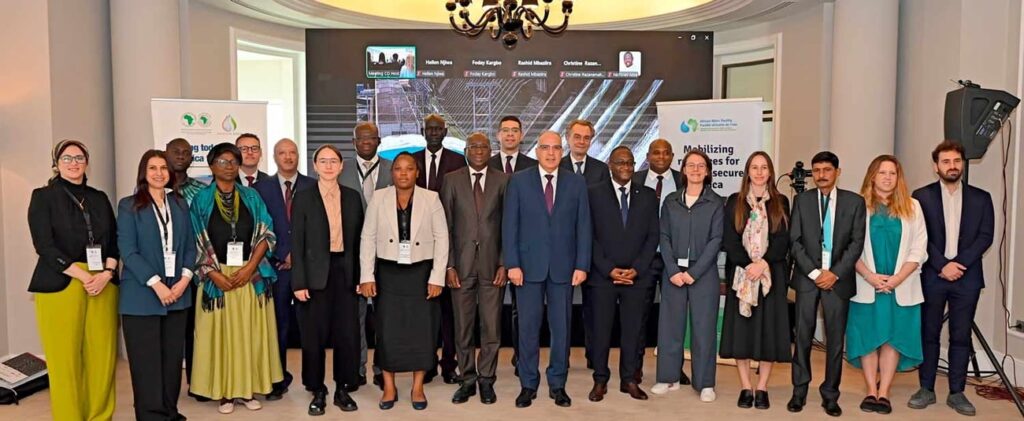
The adoption took place during the AWF’s 25th Governing Council Meeting, held from 5–6 November in Cairo, Egypt, under the chairmanship of Dr Hani Sewilam, Egypt’s Minister of Water Resources and Irrigation. The Facility is hosted by the African Development Bank (AfDB) Group and operates under the African Ministers’ Council on Water.
The African Water Facility 2026–2030 Strategy outlines renewed priorities focused on preparing bankable water and sanitation projects, expanding innovative financing mechanisms, and strengthening institutional capacity. The strategy also reinforces the Facility’s role as a catalyst for investment, particularly in a context of growing water-related challenges across Africa.
Dr Sewilam described the AWF as “a dynamic and forward-looking institution… indispensable to Africa’s future”, recalling the Governing Council’s 2024 decision to extend the Facility’s mandate to 2050. The extension included the introduction of a new urban sanitation financing window, featuring reimbursable grants, concessional instruments, and guarantees.
“These developments reflect our collective recognition that bold and adaptive approaches are needed to address Africa’s water security challenges in a rapidly changing global context,” he said.
During the Cairo meeting, the Governing Council also approved the AWF’s 2026 Work Programme and Budget, reviewed progress made in 2025, and assessed future financing prospects. Delegates commended improvements in operational efficiency, documentation, and the rollout of the Africa Urban Sanitation Investment Initiative, which aims to support governments, utilities, and private actors in expanding safe, sustainable urban sanitation services.
Mtchera Chirwa, Director of the Water Development and Sanitation Department at the AfDB, praised the commitment of member states and partners.
“Your unwavering commitment and enduring partnership have been instrumental in driving forward Africa’s vision for water security and sustainable development,” he said. “Guided by the 2026–2030 Strategy, the African Water Facility will reposition itself as a high-performing, innovation-driven institution, strengthening partnerships and diversifying financing sources.”
Since its establishment in 2004, the AWF has supported nearly 150 projects in 52 African countries, mobilising approximately €4 billion in downstream investments. The Facility continues to play a central role in advancing the African Union’s Africa Water Vision 2063 and the UN Sustainable Development Goals, particularly those linked to clean water, sanitation, and climate resilience.