Ethiopia to Learn from Zambia’s Success in Honey Value Chain Through Study Visit
Ethiopia is set to undertake a study visit to Zambia to learn from the country’s successful honey production and export systems, as part of efforts to strengthen agricultural cooperation between the two nations.
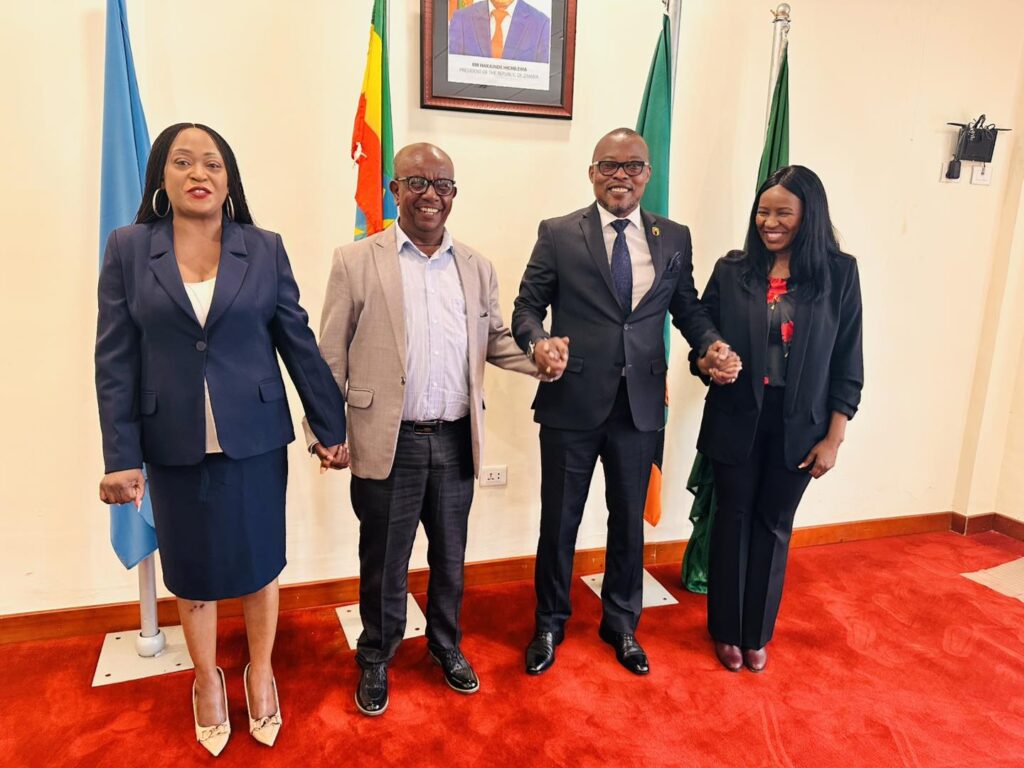
Zambia’s Chargé d’Affaires at the Embassy in Addis Ababa, Mr. Tom Michelo, announced Zambia’s readiness to share its expertise and best practices in developing a competitive honey value chain during a meeting with Mr. Girma Mulugeta Tulu, Senior Advisor to Ethiopia’s State Minister of Agriculture.
Mr. Michelo said the visit, scheduled under the framework of the Joint Permanent Commission of Cooperation (JPCC) between Zambia and Ethiopia, reflects the growing partnership and mutual commitment to agricultural development.
“This visit is a fulfilment of our shared commitment to regional collaboration and knowledge exchange. Zambia is eager to share its experiences in honey production, which has created export opportunities and improved livelihoods for rural communities,” Mr. Michelo said.
In response, Mr. Tulu commended Zambia’s achievements in the honey sector and expressed Ethiopia’s interest in replicating its success. He noted that despite Ethiopia producing about 325,000 metric tonnes of honey annually, it has yet to penetrate the export market effectively.
“Zambia’s experience in building a successful honey export value chain provides valuable lessons for us. We hope to draw insights that will help Ethiopia enhance its competitiveness and value addition in this sector,” Mr. Tulu said.
He further highlighted Ethiopia’s broader agricultural progress, including becoming a net exporter of wheat and increasing national forest cover from 17 to over 23 percent within six years under the Green Legacy Initiative. Additionally, Ethiopia has made strides in dairy production through the introduction of higher-yielding cattle breeds.
Building on these developments, Mr. Michelo expressed Zambia’s interest in expanding cooperation with Ethiopia beyond apiculture to include livestock development and energy collaboration. He noted that livestock is a presidential priority in Zambia, and that Ethiopia’s position as one of Africa’s top livestock producers offers vast opportunities for partnership.
He also pointed to potential collaboration in the energy sector, citing Ethiopia’s enhanced generation capacity following the commissioning of the Grand Ethiopian Renaissance Dam (GERD). Mr. Michelo explained that Zambia is keen to explore regional power-sharing opportunities through the Zambia–Tanzania Interconnector Project (ZTIP), which aims to link the Southern African Power Pool (SAPP) with the Eastern African Power Pool (EAPP).
The upcoming study visit is expected to deepen bilateral cooperation in agriculture, energy, and related sectors, advancing both countries’ goals for sustainable development, regional integration, and food security.