Women Peacebuilders Help Rewrite Harmful Traditions in Southern Malawi
In southern Malawi, women peacebuilders are increasingly stepping into roles traditionally reserved for men, helping to resolve community disputes and challenge harmful practices such as child marriage, gender-based violence, and school dropouts among girls.
The shift is being driven by the Sustaining Community Women Movement for Peacebuilding and Humanitarian Response project, implemented by Youth Net and Counselling (YONECO) with support from the Women’s Peace and Humanitarian Fund through UN Women.
In districts such as Phalombe and Machinga, communities have long struggled with early marriages, inheritance disputes, forced initiation rites and domestic violence. These issues have contributed to school dropouts, teenage pregnancies and cycles of poverty that remain difficult to break.
According to programme data, Malawi continues to record high rates of child marriage, with an estimated 42 per cent of girls married before the age of 18. Many of these cases are driven by poverty and entrenched social norms that limit girls’ access to education.
Until recently, women in these communities often had limited participation in traditional decision-making structures, particularly in cases involving intimate partner violence or family disputes. However, this is beginning to change.
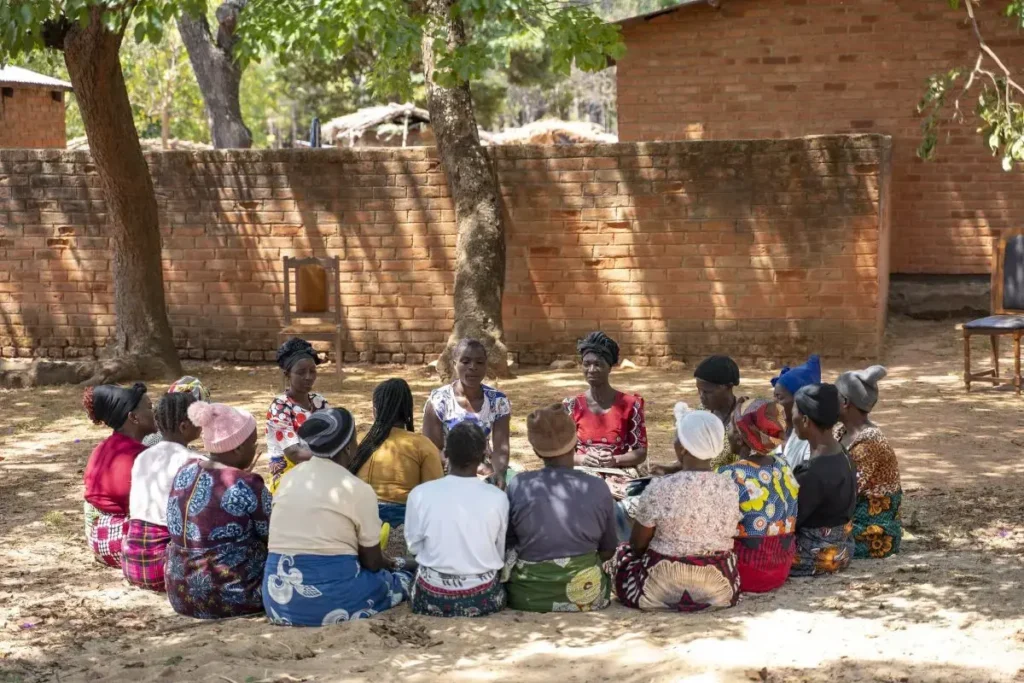
Through targeted training in mediation, leadership, negotiation and conflict resolution, more than 100 women including chiefs’ wives and female community leaders have been equipped to handle disputes at village level. Many now form women’s peace circles that provide safe spaces for survivors to report abuse and seek support.
“I never thought I could stand in front of a crowd and speak with confidence,” said Mercy Msolomba, one of the trained leaders in Machinga. “Now I can negotiate, I can mediate and people listen.”
In Phalombe, Josephine Mbalika said the training reshaped how women view leadership in their communities. “At first we thought leadership was only for our husbands, but after training we saw that we too are leaders,” she said.
The impact has already been felt on the ground. In one case, a 16-year-old girl identified as Amaluwasa was withdrawn from an early marriage after a women’s peace forum intervened following a report from her teacher. The group visited her family, mediated discussions and successfully ensured her return to school.
In another case in Machinga, a teenage pregnancy involving two minors was resolved through community mediation, with both children supported to return to education.
Officials involved in the programme say women peacebuilders are now being trusted as first responders in community disputes, while more complex cases are referred to police and social welfare services.
Since the programme began, more than 65 child marriages have been dissolved in Phalombe alone, with at least 51 girls returning to school. Across both districts, women-led interventions continue to grow, strengthening community protection systems for women and girls.
Development partners say the initiative demonstrates how local leadership can shift long-standing social norms. As women take on greater roles in mediation and governance, communities are increasingly recognising leadership not by gender but by fairness, trust and courage.
Names have been changed to protect identities.