Zambia Set to Rebase GDP After Sharp Rise in Business Activity
Zambia is advancing plans to rebase its Gross Domestic Product (GDP) to 2023, following new data showing significant growth in business activity and structural changes in the economy.
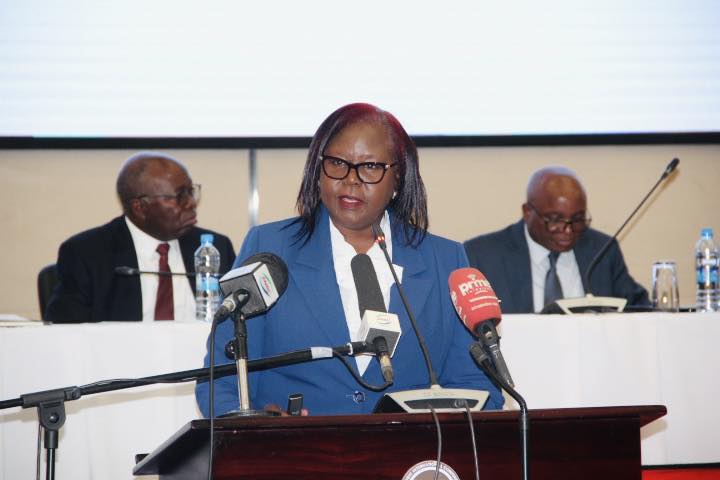
Speaking at a Townhall Meeting on first quarter budget and economic performance, Statistician General Sheila Mudenda said the exercise will enhance the accuracy of national accounts, strengthen economic planning and align Zambia’s statistics with international best practice.
Mrs Mudenda noted that the rebasing follows major shifts in the country’s economic structure since the last update in 2010.
Preliminary findings from the 2025 Economic Establishment Census indicate that Zambia now has 485,034 establishments, a sharp increase from 66,743 recorded in 2010. Lusaka accounted for the largest share at 29.5 per cent, followed by the Copperbelt Province at 19.0 per cent.
Wholesale and retail trade remains the dominant sector, with 300,097 establishments, representing 61.9 per cent of the total.
The census also shows a substantial rise in employment, with the number of workers increasing from 358,398 in 2010 to over 1.1 million in 2025.
Micro enterprises continue to dominate the economy, accounting for 93 per cent of all establishments. Meanwhile, formal businesses have grown from 18,419 in 2010 to 60,026 in 2025, while informal enterprises have risen to 411,008.
Mrs Mudenda said the data highlights the need for policies that promote formalisation, improve productivity and support enterprise growth.
On labour market trends, preliminary estimates show improvements, with the employment-to-population ratio rising to 37.1 per cent. National unemployment has declined to 9.9 per cent, while youth unemployment stands at 14.2 per cent.
The rebasing process will involve enterprise survey data collection, Supply and Use Table balancing, and the compilation of updated GDP figures, with results expected to be released in the fourth quarter of 2026.
Mrs Mudenda reaffirmed the commitment of the ZamStats to producing timely, reliable and relevant statistics to guide policy decisions, support economic development and improve livelihoods.