Namibians to Own a Piece of the Oil Surge as Sintana Energy Lists Locally
Namibia’s oil and gas industry is entering a new phase of financial development following the planned secondary listing of Sintana Energy on the Namibia Securities Exchange (NSX), a move widely viewed as a milestone for local capital market participation in the country’s emerging energy sector.
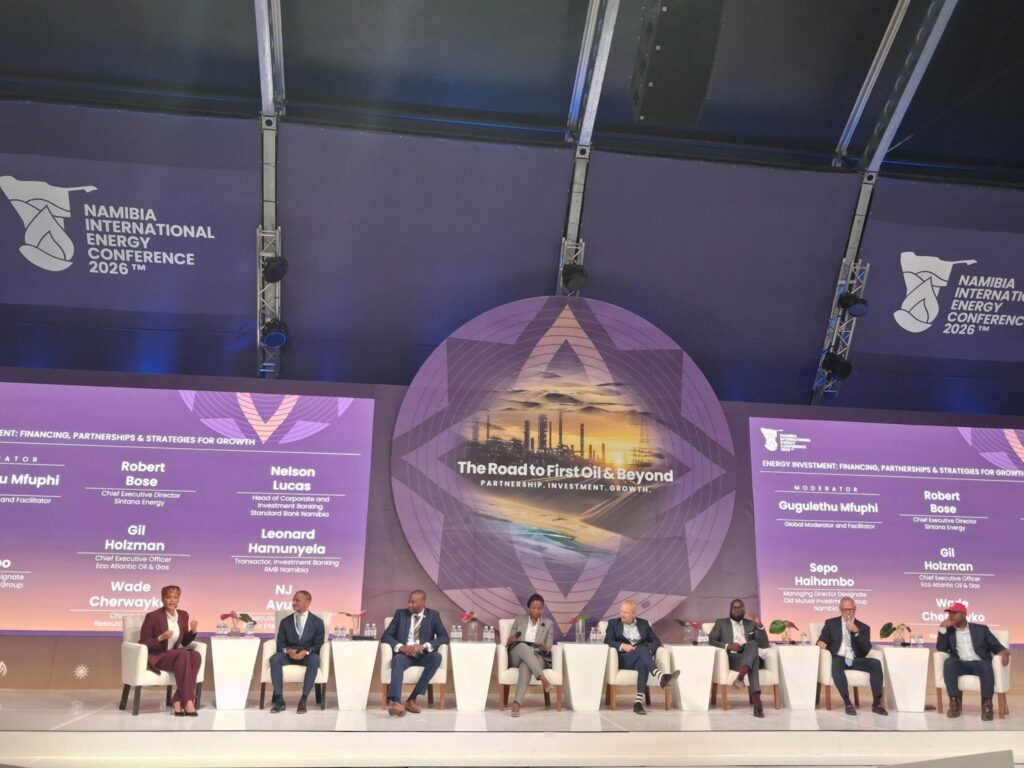
The listing, announced during the Namibia International Energy Conference (NIEC) 2026 in Windhoek, is expected to enable Namibian investors to gain direct exposure to offshore exploration assets in key licences such as PEL 83 and PEL 87.
Industry stakeholders say the development reflects a broader shift from early-stage exploration towards structured investment, domestic ownership and financial market integration.
The initiative has been welcomed by the African Energy Chamber, which described it as a critical step in strengthening local participation and deepening capital market engagement within Namibia’s fast-growing upstream oil and gas industry.
AEC Executive Chairman NJ Ayuk said the evolving energy landscape requires decisive policy and investment action to ensure Africa benefits fully from its natural resources.
“We have a fierce urgency of now. You need to think about energy security. These are bold choices that must come around fiscal stability and investment frameworks,” he said.
At the conference, Sintana Energy outlined its strategy to align capital markets with Namibia’s long-term energy ambitions, particularly as the country moves closer to final investment decisions across multiple Orange Basin developments.
Financial institutions have also positioned themselves at the centre of this transformation. Standard Bank Namibia highlighted the importance of regulatory certainty and predictable investment conditions in unlocking large-scale energy financing, while noting growing opportunities to expand local capital participation.
Similarly, Old Mutual Investment Group Namibia emphasised the importance of mobilising domestic institutional capital to support infrastructure and energy development. The firm noted that Namibia’s banking sector, valued at approximately $187 billion in 2024, represents a significant pool of local investment potential.
Energy companies are also advancing their upstream positions. Eco Atlantic Oil & Gas is progressing exploration activities across multiple offshore licences, including PELs 97, 99, 100 and 107, following a strategic farm-down agreement with global energy major bp.
Eco Atlantic Chief Executive Gil Holzman said Namibia’s oil and gas sector has seen rapid transformation, driven by significant discoveries and increased investor interest, but stressed the importance of ensuring local participation in the next phase of development.
In the financial sector, Rand Merchant Bank Namibia is playing a growing role in structuring energy-related transactions, including project financing, trade finance and risk management solutions to support large-scale upstream developments.
RMB Namibia’s Investment Banking Transactor Leonard Hamunyela said the bank is focused on balancing international capital inflows with local participation to support sustainable sector growth.
Energy stakeholders say the combined momentum from exploration success, capital market developments and institutional financing signals a turning point for Namibia’s energy sector as it moves towards first oil production.
The African Energy Chamber emphasised that aligning policy, capital and local ownership will be essential in ensuring the sector develops into a sustainable engine of long-term economic growth.