Climate, Financing and Value Chain Gaps Threaten Aquaculture Growth – Dr Choombe
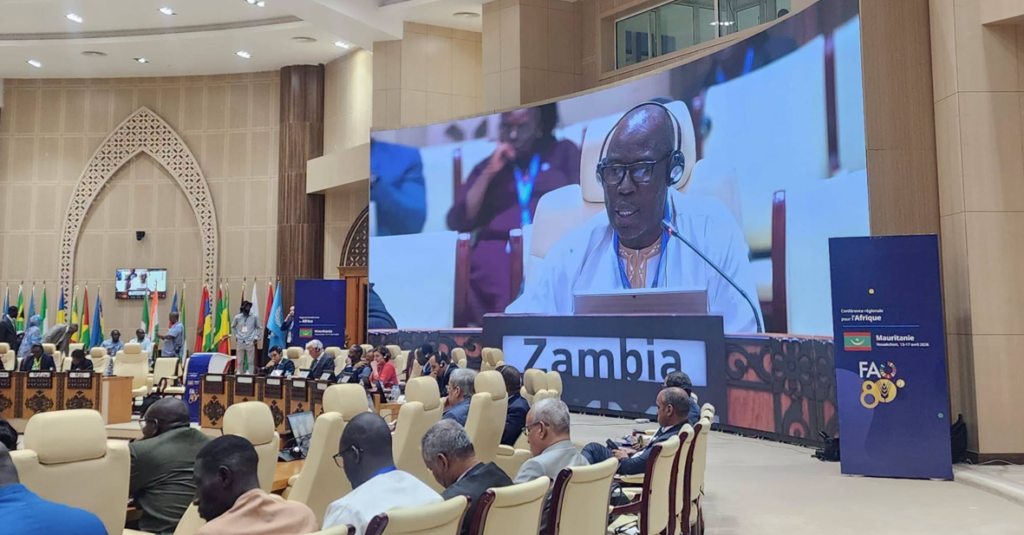
Zambia has reaffirmed its commitment to sustainable agrifood systems transformation and climate-resilient agricultural development following its active participation in the 34th Session of the Food and Agriculture Organization (Food and Agriculture Organization of the United Nations) Regional Conference for Africa (ARC34), held from 13th to 17th April 2026 in Nouakchott, Mauritania.
The high-level conference, convened under the theme “Sustaining Agrifood Systems Transformation in Africa: Innovate. Partner. Invest,” brought together Ministers and senior government officials from across the continent to deliberate on policy, regulatory, and investment priorities aimed at strengthening Africa’s agrifood systems in the face of climate change and growing food security challenges.
Zambia’s delegation was led by the Ministry of Fisheries and Livestock Permanent Secretary, Dr Max Choombe, who represented the country in key technical and ministerial sessions.
During a high-level panel discussion on Blue Transformation, Dr Choombe shared Zambia’s progress and lessons learned in advancing sustainable aquaculture development, noting that the country is emerging as one of the leading aquaculture producers in the region.
He explained that Zambia’s Blue Transformation Agenda is designed to unlock the potential of its aquatic resources to stimulate economic growth, enhance food and nutrition security, and create sustainable livelihoods, particularly in rural communities.
“Aquaculture has become one of the fastest-growing subsectors in Zambia, driven by deliberate policy reforms, strategic investments, and increased private sector participation,” Dr Choombe said.
He attributed this growth to supportive government frameworks and partnerships that have enabled expansion in fish production capacity across the country.
However, Dr Choombe also highlighted persistent challenges facing the sector, including the effects of climate change, limited access to financing for smallholder farmers, post-harvest losses, and inefficiencies within the value chain.
He called for greater investment in climate-smart aquaculture systems, infrastructure development, research, and innovation to sustain growth.
Dr Choombe further urged enhanced collaboration between governments, development partners, and the private sector to scale up sustainable fisheries and aquaculture development across Africa.
In a separate session focused on Managing Transboundary Animal Diseases, he reaffirmed Zambia’s commitment to strengthening the livestock sector.
Dr Choombe outlined government targets to increase the national cattle population to 7.4 million by 2027 and to achieve annual beef exports worth US$1 billion by 2031.
He noted that Zambia has made significant progress through the establishment of Animal Disease-Free Compartments (ADFCs), which have strengthened the country’s capacity to access regional and international beef markets.
Dr Choombe welcomed the FAO’s Global Programme for the Prevention and Control of Transboundary Animal Diseases (GPP-TADs), encouraging member states to support its implementation.
He stressed the importance of coordinated regional action in disease surveillance, livestock movement control, animal traceability systems, and strengthened biosecurity measures.