Zambia Pledges Stronger Action on Inclusive Social Development and Justice at UN
Zambia has reaffirmed its commitment to inclusive social development and social justice at the United Nations, calling for coordinated, equitable and people-centred policies that leave no one behind.
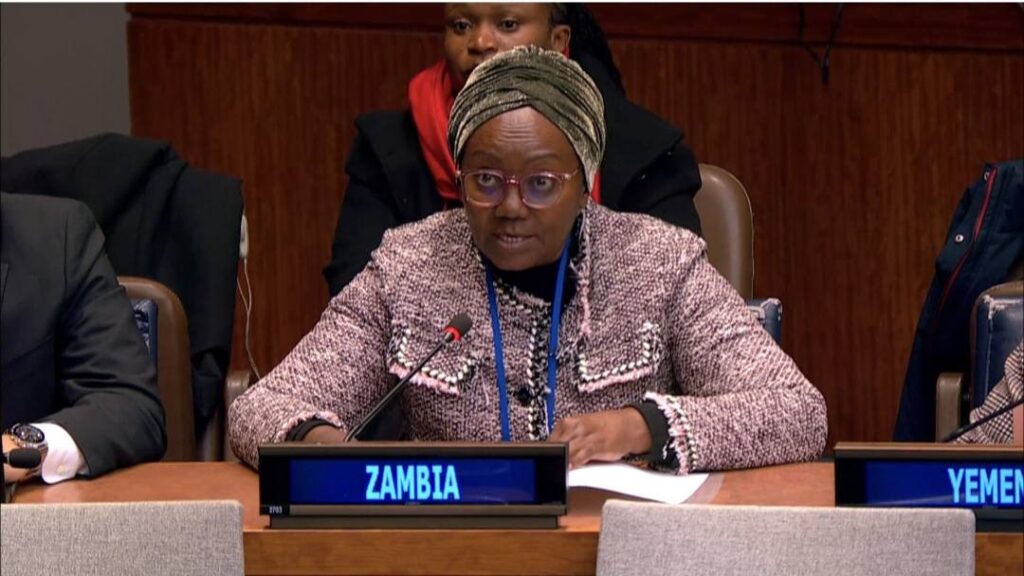
Delivering Zambia’s national statement at the 64th Session of the Commission for Social Development at UN Headquarters on 3 February, Permanent Secretary in the Ministry of Community Development and Social Services, Ms Angela Kawandami, said Zambia remains firmly committed to advancing social development through inclusive and evidence-based approaches.
The session is being held under the theme “Advancing Social Development and Social Justice through Coordinated, Equitable, and Inclusive Policies.” Ms Kawandami noted that Zambia’s efforts build on the principles of the Copenhagen Declaration and the Doha Political Declaration, while aligning with the 2030 Agenda for Sustainable Development and the African Union’s Agenda 2063.
She highlighted that Zambia has made progress in strengthening child protection systems, expanding social assistance programmes, and improving access to education and health services to protect vulnerable children and break the cycle of intergenerational poverty.
Ms Kawandami further stated that Government is promoting dignity and inclusion for older persons through enhanced social assistance and community-based support systems. She added that youth empowerment remains a priority, with increased focus on skills development and entrepreneurship to improve livelihoods and employment prospects.
“Zambia has strengthened inter-ministerial coordination to ensure that social development issues are effectively integrated into economic, infrastructure and sectoral planning,” she said.
The Permanent Secretary also noted that social protection programmes continue to expand in both coverage and effectiveness, supporting poverty reduction, resilience to shocks and productive inclusion, particularly for women, young people and persons with disabilities.
She emphasised the importance of strong data systems, evidence-based planning and sustainable financing for development, and welcomed reforms to the international financial architecture as well as increased global cooperation to support social investments.
While acknowledging ongoing challenges such as unemployment, informality, inequality and vulnerability to economic and climate-related shocks—challenges that disproportionately affect African and other developing countries—Ms Kawandami reaffirmed Zambia’s readiness to work with Member States, civil society and development partners to advance inclusive and equitable social development.