Zambia Targets Charcoal Hotspots in Major Forest Protection Drive
The Ministry of Green Economy and Environment has convened Provincial Forest Officers (PFOs) from across the country, alongside key stakeholders, for a high-level workshop to review the Draft National Charcoal Strategy and Draft Charcoal Regulations aimed at promoting sustainable charcoal production and protecting Zambia’s forest resources.
The two-day technical workshop is being held at Mika Hotel in Kabulonga and is organised in collaboration with cooperating partners, including the Czech Development Agency (CzechAid), the EU–Zambia Forest Partnership, and experts from the Czech University of Life Sciences.
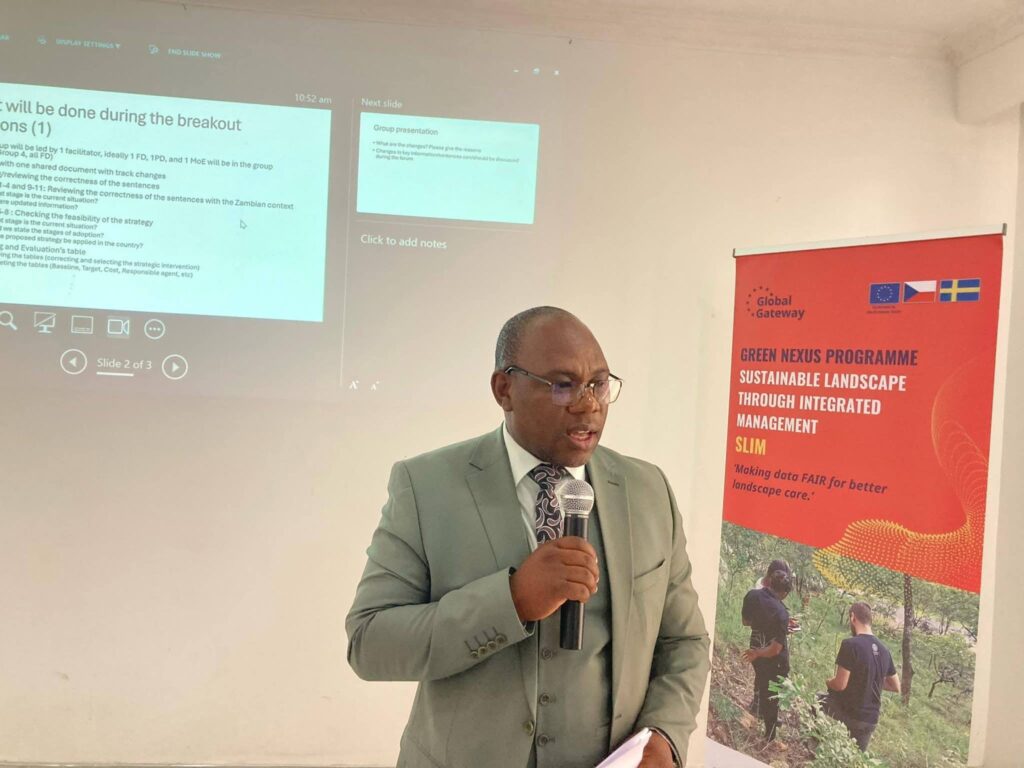
Officially opening the workshop, Acting Director of Forestry Dr Freddie Siangulube said the review represents a crucial step in translating the recently launched National Forestry Policy into practical and enforceable action.
“The charcoal sub-sector remains central to Zambia’s energy system and the livelihoods of many rural communities. Our task is not merely to regulate, but to transform charcoal production into a sustainable, well-managed and accountable sector,” Dr Siangulube said.
He explained that the review builds on an earlier workshop held in October 2025, which produced a roadmap leading to the current draft documents. The Lusaka meeting is focused on refining the zero draft of both the National Charcoal Strategy and its accompanying regulations.
Dr Siangulube noted that although government continues to promote alternative energy sources, charcoal remains a major component of Zambia’s energy mix. As such, the strategy seeks to sustainably regulate charcoal production rather than ignore its continued role.
As part of the proposed reforms, the Forestry Department has identified 13 charcoal hotspot districts across the country. These areas will be formally designated and zoned to improve monitoring of production levels, supply chains and producers, while creating opportunities for job creation and community participation through Community Forest Management Groups.
“We want to know how much charcoal is produced, where it is coming from, who is producing it, and how local communities can benefit as custodians of the forests,” Dr Siangulube added.
Meanwhile, Mr Tomáš Daníček, Project Coordinator for the Sustainable Landscape through Integrated Management (SLIM) project under CzechAid, emphasised the importance of finalising a strong draft for wider stakeholder consultation.
“This strategy is a key pillar of the National Forestry Policy implementation plan. It is essential that this workshop delivers a version that is ready for broader engagement,” Mr Daníček said.
The workshop has drawn participation from senior officials from the Ministry of Green Economy and Environment, the Ministry of Energy, planning and policy departments, as well as provincial forestry leadership.
Dr Siangulube concluded by urging participants to provide meaningful input, noting that the outcomes of the review will shape the management of Zambia’s charcoal sector for years to come.