Afreximbank Abuja Trade Centre Earns LEED Platinum Status
The African Export-Import Bank (Afreximbank) has marked a major sustainability milestone after its African Trade Centre (AATC) in Abuja was awarded the highly coveted LEED Platinum certification, the highest global standard for green buildings.
The certification was granted by the United States Green Building Council (USGBC) and Green Business Certification Inc (GBCI), making the Abuja AATC the first building in Nigeria, the second in West Africa, and the nineteenth on the African continent to achieve LEED Platinum status. It is also among the first large-scale trade and business facilities in Africa to receive this level of environmental recognition.
The achievement underscores Afreximbank’s growing commitment to embedding sustainability, innovation and climate-smart solutions into Africa’s trade and economic infrastructure.
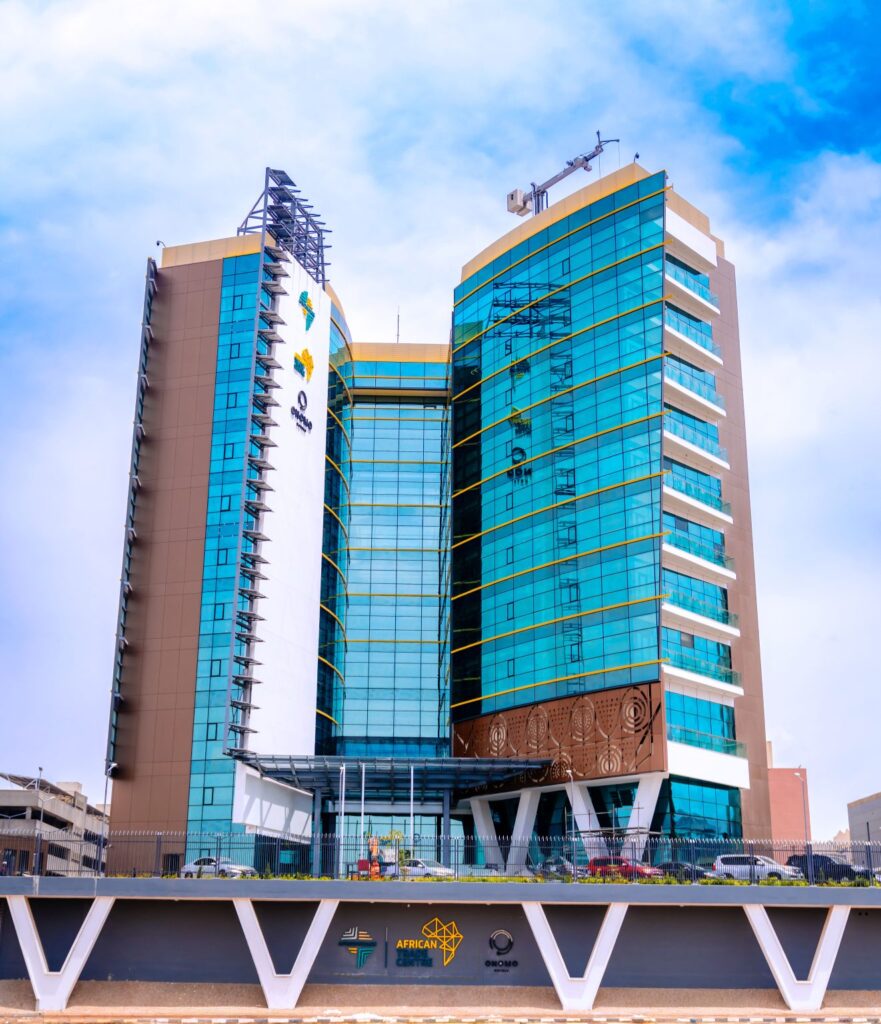
The Abuja AATC comprises two interconnected nine-storey towers designed as a comprehensive hub for trade, business and innovation. One tower accommodates Grade A commercial office spaces, a trade and exhibition centre, a conference facility, a technology and SME incubator, a digital trade gateway and a trade information services hub.
The adjoining tower houses a 148-room business hotel with meeting and seminar rooms, wellness facilities, a restaurant and supporting amenities. The centre also provides office space for local and international financial institutions and policy organisations, creating an integrated ecosystem for continental trade development.
Although the project was initially designed to achieve LEED Gold certification, it exceeded expectations due to rigorous planning, advanced sustainable construction techniques and close collaboration among architects, engineers, consultants, contractors and Afreximbank’s Environmental, Social and Governance (ESG) and project management teams.
The building was officially awarded LEED Platinum certification on 26 November 2025, after earning 81 points—well above the threshold required for the top-tier rating.
LEED Platinum certification recognises exceptional performance across several sustainability indicators, including energy efficiency, water conservation, indoor environmental quality, materials selection and sustainable site development. The Abuja AATC incorporates high-performance glazing, energy-efficient heating, ventilation and air conditioning systems, LED lighting and intelligent building management systems, resulting in energy savings of between 40 and 50 per cent compared to conventional buildings.
Water-efficient systems reduce potable water consumption by at least 30 per cent, while waste recycling measures and circular economy practices further enhance environmental performance.
The facility also promotes low-carbon mobility through the provision of electric vehicle charging points and bicycle infrastructure. Collectively, these features support several United Nations Sustainable Development Goals, including clean energy, resilient infrastructure and climate action. Globally, buildings of this standard are known to reduce operating costs by up to nine per cent annually.
Commenting on the achievement, Afreximbank’s Director and Global Head of Real Estate and Administration, Dr Robert Lumbuye Tomusange, said the certification reflects the institution’s broader sustainability vision.
“The attainment of LEED Platinum certification by the Abuja African Trade Centre demonstrates Afreximbank’s unwavering commitment to sustainability, innovation and climate-smart development,” Dr Tomusange said. “It proves that trade infrastructure can be both environmentally outstanding and commercially competitive, setting a new benchmark for green buildings across Africa.”
With the LEED Platinum award, the Abuja AATC now stands as a model for climate-resilient and resource-efficient trade infrastructure on the continent. Afreximbank says the project reinforces its ESG objectives by reducing environmental impact, improving workplace wellbeing and aligning governance practices with internationally recognised sustainability standards.