MoH, CIDRZ Train Health Workers and Communities in People-Centred HIV Care
The Ministry of Health (MoH) and the Centre for Infectious Disease Research in Zambia (CIDRZ) have been commended for strengthening the capacity of health workers and communities to deliver more responsive, people-centred HIV care.
Despite notable progress in expanding access to HIV treatment in Zambia, interruptions in care remain a challenge, often resulting in high viral loads, increased risk of disease progression and continued HIV transmission. Experts say sustained engagement and tailored support are key to improving health outcomes and achieving viral suppression.
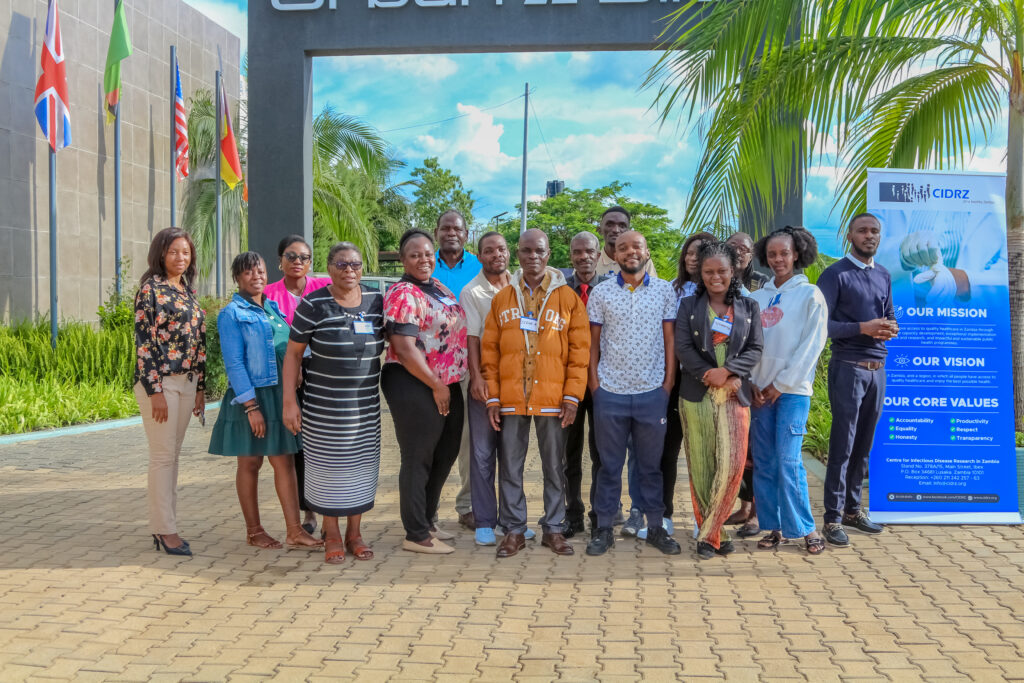
In response, health workers, community members and representatives from the Mumbwa, Kabwe and Kapiri Mposhi District Health Offices recently took part in a three-day Human-Centred Design (HCD) workshop aimed at improving HIV care and retention in treatment.
The workshop, hosted by CIDRZ’s P-CORE Study team in collaboration with the Ministry of Health, brought together community voices and healthcare providers to co-create practical, context-specific solutions to address high viral loads and improve continuity of care.
Participants shared lived experiences, reviewed proposed interventions and worked collaboratively to design strategies tailored to local realities. CIDRZ Study Coordinator and HCD Lead Trainer, Mr Njekwa Mukamba, said the interactive sessions promoted open dialogue and collective problem-solving, ensuring that people remain at the centre of care delivery.
“The process generated innovative intervention ideas and detailed strategies aligned to local needs, which the Study team will now review for possible implementation to improve treatment outcomes and strengthen person-centred HIV care,” Mr Mukamba said.
Ms Delphine Chisanga, Facility In-Charge at Kabwe Central Hospital, said the P-CORE Study has shown that intensive, tailored support for high-risk clients improves retention in care and sustains viral suppression at both facility and community levels.
“This workshop helped me appreciate the value of diverse perspectives. Together, we identified unique strategies to support clients with high viral loads and those returning after being lost to follow-up,” she said.
Community representative Mr Epson Kabaso welcomed the focus on intensifying community antiretroviral services through client involvement, including direct observation treatment, and strengthening relationships between clients and primary healthcare providers.
Youth advocate Mr Simbule Penias from the Network of Zambian People Living with HIV (NZP+) in Kabwe said the training was particularly beneficial in exploring innovative approaches to supporting clients who are lost to follow-up, returners and those with persistently high viral loads.