New System to Help Zambians Gain the Right Skills
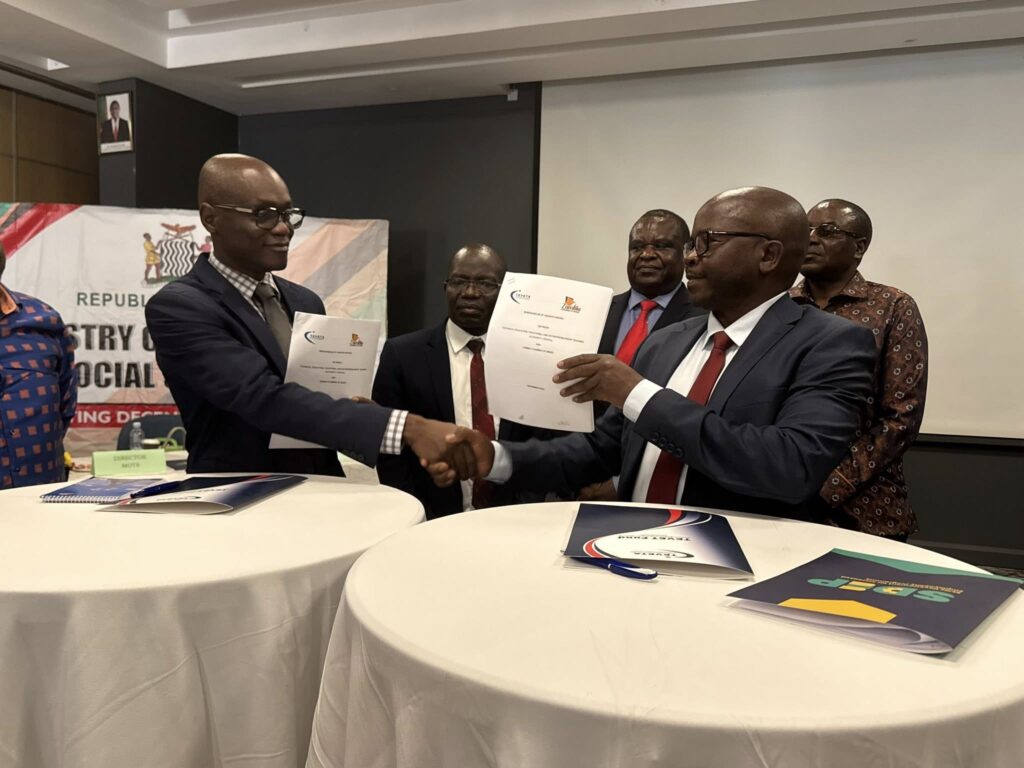
The Government of Zambia has officially launched its first-ever Labour Market Information System (LMIS), alongside a Mining Sector Skills Strategy and the establishment of a Mining Sector Skills Body, in a major step towards aligning skills development with labour market needs.
The LMIS is a digital platform designed to bridge gaps between skills supply and demand, guide evidence-based employment policies, and provide Zambians with reliable information on job trends, in-demand skills and career pathways.
Speaking at the launch, Minister of Labour and Social Security, Brenda Mwika Tambatamba, said the system would address longstanding challenges of fragmented and outdated labour market data, which have contributed to skills mismatches and inefficient workforce planning.
In a speech delivered on her behalf by the Director of Planning and Research, Paul Mumba, Ms Tambatamba said the LMIS would enable government to design targeted training programmes, improve employability and strengthen economic planning.
“With a functional and well-integrated LMIS, we now have reliable data to design evidence-based policies that tackle unemployment, improve working conditions, foster productivity and promote decent work,” she said.
She described the LMIS as more than a database, calling it a strategic tool for economic growth, social inclusion and poverty reduction, particularly through unlocking opportunities for youth employment and skills development.
The Minister also stressed the importance of investing in human capital to sustain Zambia’s competitiveness, noting that the global mining sector is evolving due to technological innovation, environmental sustainability requirements and changing market dynamics.
Minister of Mines and Mineral Development, Paul Kabuswe, said the launch of the Mining Sector Skills Strategy and Skills Body would ensure workers are equipped with relevant competencies to support growth, competitiveness and value addition in the sector. His remarks were delivered by Principal Planner, Edward Shabani.
Meanwhile, Minister of Technology and Science, Felix Mutati, emphasised the need to develop a highly skilled workforce at all levels to fully harness Zambia’s mining potential.
Speaking through Director of Vocational Education and Training, Precious Lisulo, he called for stronger collaboration between government and mining companies to support curriculum development, work-based learning and lecturer capacity building.
International Labour Organization Country Director for Malawi, Zambia and Mozambique, Wellington Chibebe, urged member states to adopt comprehensive vocational guidance and training policies aligned with employment, in line with Convention No. 142 on Human Resource Development.
Zambia Federation of Employers Executive Director, Harrington Chibanda, said the success of the LMIS would depend on strong institutions supplying accurate and quality data to inform decision-making.
Zambia Congress of Trade Unions President, Blake Mulala, called for improved safety standards in the mining sector and the formalisation of small-scale mines to protect workers’ rights.
“A mine that cannot guarantee safety has no business operating in Zambia. One death is one too many. When a worker dies, families suffer, children drop out of school and communities lose hope,” Mr Mulala said.