Treasury Releases K15.56 Billion as Zambia Strengthens Financial Stability
The Government has reinforced its commitment to fiscal discipline following the release of K15.56 billion in November to support public services, infrastructure development, debt obligations and social programmes across the country.
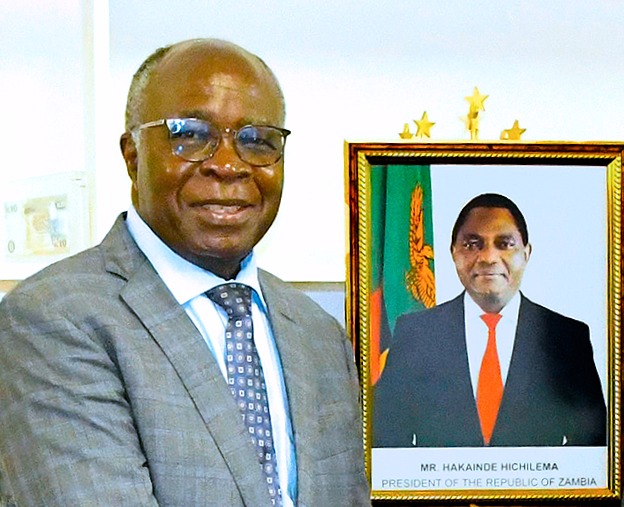
Minister of Finance and National Planning, Dr Situmbeko Musokotwane, said the Treasury releases reflect the administration’s continued efforts to stabilise the economy while ensuring that national resources translate into meaningful improvements in people’s lives.
Dr Musokotwane noted that Zambia’s recent credit rating upgrades by Standard & Poor’s and Fitch Ratings demonstrate renewed global confidence in the country’s financial management. He explained that a stable economic environment benefits every citizen, including farmers, teachers, entrepreneurs and public service workers, as it brings controlled inflation, predictability and increased investor trust.
The Minister emphasised that the progress recorded so far is the product of the entire economic management ecosystem rather than central Government alone. He urged statutory bodies and agencies under the Ministry of Finance, such as the Bank of Zambia, the Zambia Revenue Authority, the Industrial Development Corporation, the Zambia Public Procurement Authority and the Financial Intelligence Centre, to step up their public reporting.
He said clear and consistent communication from these institutions would strengthen public trust and help citizens better appreciate ongoing reforms.
Dr Musokotwane also highlighted the need for institutions that directly affect social welfare, including the Public Service Pensions Fund, the Zambia Credit Guarantee Scheme and the Public Service Micro Finance Company, to transparently share their achievements and ongoing programmes.
He said Government is in a phase where effective implementation must match lofty aspirations, and that Treasury releases alone cannot transform communities without strong delivery from ministries and agencies.
A significant portion of the November disbursements went towards strengthening Zambia Railways Limited (ZRL). The Treasury released K100 million for the recapitalisation of the company, supplemented by a €50 million grant from the European Union. These funds will finance the rehabilitation of key sections of track, modernisation of signalling systems and safety enhancements.
Dr Musokotwane noted that a fully functioning railway system is vital for reducing transportation costs for mines, farmers and manufacturers, while also helping to protect national road infrastructure from excessive wear and tear. He said the recapitalisation of ZRL is part of a broader strategy to position Zambia as a competitive and efficient regional trade hub.
Of the total K15.56 billion released in November, K4.63 billion was dedicated to the public service wage bill, enabling teachers, health workers, security personnel, civil servants and diplomats to receive their salaries and allowances on time. A further K5.26 billion was committed to debt servicing, covering domestic and external obligations as well as arrears.
Dr Musokotwane stressed that timely repayment of debt is crucial for maintaining the international goodwill earned through Zambia’s debt restructuring efforts and recent rating upgrades.
Transfers and subsidies accounted for a significant share of expenditure, with funding directed to the Farmer Input Support Programme, the Constituency Development Fund and Grant-Aided Institutions such as universities and hospitals. Additional support went to pensioners and vulnerable households through pension payments and the Food Security Pack.
Meanwhile, general Government operations were financed with K2.04 billion, which included allocations for essential drugs and medical supplies, voter registration activities and the recapitalisation of Zambia Railways.
Capital expenditure amounted to K1.2 billion, with road infrastructure receiving more than half of this funding. The rest supported priority projects in education, tourism and defence, all aimed at improving long-term economic prospects and community development.
Dr Musokotwane acknowledged the ongoing power challenges affecting citizens but assured the nation that Government is working aggressively to address the energy deficit. He encouraged the public to continue monitoring public projects, asking questions and tracking service delivery, saying active citizen participation strengthens accountability and improves outcomes.
He concluded by reaffirming Government’s commitment to building a disciplined, transparent and inclusive economy that delivers opportunities for all Zambians.