Calls Grow for Global Action as Progress Stalls on Ending Violence Against Women
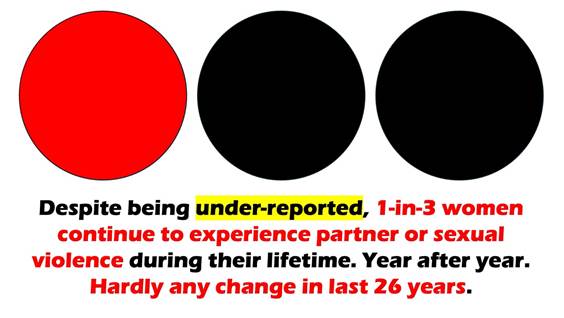
Violence against women and girls remains one of the world’s most persistent human rights violations, with new data showing almost no progress in reducing cases over the past 26 years.
Despite decades of advocacy, legislation, and international commitments, one in three women continues to experience intimate partner or sexual violence in her lifetime, according to the World Health Organization (WHO).
WHO Director-General Dr Tedros Adhanom Ghebreyesus recently described gender-based violence as “one of humanity’s oldest and most pervasive injustices” and urged governments to prioritise prevention as a matter of dignity, equality, and basic human rights.
Although 165 countries have enacted domestic violence laws, only 104 have comprehensive legislation. Countries with such frameworks report significantly lower rates of intimate partner violence, yet many still lack the resources, political will, or enforcement mechanisms required to protect women and girls effectively.
Funding is also declining. In 2022, just 0.2% of global development aid was directed to violence-prevention programmes, a figure that has dropped even further in 2025—despite growing humanitarian crises and rising socio-economic inequality that increase risks for women and girls.
Human rights experts warn that global backlash is intensifying. Nearly one in four countries experienced rollbacks on women’s rights in 2024. Dr Tlaleng Mofokeng, UN Special Rapporteur on the Right to Health, emphasised that sexual and reproductive health and rights (SRHR) must not be sidelined, noting that “we must invest in equity” and build health systems rooted in justice and autonomy.
Representatives from CARICOM, Brazil, Pakistan and global health institutions stressed that shrinking resources, regressive policies, and patriarchal norms continue to harm women, particularly those in marginalised, rural, or climate-affected communities.
They warned that without strong integration of SRHR into universal health coverage (UHC), women and girls will continue to shoulder the burden of preventable harm, unsafe births, and unmet healthcare needs.
As the world approaches Universal Health Coverage Day on 12 December, health and human rights advocates are calling for urgent investment in evidence-based prevention programmes, survivor-centred services, stronger data systems, and strict enforcement of protective laws.
They argue that ending violence against women is not only a legal responsibility but a fundamental human rights imperative, and one that requires bold political commitment, sustained funding, and the meaningful inclusion of women and girls in all decision-making spaces.