Zambia Rejects US Ambassador’s Remarks, Cites $12 Billion Mining Revival and Budget Growth
The Government of the Republic of Zambia has issued a strongly worded response to farewell remarks made by outgoing United States Ambassador to Zambia, His Excellency Michael Gonzales, describing his comments as “deeply regrettable, undiplomatic, and inconsistent with the spirit of mutual respect” governing international relations.
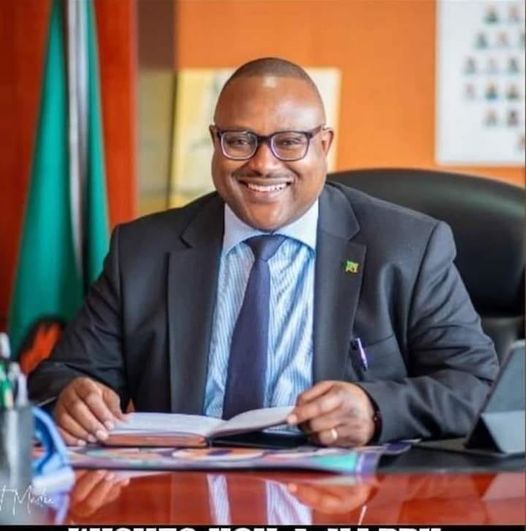
Speaking at a press briefing on Monday, Minister of Foreign Affairs and International Cooperation, Honourable Mulambo Haimbe, said the Government took “the greatest exception” to the statements made by the ambassador during a farewell reception held at his residence in Lusaka on 30 April 2026.
The Government further argued that the remarks were contrary to the Vienna Convention on Diplomatic Relations of 1961, particularly Articles 3 and 41, which outline the functions of diplomatic missions and the obligation of diplomats to respect the laws of the host state and refrain from interference in internal affairs.
According to the Ministry, the concerns raised by the outgoing envoy were not formally communicated through official diplomatic channels such as a démarche, which it said reflected “a lack of respect for diplomatic processes.”
The Zambian Government also rejected assertions that relations between Zambia and the United States are primarily centred on development assistance.
“It is important to clarify that contrary to the statement by the outgoing Ambassador, the relationship between Zambia and the United States is not, nor has it ever been, centred around aid,” Haimbe said.
He stressed that diplomatic relations, established in 1964, have been based on “shared values, unconditional friendship, mutual respect, and equality of sovereign states,” adding that reducing the relationship to aid was “an affront” to its historical foundations.
The Government also addressed ongoing negotiations with the United States over a proposed health Memorandum of Understanding (MoU reportedly valued at up to US$2 billion over five years), stating that discussions had not stalled due to neglect, but due to unresolved issues.
Chief among the concerns, according to the Ministry, are provisions relating to data sharing, which it said could infringe on citizens’ privacy rights and are currently subject to legal proceedings in Zambia.
“These matters are the subject of litigation and must be respected,” the Minister said, adding that Zambia has a duty to safeguard national interests.
On the proposed critical minerals framework, the Government reiterated that it would not accept preferential treatment for any foreign companies or conditional linking of separate agreements.
Zambia also raised concerns over attempts to tie the health agreement to the minerals deal, insisting each must be negotiated independently “on its own merits.”
Responding to criticism attributed to the outgoing ambassador regarding governance, corruption, and investment conditions, the Government defended its record under President Hakainde Hichilema.
Haimbe said Zambia had intensified its anti-corruption efforts, including asset recovery exceeding US$30 million, and confirmed that 156 arrests and 76 convictions had been recorded in relation to theft of health commodities.
He further noted increased health sector funding, citing a 30% rise in the 2026 national budget compared to 2025, alongside broader reforms in education, social protection, and infrastructure.
The Minister also highlighted Zambia’s economic performance, pointing to renewed investor confidence, mining sector expansion, and macroeconomic stabilisation since 2021.
“From a debt-distressed economy in 2021 to a stable and growing economy today, the numbers speak for themselves,” he said.
The Government rejected suggestions that Zambia is becoming less attractive to foreign investors, citing multi-billion-dollar investments in the mining sector, restoration of previously closed mines, and geological mapping initiatives.
It further described remarks questioning governance processes, including appointments and constitutional amendments, as “a clear misunderstanding of diplomatic roles.”
Zambia also condemned any implication of support for regime change, describing such suggestions as crossing “all known diplomatic lines.”
While reaffirming its commitment to continued relations with the United States, the Government emphasised that future engagement must be based on mutual respect, non-interference, and adherence to international diplomatic norms.
“Zambia remains open to constructive engagement with all international partners,” Haimbe said. “However, such engagement must be grounded in respect and genuine partnership, not paternalism.”
The Government concluded by expressing confidence that the end of the ambassador’s tenure presented an opportunity to reset and strengthen bilateral relations.
“As we bid him farewell, Zambia remains committed to the United States as a cherished and important development partner,” the statement read.
The Minister also called on members of the diplomatic corps to uphold established conventions, particularly Articles 3, 9, and 41 of the Vienna Convention, and reiterated Zambia’s preference for dialogue over confrontation in international relations.